Tabung Haji continues an aggressive pursuit to recover the bulk of a massive arbitration award from Saudi Arabia-based property developer Al-Rawda Real Estates Development & Project Management Co Ltd, with the institution now deploying specialized asset tracing consultants following the company's failure to meet settlement obligations. The Islamic pilgrimage fund received only 14.9 million Saudi riyal of the 899 million riyal arbitration award in its favour, leaving a shortfall of approximately 884 million Saudi riyal—equivalent to around RM964 million at current exchange rates.
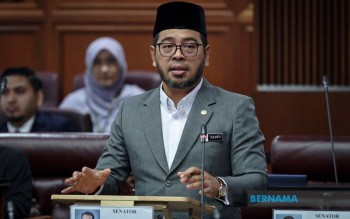
Dr Zulkifli Hasan, Minister in the Prime Minister's Department (Religious Affairs), briefed Parliament on the recovery strategy during discussion of the Royal Commission of Inquiry report into Tabung Haji's financial collapse. He acknowledged that enforcement measures against Al-Rawda had revealed fundamental solvency issues with the Saudi company, complicating direct collection efforts. Rather than abandon recovery hopes, Tabung Haji terminated the November 2024 settlement agreement after Al-Rawda's partial payment and non-compliance, pivoting to more sophisticated tracing methodologies to identify and pursue the company's assets across jurisdictions.
The dispute stems from a series of extraordinarily unfavourable hospitality deals struck between 2015 and 2017, when Tabung Haji committed approximately RM1.55 billion upfront to lease four hotels in the holy cities of Makkah and Madinah. The rental arrangements—spanning ten to eighteen years depending on the property—represented significantly above-market commitments that the Royal Commission later flagged as departing substantially from normal commercial practice. Beyond the initial capital outlay, Tabung Haji entered into a separate Management and Operation Agreement with Al-Rawda, structuring an annual lease payment of 2.49 billion Saudi riyal in exchange for the company's hotel management services.
The fundamental weakness of Tabung Haji's contractual position became apparent when the fund accepted only a personal promissory note from Al-Rawda's owner, Dr Mashhoor Ali Omar Almadoodi, rather than securing corporate guarantees or tangible collateral. This decision—taken during a period the RCI identified as marked by weak governance and inadequate due diligence—left Tabung Haji virtually unsecured when Al-Rawda stopped remitting rental income from March 2019 onwards. The cessation of payments triggered enforcement proceedings in Saudi Arabia, establishing the legal foundation for the eventual arbitration claim.
Arbitration proceedings initiated by Al-Rawda against Tabung Haji paradoxically resulted in a favourable outcome for the Malaysian institution. The Final Award dated April 16, 2023, ruled entirely in Tabung Haji's favour and ordered Al-Rawda to remit 899 million Saudi riyal in compensation. This arbitration victory, however, proved largely pyrrhic, given the company's apparent inability or unwillingness to honour the judgment. The gap between a legal victory and financial recovery illustrates a persistent challenge facing creditors pursuing claims against Saudi entities: court judgments do not automatically translate into cash flow when the debtor lacks sufficient accessible assets.
The Al-Rawda situation represents one dimension of a far broader institutional crisis at Tabung Haji. The Royal Commission of Inquiry, which released its 211-page report in July, identified this Saudi hospitality investment among fourteen troubled international ventures that collectively generated losses running into the billions of ringgit. The RCI's investigation, mandated by the government in 2021 and formally presented to the King in August 2022, exposed systemic weaknesses in investment governance, risk assessment, and operational oversight spanning the 2014-to-2020 period.
The commission's findings prompted twenty-five specific recommendations for institutional reform and remediation. By late July, Tabung Haji had already implemented seventy-five percent of these recommendations, signalling management's commitment to preventing recurrence of the governance failures that enabled investments like the Al-Rawda arrangements. Nevertheless, the Al-Rawda recovery effort demonstrates that reform alone cannot unwind past financial damage; the fund must simultaneously pursue active recovery of outstanding obligations owed by counterparties.
For Malaysian stakeholders, the Tabung Haji situation carries particular significance given the fund's role in facilitating Hajj pilgrimage financing for hundreds of thousands of Malaysian Muslims annually. The institution's financial stability directly affects the accessibility and affordability of pilgrimage for ordinary Malaysians. The combination of substantial international losses and difficulties recovering arbitration awards underscores the importance of rigorous due diligence in cross-border transactions, particularly in emerging markets where enforcement mechanisms may prove unreliable even following formal legal victories.
The deployment of asset tracing specialists represents a sophisticated last-resort strategy, suggesting Tabung Haji has moved beyond conventional collection efforts. Asset tracing typically involves investigating the financial structure of debtors, identifying hidden assets across multiple jurisdictions, and mapping complex ownership structures designed to obscure wealth. Given Al-Rawda's operations in Saudi Arabia and potentially throughout the Gulf region, international cooperation and specialized expertise in regional financial systems may be necessary to locate and pursue the company's actual holdings.
The broader implications for Malaysian sovereign wealth and Islamic financial institutions suggest that international commercial arrangements require enhanced protective mechanisms. Tabung Haji's experience with Al-Rawda—accepting personal rather than corporate guarantees, making large upfront payments for long-term leases, and inadequately assessing counterparty creditworthiness—represents a cautionary template for other entities managing substantial cross-border investments. The RCI's reform recommendations attempt to institutionalize lessons from this experience, though enforcing behavioural change across complex organizations remains perpetually challenging.
As Tabung Haji navigates the recovery process, the institution faces the unenviable task of balancing optimism about potential asset recovery against realistic assessment of Al-Rawda's financial condition. Even if asset tracing uncovers previously unknown holdings, the expense of pursuing claims across international boundaries may consume substantial portions of any recovered amount. Nonetheless, persistence in recovery efforts sends important signals both to the Malaysian public and to future counterparties regarding Tabung Haji's commitment to protecting institutional assets and accountability for past losses.

