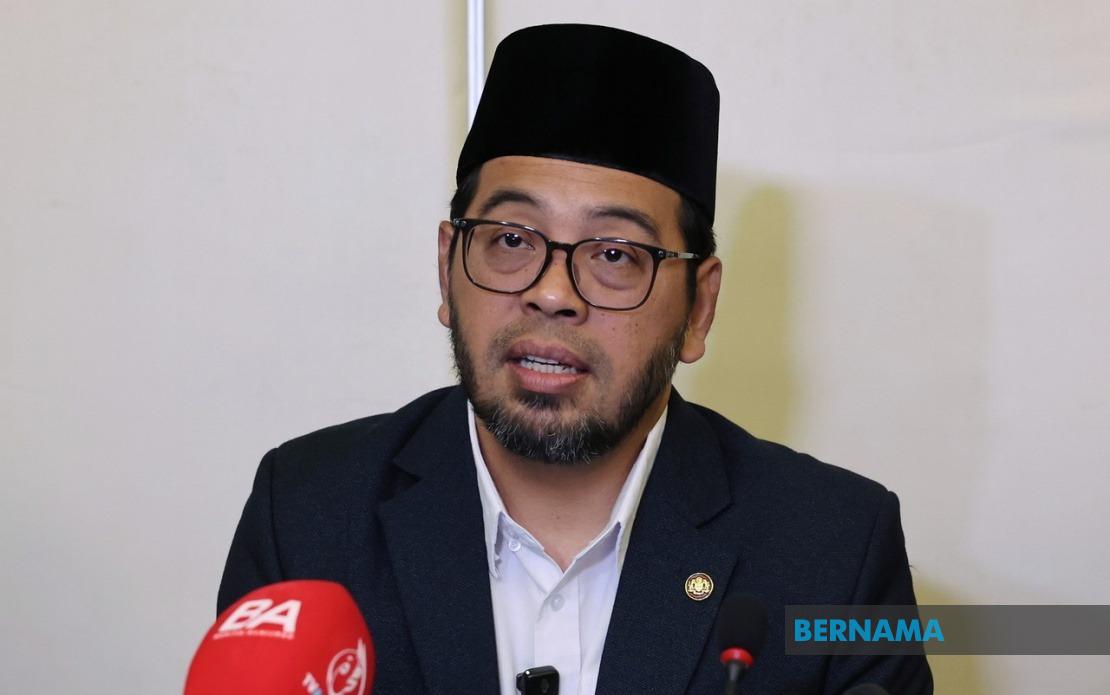
Tabung Haji has substantially strengthened its position through a comprehensive institutional recovery programme undertaken since the MADANI administration assumed office in late 2022, according to Religious Affairs Minister Dr Zulkifli Hasan. Speaking during a special Parliament sitting, the minister outlined how the pilgrimage fund has emerged from a period marked by legacy problems that had accumulated within the organisation over several years. The timing of making the recovery efforts and findings public reflects the government's confidence in the institution's renewed operational and financial health.
When the current administration took power, Tabung Haji faced considerable challenges stemming from non-performing assets and problematic investments that had festered since 2018. Rather than rushing to public disclosure while the institution remained fragile, the government prioritised giving management the space and resources needed to undertake genuine structural repairs. This deliberate approach allowed the organisation to rebuild credibility and financial stability before transparent public accounting of both problems and solutions. The strategy represents a shift from the previous government's initial announcement of the Royal Commission of Inquiry in 2021, which had eventually documented extensive governance failures across the 2014-2020 period.
The recognition of Tabung Haji's turnaround extends beyond domestic assessment. The institution has received five World's Best Haj Management Awards across four consecutive years, a series of international accolades that underscores meaningful operational improvements in pilgrimage logistics and service delivery. These awards validate that capable and integrity-driven leadership can genuinely restore institutional performance, positioning the recovery as more than cosmetic restructuring. For Malaysian pilgrims and their families, these recognitions provide tangible evidence that their sacred funds are being managed by management genuinely committed to excellence.
On 29 July, the Cabinet unanimously decided to make the 211-page Royal Commission of Inquiry report public and subject it to parliamentary debate through a special sitting. The report, which had been presented to the King on 30 August 2022, contains findings on institutional weaknesses and puts forward 25 recommendations for improvement. As of late July, 75 per cent of these recommendations had already been implemented, with remaining measures under active development. This demonstrates that recovery efforts were already substantially underway before public release, rather than the institution scrambling to respond retroactively to exposed problems.
Following the Cabinet's decision and public release of the RCI findings, enforcement authorities including the Malaysian Anti-Corruption Commission and police have commenced investigations into the misappropriation issues documented in the report. Several key individuals linked to the institutional failures have been detained as part of these initial investigative steps. The minister stressed that this enforcement response reflects unwavering commitment from both government and agencies to ensure accountability for any abuse of power or criminal breach of trust involving pilgrimage funds. The scale and seriousness of the enforcement action signals that political leadership will not tolerate financial crimes affecting religious institutions.
The minister's emphasis on the sacred nature of Tabung Haji deposits underscores why institutional failures carry such gravity in Malaysian society. The institution holds savings accumulated gradually by ordinary Malaysians—parents setting aside funds for their children to perform the Hajj, teachers, small traders, retirees, farmers, fishermen, rubber tappers and taxi drivers. These depositors are not motivated by profit-seeking; they save specifically to fulfil the Islamic obligation of pilgrimage. This distinction between Tabung Haji and ordinary financial institutions means that mismanagement represents not merely a breach of fiduciary duty but a violation of religious trust, which elevates both the seriousness of accountability and the urgency of restoration.
The minister further noted that His Majesty Sultan Ibrahim, King of Malaysia, has decreed that investigations proceed comprehensively, transparently and without compromise, with enforcement continuing until every aspect is fully examined. This royal directive carries particular weight in Malaysia's constitutional framework and signals that the investigative process will not be truncated or deflected by political considerations. The unambiguous language—turning over every stone—indicates that truth-finding and accountability take precedence over protecting reputations or suppressing information that might prove embarrassing to former officials or administrations.
Decisions regarding Tabung Haji must henceforth be guided by principles of trust and depositor confidence, the minister stated, establishing a framework that prioritises the interests of pilgrims over competing institutional or political agendas. Questions about breaches of trust require thorough investigation not merely to assign blame but to establish factual clarity, identify operational weaknesses that enabled failures, and implement safeguards preventing recurrence. This preventive approach to institutional reform distinguishes genuine recovery from superficial responses designed solely to manage immediate political fallout.
The broader context for Malaysian readers involves understanding that Tabung Haji occupies a unique place in the nation's financial ecosystem. Unlike commercial banks or investment funds, it combines religious significance with substantial accumulated assets drawn from millions of ordinary Malaysians. Failures in such institutions carry implications far beyond financial loss; they undermine public confidence in the integrity of systems designed to serve religious obligations. The recovery efforts therefore represent not merely institutional housekeeping but restoration of community faith in entities entrusted with sacred responsibilities.
Regionally, Tabung Haji's experience offers lessons for other Muslim-majority nations managing pilgrimage funds and religious endowments. The transparency of Malaysia's approach—establishing an independent royal commission, making findings public, pursuing prosecutions regardless of individual status, and subjecting the matter to parliamentary debate—contrasts with opacity that characterises fund management in some comparable jurisdictions. For Southeast Asian observers, the Malaysian model demonstrates how institutional accountability and religious stewardship can be reconciled through independent inquiry and rule-of-law enforcement.
The Royal Commission, chaired by former Chief Justice Tun Mohamed Raus Sharif and comprising five experts in public administration, banking, finance, Shariah law and accounting, brought substantial institutional knowledge to its examination of Tabung Haji's operations. This composition reflected deliberate effort to ensure that findings rested on diverse expert analysis rather than narrow perspective. The expertise deployed by the commission established credibility for its findings and recommendations, creating a foundation for reform that extends beyond government rhetoric to substantive professional assessment.
Looking forward, the implementation of remaining RCI recommendations and completion of enforcement investigations will test whether the recovery represents genuine institutional transformation or temporary political responsiveness. For depositors and potential pilgrims, the critical measure will be whether strengthened governance, accountability mechanisms and oversight prevent future misappropriation and ensure their sacred funds are protected through systems designed with integrity as primary objective. The government's commitment to transparency and enforcement, articulated by the minister and reinforced by royal decree, establishes the framework within which this ongoing accountability must be measured.

