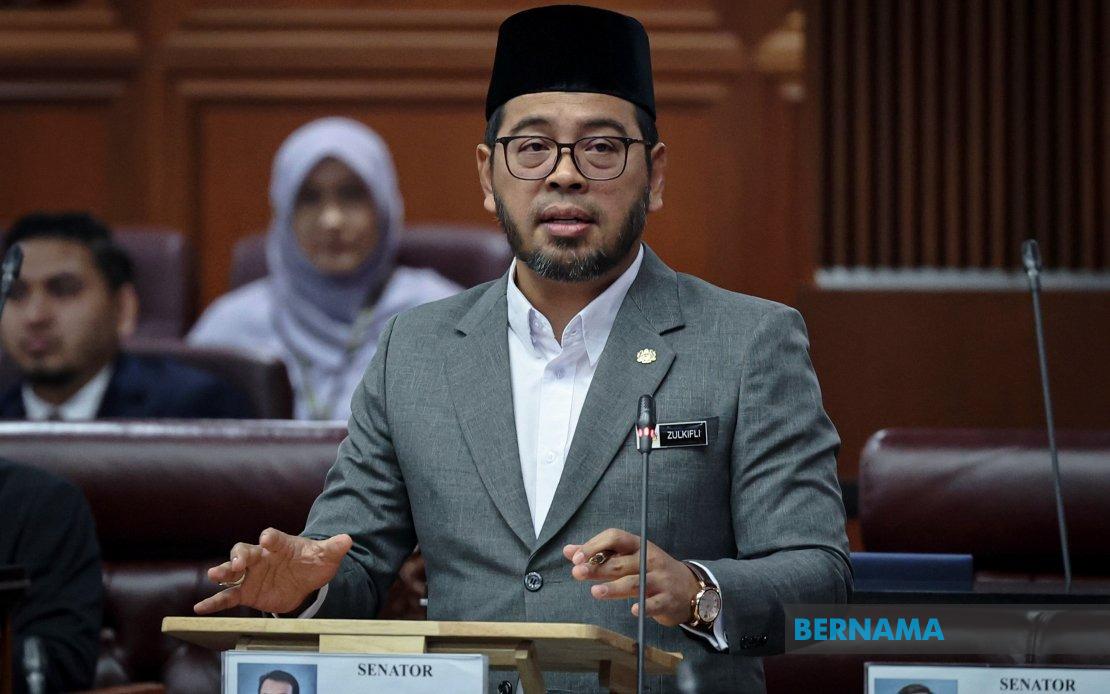
Tabung Haji (TH) depositors can be assured that their zakat obligations have been properly discharged in full compliance with Islamic law, according to Minister in the Prime Minister's Department (Religious Affairs) Dr Zulkifli Hasan, who addressed Parliament this week on the institution's handling of religious financial duties. The clarification comes after years of public concern over the fund's management practices and represents an effort to restore confidence among the millions of Malaysian Muslims who contribute to the pilgrimage savings scheme.
The minister's reassurance stems from multiple validation layers within Malaysia's Islamic governance framework. Tabung Haji's own Syariah Advisory Committee determined in September 2020 that zakat payments made on behalf of depositors prior to 2019, when the wakalah agency concept was introduced, remain valid and Syariah-compliant. This ruling provides retroactive legitimacy to years of zakat collection that had become subject to scrutiny following the fund's well-documented financial difficulties and management lapses exposed by the Royal Commission of Inquiry.
A foundational decision by the National Fatwa Committee for Islamic Religious Affairs Malaysia, issued on May 3, 1979, established the theological basis for TH's zakat operations. The fatwa clarified that while Tabung Haji itself is not subject to zakat as an institution, it bears the obligation to calculate and remit zakat on behalf of its depositors based on their accumulated savings. This distinction has governed TH's zakat practices for more than four decades and provides essential clarity in a system where individual depositors might otherwise struggle to determine their own religious obligations on funds held in collective trust.
During the period from 2016 to 2019, when the Wadiah Yad Damanah contract framework governed TH's operations, the fund calculated and paid business zakat, known colloquially as khultah or collective zakat, on the pooled deposits that were actively traded. This methodology differs from the wakalah model introduced thereafter and reflects the evolving contractual approaches TH has employed to balance investment returns with religious compliance. The distinction matters for depositors seeking to understand how their contributions have been managed and what percentage of their returns has been allocated to fulfilling religious duties.
The government's confidence in TH's zakat governance was further reinforced through the recommendations of the Royal Commission of Inquiry, which suggested that zakat practices be referred to the National Council for Islamic Religious Affairs for additional scrutiny and guidance. Rather than viewing this as criticism, the minister presented it as part of a strengthening process. In June 2024, the matter was formally presented to and endorsed by the Muzakarah Committee, the council's deliberative body responsible for reviewing complex Islamic finance issues. These views were subsequently forwarded to the Conference of Rulers during its 267th meeting in October 2024, placing TH's zakat operations within the highest echelons of Malaysia's Islamic governance structure.
For Malaysian Muslims saving toward the hajj pilgrimage, the multi-layered validation provides several reassurances. The zakat guidelines governing TH's operations have been explicitly approved and are continuously monitored by the institution's Syariah Advisory Committee, which comprises specialists in Islamic law and Islamic finance. This oversight mechanism ensures that decisions are not made unilaterally by administrators but remain subject to religious expert review. The structure mirrors best practices in Islamic financial institutions across the Muslim world, where governance committees serve as checks against potential misuse or deviation from theological principles.
Beyond the immediate question of zakat compliance, the minister's parliamentary briefing addressed the RCI's broader recommendations concerning hajj management policy. Tabung Haji is now in the final stages of implementing improvements to its pilgrimage eligibility criteria and waiting period procedures, reflecting recommendations that emerged from the inquiry's comprehensive review of TH's operations between 2014 and 2020. These changes will introduce greater clarity and systematic planning to the hajj process, incorporating the Islamic concept of istito'ah—the principle that pilgrimage should be undertaken only by those with genuine ability to do so—as a guiding framework.
The Royal Commission of Inquiry, established in 2021 with members appointed in January 2022, released its 211-page report publicly on July 29, 2024, after presenting findings to the Yang di-Pertuan Agong in August 2022. The comprehensive document identified weaknesses in TH's management and operational practices during a critical six-year period and proposed 25 recommendations for systemic improvement. By late July 2024, Tabung Haji had already implemented approximately 75 percent of these recommendations, suggesting a measured but accelerating pace of institutional reform that extends beyond religious compliance to encompass governance, financial management, and operational procedures.
For Malaysian society more broadly, the resolution of the zakat question carries significance beyond individual depositors. Tabung Haji represents one of Malaysia's largest Islamic financial institutions, holding billions of ringgit in pilgrim savings and serving as a tangible expression of the country's Islamic identity. Public confidence in the institution's religious integrity directly influences participation rates and the willingness of Malaysian Muslims to entrust their hajj savings to a government-linked entity. By securing explicit validation from multiple layers of Islamic jurisprudence, the government aims to rebuild this confidence and demonstrate that institutional reform has encompassed not merely financial restructuring but also recommitment to the religious principles underlying the fund's original purpose.
The minister's emphasis on the orderly conduct of TH's zakat operations and their alignment with Islamic law reflects a broader Malaysian governmental approach to Islamic finance regulation. Rather than treating religious compliance as a supplementary concern addressed after financial performance, the framework positions Syariah compliance as integral to institutional legitimacy. This theological grounding becomes particularly important when addressing past failures and requesting depositors' patience during a recovery period that could extend several years. The assurance that religious obligations have been fulfilled precisely and completely serves as a moral foundation for the institution's restoration efforts.
Looking forward, the improvements to hajj management policy are scheduled for announcement in the near future and will incorporate lessons learned during the RCI investigation. The emphasis on early preparedness and systematic planning suggests TH is moving toward a model where pilgrims are better informed about timelines and requirements well in advance, potentially reducing administrative chaos and financial pressures that have periodically afflicted the hajj process. These operational improvements, combined with the explicit Syariah validation of past zakat practices, represent TH's attempt to address both the theological concerns and practical grievances that emerged during the period covered by the inquiry.

