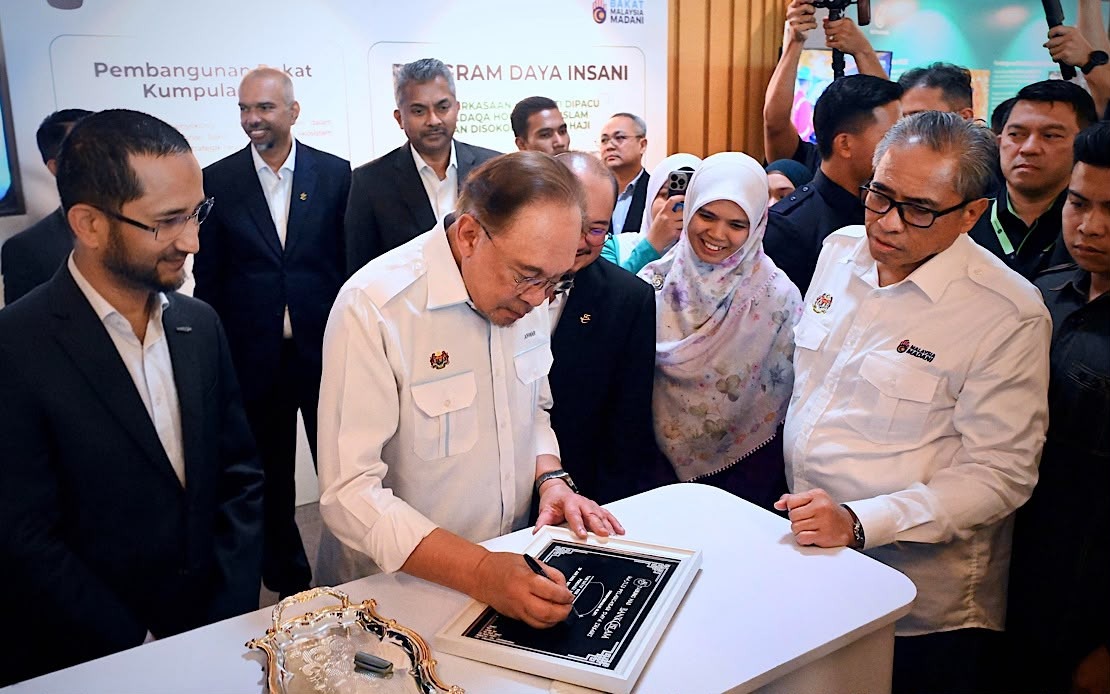
Tabung Haji and Bank Islam Malaysia Berhad have joined forces to introduce the Asnaf Youth Development Programme for Inclusive and Sustainable Empowerment, known as DAYA INSANI, backed by an initial investment of RM1 million. Unveiled during Prime Minister Datuk Seri Anwar Ibrahim's MADANI Talent initiative launch in Sendayan, Negeri Sembilan, the programme represents a significant collaborative effort between two major Islamic financial institutions to address youth unemployment and economic mobility in disadvantaged communities.
The initiative addresses a critical gap in Malaysia's talent development landscape by focusing specifically on asnaf youth—those from lower-income households—and orphans who face structural barriers to employment and professional advancement. Rather than offering generic support, DAYA INSANI combines three essential components: specialised technical and professional skills training, direct exposure to industry environments, and strategic job placement with identified employers. This integrated approach recognises that skills alone are insufficient without meaningful pathways into sustainable employment.
Tabung Haji Group Managing Director Mustakim Mohamad framed the programme as the most valuable investment the organisation can make in the future of the Muslim community. He emphasised that beyond financial returns, institutional priority should rest on developing human capital, particularly among young people who lack family resources to pursue higher education or professional qualifications independently. The Hajj pilgrimage fund's pivot towards youth empowerment reflects broader thinking within Malaysia's Islamic financial sector about social responsibility and inclusive economic participation.
Bank Islam Group Chief Executive Officer Raja Datin Paduka Teh Maimunah Raja Abdul Aziz characterised the partnership as a demonstration of social finance principles in action. She stressed that structural inequality stems partly from unequal access to opportunities and quality mentorship, not inherent capability. DAYA INSANI attempts to level that playing field by removing financial barriers to training and creating direct employment connections. This philosophy aligns with growing recognition that Malaysia's economic productivity depends on developing talent from all demographic segments.
The programme's partnership ecosystem extends across multiple economic sectors and education providers. The Kulim Hi-Tech Park Skills Centre will produce advanced technical workers equipped for manufacturing and engineering roles. Kolej Universiti Bestari and Kumpulan Medic Iman Sdn Bhd will train professional nurses in response to Malaysia's persistent healthcare workforce shortage. The Malaysian Professional Accountancy Centre will develop certified accountants, while Showme Education will prepare aspiring therapists. This diversified approach ensures participants can pursue careers matching their interests and abilities rather than facing restricted options.
Early results from existing initiatives demonstrate the model's viability. A diploma nursing programme launched in 2024 already has nineteen students enrolled, with one graduate successfully entering the workforce. Simultaneously, technical training at Kulim Hi-Tech Park commenced in June with thirteen participants, with organisers projecting expansion to one hundred participants in the medium term. These figures suggest demand for such programmes far exceeds current supply, indicating that DAYA INSANI meets a genuine market need among disadvantaged youth seeking career development.
The RM1 million initial commitment represents only a starting point rather than the ceiling for the programme's ambitions. Bank Islam and Tabung Haji have opened contribution channels to corporations, institutions, and private donors willing to expand the fund. This fundraising approach potentially transforms DAYA INSANI into a much larger ecosystem, distributing the financial burden beyond the two anchor institutions. Malaysian corporates increasingly face pressure to demonstrate corporate social responsibility, and youth employment initiatives offer tangible evidence of community impact that shareholders and regulators favour.
The programme's alignment with the government's MADANI Talent aspiration provides significant institutional validation and potential policy support. The Prime Minister's public endorsement at the launch event signals that youth skills development and inclusive economic participation rank among federal priorities. This positioning may facilitate regulatory support, tax incentives for participating employers, or coordination with other government workforce development initiatives. For Bank Islam and Tabung Haji, the government backing strengthens their ability to attract corporate partners and philanthropic contributions.
Tabung Haji's deepening engagement with Islamic finance institutions and professional bodies reflects a strategic expansion beyond its traditional Hajj savings mandate. Partnerships with INCEIF University aim to produce certified accountants and Islamic finance professionals who meet global competency standards while maintaining ethical grounding. This commitment to producing ethically-trained financial professionals addresses longstanding concerns about integrity in Malaysia's financial sector and positions graduates advantageously in increasingly regulated global markets.
For Southeast Asian readers, DAYA INSANI illustrates broader trends shaping development finance across the region. Islamic financial institutions increasingly see social finance as integral to institutional mission rather than peripheral charity. Malaysia's approach to youth empowerment through strategic sectoral partnerships offers a replicable model for other Muslim-majority nations confronting youth unemployment and skills mismatches. The emphasis on measurable outcomes and private sector engagement suggests a practical alternative to purely government-funded programmes that often struggle with sustainability.
The programme's projected reach of over one hundred asnaf youth and orphans in its initial phase remains modest relative to Malaysia's broader unemployment challenges, yet the expansion trajectory appears intentional. Rather than spreading resources thinly across hundreds of participants with minimal support, DAYA INSANI concentrates intensity on smaller cohorts receiving comprehensive training, mentorship, and employment placement. This approach maximises the probability of sustained employment and career progression, generating success stories that attract additional funding and institutional participation.
Looking forward, DAYA INSANI's success will depend substantially on employers' genuine commitment to hiring and promoting graduates. Skills training creates little value if labour markets remain unresponsive or if hiring discrimination persists despite qualifications. The programme's explicit partnerships with strategic employers suggest that participating companies have committed to recruitment pipelines, distinguishing DAYA INSANI from generic training initiatives. Monitoring employment outcomes and earnings trajectories over three to five years will reveal whether the integrated model delivers sustainable economic mobility that transforms participants' life prospects.
The initiative represents recognition within Malaysia's Islamic financial establishment that inclusive economic development requires deliberate structural interventions. Market forces alone have left substantial segments of Malaysia's youth population underemployed or unemployed despite growing sectoral labour shortages. By combining financial resources, institutional credibility, educational partnerships, and employer networks, Tabung Haji and Bank Islam are constructing a comprehensive pathway from disadvantage to productive employment. Whether this model scales effectively beyond the initial cohort will significantly influence how Malaysia addresses persistent inequality and fulfils its aspirations for broadly-shared economic prosperity.

