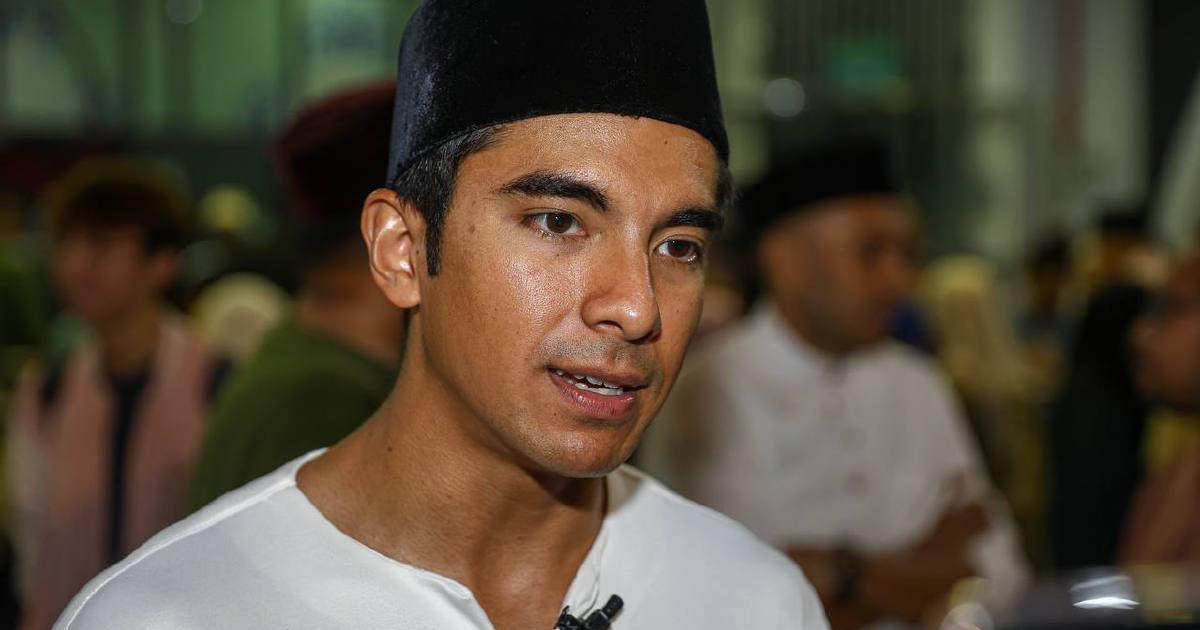
Syed Saddiq Syed Abdul Rahman, the former Youth and Sports Minister and prominent Perikatan Nasional politician, has struck a contemplative tone as he awaits a decisive ruling from Malaysia's Federal Court, signalling his acceptance of whatever outcome the judiciary delivers. The stance reflects both the gravity of the proceedings and the uncertainty surrounding a case that has drawn significant national attention given his standing within the party hierarchy.
The timing of this statement comes at a critical juncture in the Malaysian legal calendar, with the Federal Court—the apex of the nation's judicial system—preparing to render judgment on a matter that carries substantial implications for Syed Saddiq's political future. His willingness to defer to divine providence rather than engage in public speculation underscores the seriousness with which he views the proceedings and the limited room for manoeuvre remaining in the formal legal process.
Syed Saddiq's position within Perikatan Nasional has been significant since the coalition's rise to prominence in recent years. As a younger-generation politician with a base of support, particularly among youth voters, his legal challenges have attracted scrutiny beyond typical parliamentary circles. The Federal Court's impending decision therefore carries weight that extends beyond his personal circumstances, potentially influencing perceptions of judicial independence and the fairness of the legal system itself.
The appeal to faith rather than legal strategy may also serve a broader communicative purpose for Syed Saddiq's constituency and supporters. By publicly accepting the court's authority and expressing deference to outcomes beyond his control, he positions himself as respecting constitutional processes—a posture that could prove valuable regardless of the judgment. This approach contrasts sharply with contentious statements that sometimes emerge from political figures facing legal jeopardy, demonstrating political maturity in handling a sensitive matter.
For Malaysian observers, the case exemplifies the ongoing tension between political ambition and legal accountability that has characterised the nation's governance in recent years. The Federal Court's docket has increasingly featured cases involving prominent political figures, reflecting both more aggressive law enforcement and, critics argue, the weaponisation of legal processes for political ends. However, the court has also maintained its institutional credibility through careful, reasoned judgments despite these pressures.
The implications for Perikatan Nasional are also noteworthy. The coalition has repositioned itself as an alternative to the Pakatan Harapan government, and the status of senior figures like Syed Saddiq affects party dynamics and public perception. A judgment against him could complicate the party's electoral positioning, while vindication might strengthen his influence within the coalition's leadership structures.
Syed Saddiq's public statements regarding the case have generally maintained this measured demeanour, avoiding inflammatory rhetoric that might prejudice judicial consideration or inflame political tensions. This disciplined approach contrasts with some international examples where political figures facing legal challenges mount vigorous public campaigns to shape narrative and perception. His Malaysian counterpart appears to recognise that such tactics often prove counterproductive within the domestic legal environment.
The Federal Court ruling, whenever it arrives, will likely influence broader conversations about the role of the judiciary in Malaysian political life. Observers and legal analysts have been closely monitoring how the court balances institutional independence with pressure from various quarters. A transparent, well-reasoned judgment—regardless of outcome—could reinforce public confidence in Malaysia's constitutional framework at a time when such confidence faces periodic challenges.
For regional observers across Southeast Asia, Malaysia's judicial processes remain instructive. The region's democracies grapple with similar challenges regarding the intersection of law and politics, and the conduct of cases involving prominent figures influences perceptions of rule-of-law commitment. How Malaysian courts handle such matters therefore carries significance beyond the peninsula's borders.
Syed Saddiq's invocation of divine will also resonates culturally within the Malaysian context, where public figures routinely reference faith when confronting uncertainty. This linguistic choice connects his personal predicament to broader spiritual and philosophical frameworks familiar to his constituents, potentially maintaining support regardless of legal outcomes. It demonstrates awareness of how political communication operates across multiple registers simultaneously.
The countdown to the Federal Court's pronouncement represents a defining moment not merely for Syed Saddiq but for perceptions of Malaysia's judicial system. His graceful acceptance of pending judgment, expressed through appeals to faith and providence, suggests a politician preparing himself and his supporters for any result while maintaining dignity and demonstrating respect for constitutional processes. Whether such composure proves vindicated or tested by the court's decision, it establishes a template for how political figures might navigate legal challenges with grace amid institutional pressures.

