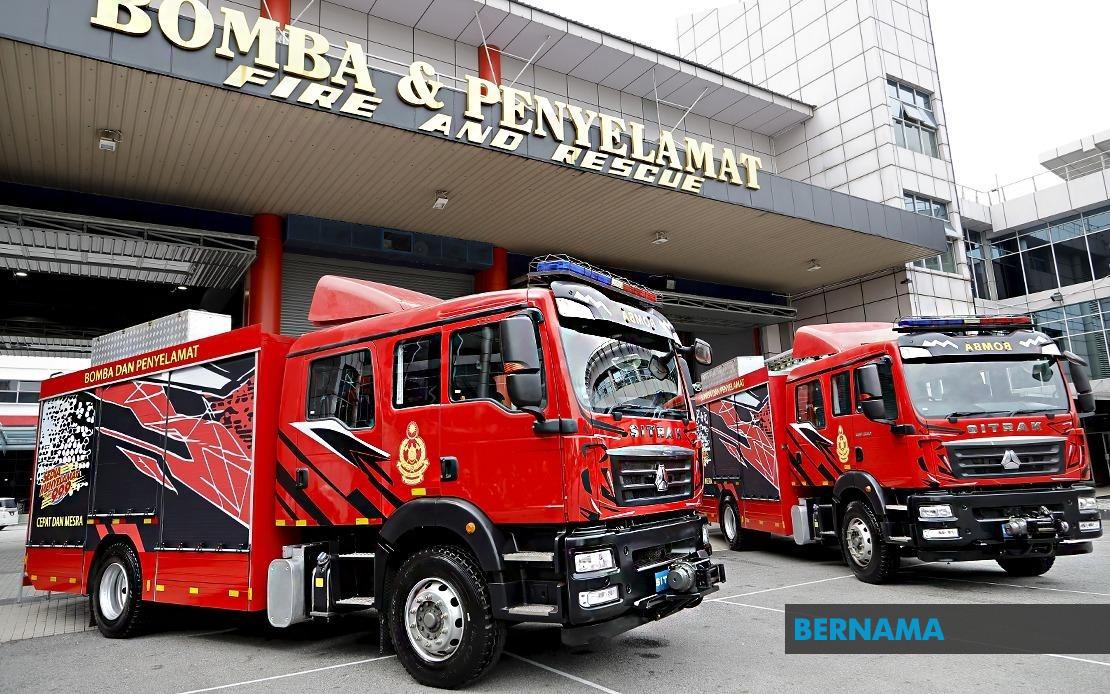
An earthquake measuring 5.7 on the Richter scale struck North Sumatra on July 22 at 12.18 pm, sending tremors across Malaysia's Klang Valley region. The seismic event, which originated approximately 55 kilometres southwest of Langsa, Indonesia, prompted Malaysia's Fire and Rescue Department (JBPM) to respond to three separate emergency calls from buildings in Kajang, Subang Jaya and Bandar Tasik Selatan. The incident underscores the region's vulnerability to seismic activity originating from the volatile Sumatran fault line and highlights the importance of Malaysia's emergency response infrastructure in managing natural disaster situations.
The first alert reached the JBPM at 12.31 pm, just thirteen minutes after the tremor struck, concerning the Kajang Municipal Council building. A second emergency report followed nine minutes later from INTI International College Subang, located along Jalan SS15. These rapid-response notifications demonstrated public awareness and the effectiveness of Malaysia's emergency reporting systems in mobilising rapid reaction to potential structural hazards. The third call came from Menara B2 Maju Link in Bandar Tasik Selatan at 12.32 pm, indicating that seismic effects were widely distributed across the metropolitan area.
Selangor JBPM's assistant director of operations, Ashrul Riezal Asbar, confirmed in statements that teams dispatched from Kajang and Subang Jaya stations conducted comprehensive inspections of the first two locations. Their detailed assessments revealed no cracks, fractures or any other indicators of structural compromise. The buildings were deemed fully safe for continued occupation, allowing normal operations to resume without disruption. This swift clearance was critical for maintaining confidence in the safety of commercial and institutional facilities across the region.
The Kuala Lumpur JBPM deployed personnel from the Sungai Besi station to investigate the tremors at the Menara B2 Maju Link office tower in Bandar Tasik Selatan. Upon arrival, responders discovered that building occupants had already exercised appropriate precautionary measures by evacuating to designated assembly points. The tremors, which lasted approximately fifteen seconds, had prompted prudent self-evacuation even before official guidance was issued. The subsequent structural survey conducted by the fire and rescue team confirmed the building remained sound with no damage detected, and it was cleared for reoccupancy shortly thereafter.
The incident generated considerable discussion across Malaysian social media platforms, particularly on Threads, where users from the Shah Alam area and surrounding neighbourhoods shared their experiences of the tremor. Many inhabitants had questioned whether the vibrations were genuine earthquake effects or merely local disturbances, illustrating how seismic events in distant locations can create uncertainty among the general public about the source of ground movement. The social media discourse served an informal information-sharing function, with residents confirming observations with colleagues and friends to establish consensus about what they had experienced.
One Threads user, 'nabilaishah', posted from Section 26 describing the tremors before describing how the situation normalised within minutes. Another user, 'nadiaxzailan', recounted initially attributing the shaking of her desk and workspace to her imagination while concentrating on work tasks. Only after consulting with colleagues and cross-referencing information on social media platforms did she become confident that the vibrations constituted a genuine seismic event rather than a localised disturbance. These narratives reflect how modern communication technologies facilitate rapid collective verification of environmental phenomena, particularly when official information may not be immediately available.
The North Sumatra earthquake sits within the broader context of seismic hazard in Southeast Asia. The Sumatran subduction zone remains one of the world's most active geological regions, responsible for some of the planet's most powerful earthquakes. While this particular 5.7 magnitude event was moderate in strength, it demonstrated that tremors originating from distant Indonesian tectonic activity can be felt across the Malaysia-Singapore border and throughout the Klang Valley region. Understanding these transmission patterns remains important for disaster preparedness planning and public communication strategies during seismic events.
Malaysia's response to this incident reflects the maturity of its emergency management systems. The JBPM's rapid deployment protocols, systematic building inspections and clear communication about structural safety all contributed to ensuring public confidence was maintained despite the unexpected ground motion. The department's willingness to provide detailed statements about inspection findings helped dispel alarm and prevented unnecessary disruption to business and institutional operations. Such professional handling of emergency situations strengthens public trust in official safety assurances.
For Malaysian businesses, particularly those in the Klang Valley's dense commercial and industrial zones, this event serves as a timely reminder of the importance of structural engineering standards and regular safety audits. Buildings in earthquake-prone regions require careful attention to design specifications that ensure stability even under significant seismic stress. The fact that multiple buildings in three different locations all passed safety inspections suggests that current Malaysian construction standards are performing adequately, though continued vigilance and periodic structural reviews remain prudent practices.
The incident also highlights the value of public education regarding earthquake safety protocols. The fact that occupants at Menara B2 Maju Link responded appropriately by evacuating to safe assembly areas indicates that workplace safety awareness is reasonably well-established in Malaysian commercial settings. However, ongoing training and updated emergency procedures remain important, particularly as the workforce evolves and new buildings are constructed. Regular earthquake safety drills in schools, offices and public facilities can further embed appropriate response behaviours across society.
Looking forward, the Klang Valley's sustained growth and increasing concentration of residential, commercial and institutional facilities in densely populated areas suggests that earthquake preparedness will remain an ongoing concern. The region's proximity to Sumatran seismic sources, combined with its status as Malaysia's economic heartland, makes it strategically important to maintain robust emergency response capabilities. Continued investment in early warning systems, building code enforcement and public communication during seismic events will be essential for protecting both lives and economic assets.

