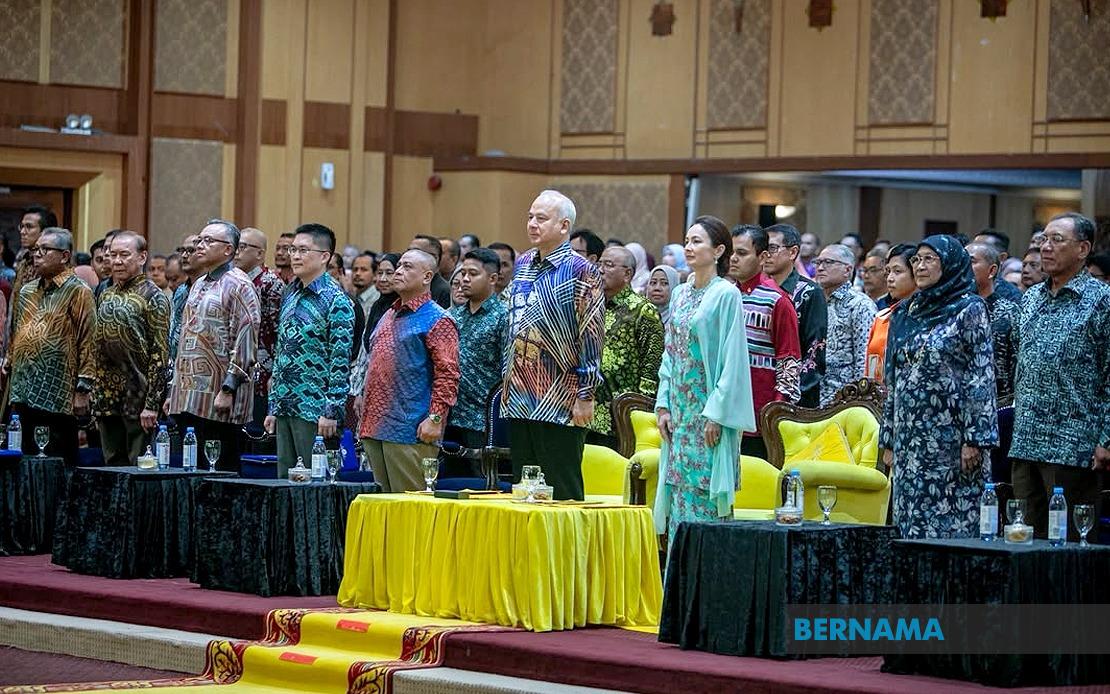
Sultan Nazrin Shah, the Sultan of Perak, presided over a grand celebration of the Perak-level 2026 Merdeka Month programme at Bangunan Perak Darul Ridzuan in Ipoh, underlining the royal household's commitment to nurturing patriotic fervour and talent development among the state's younger generation. The evening event drew significant political representation, with Raja Permaisuri Tuanku Zara Salim, Menteri Besar Datuk Seri Saarani Mohamad, and Deputy Education Minister Wong Kah Woh in attendance, reflecting the multi-level government backing for educational initiatives linked to national observances.
The scale of participation in this year's Merdeka Month programme exceeded expectations, with 214,095 student entries representing an impressive 83.6 per cent penetration across Perak's primary and secondary school system. Perak Education Department director Zulkafli Mohamed Mokhtar highlighted that these figures represented a 15 per cent surge compared with the previous year's participation levels, signalling growing momentum in what has become a flagship platform for identifying and nurturing emerging talent in the state. The breadth of engagement across the school-going population suggests that the programme has successfully transcended traditional barriers to participation and embedded itself within the educational calendar.
Beyond raw numbers, educators and administrators view the competition's expansion as evidence of a strategic shift toward holistic youth development. The programme now functions as more than a showcase for academic prowess or artistic ability; rather, it serves as an incubator for self-confidence, leadership potential, and the cultivation of diverse skill sets among students. By creating structured pathways for competition across multiple domains—from language and oratory to visual arts and performance—the initiative acknowledges that talent manifests in varied forms and that educational excellence encompasses far more than examination results.
The alignment of this programme with Malaysia's Education Plan 2026-2035 underscores a deliberate policy framework aimed at producing graduates equipped not only with knowledge but also with moral integrity, critical thinking capabilities, and patriotic consciousness. These competencies reflect long-standing concerns within Malaysian education discourse about whether schooling systems adequately prepare students to navigate complex societal challenges and serve as custodians of national heritage. By anchoring competitions within Merdeka Month observations, authorities implicitly reinforce the connection between personal excellence and civic responsibility.
Sultan Nazrin's active participation in awarding prizes and presenting recognition served multiple ceremonial functions. The presentation of a special achievement award to the Kinta Utara District Education Office, accompanied by a RM20,000 cash incentive, signals royal validation for district-level educational administrators and encourages continued investment in grassroots programme delivery. This recognition structure trickles down through the system, from district education offices responsible for coordination to individual schools and teachers facilitating student participation.
Competition outcomes reflected the diverse talent pool across Perak's education system. Ifwat Arrafi Mohd Amin from Sekolah Menengah Kebangsaan Tun Abd Razak in Bagan Datuk secured the upper secondary Malay Language Public Speaking championship, while E Johnnes Abysia from SMK Sungai Pari in Kinta Utara emerged victorious in the English public speaking category. Beyond these headline achievements, the programme encompassed numerous competitive categories spanning choral speaking, choral recitation, choir performance, caricature drawing, essay writing, poetry composition, and poster design across primary, lower secondary, and upper secondary levels. This architectural diversity ensures that students with varying aptitudes and interests can identify pathways for meaningful competition and recognition.
The ceremonial distribution of prizes across multiple categories, with Sultan Nazrin and Tuanku Zara jointly presenting awards, emphasised the institutional support for educational endeavours across the state hierarchy. This visible royal endorsement carries symbolic weight within Malaysian governance structures, where monarchical involvement in educational and cultural initiatives reinforces their importance within the broader development agenda. For participating schools and students, such royal recognition often translates into enhanced institutional prestige and can motivate greater future engagement.
For Malaysian policymakers and education administrators observing developments across states, Perak's experience offers instructive data about the viability of large-scale student participation programmes linked to national observances. The consistent year-on-year growth in participation suggests that when competitions are structured flexibly enough to accommodate diverse talents and interests, and when institutional support cascades from royal patronage through ministerial and departmental levels to individual schools, student engagement responds positively. This pattern holds relevance for similar initiatives planned elsewhere in the country or within ASEAN contexts where educational systems grapple with comparable developmental priorities.
The integration of cultural and linguistic competitions—particularly the prominence given to both Malay and English public speaking competitions—reflects Malaysia's bilingual educational reality and the strategic importance assigned to communication proficiency. In an era when regional economic integration and digital connectivity demand multilingual capabilities, these competitions serve practical as well as patriotic functions. Students who excel in language competitions develop skills with direct applicability to future employment prospects and cross-cultural engagement within Southeast Asia.
Looking beyond immediate event logistics, the Merdeka Month programme embodies a particular vision of national identity formation within Malaysian education. By celebrating achievement across academic and creative domains during the month dedicated to national independence commemoration, the state apparatus attempts to inculcate an understanding of patriotism as something intellectually and creatively expressed rather than merely formally observed. This approach acknowledges that younger generations often respond more authentically to narratives that connect national pride with personal achievement and creative expression than to didactic civics instruction.
The presence of Deputy Education Minister Wong Kah Woh at the Perak-level event signals federal-level oversight of state educational initiatives and ensures alignment with broader ministry strategic objectives. This governmental architecture reflects the federated nature of Malaysian education administration, where national frameworks cascade into state implementations while maintaining centralised standards and objectives. For stakeholders in other Malaysian states, the Perak model provides a template for similar programmes while allowing for local contextualisation reflecting regional educational profiles and demographic characteristics.
Moving forward, sustaining the momentum evidenced by this year's participation figures will require continued institutional commitment and resource allocation at multiple governance levels. The competitive landscape within Malaysian education is evolving, with students increasingly balancing multiple academic and extracurricular demands. Programmes that successfully capture student imagination and engagement typically do so because they offer genuine recognition, clear pathways for participation, and demonstrable career or personal development benefits. As Perak consolidates its Merdeka Month programme as a flagship educational initiative, maintaining this appeal across successive student cohorts will depend on responsive programme evolution and continued high-level patronage and support.

