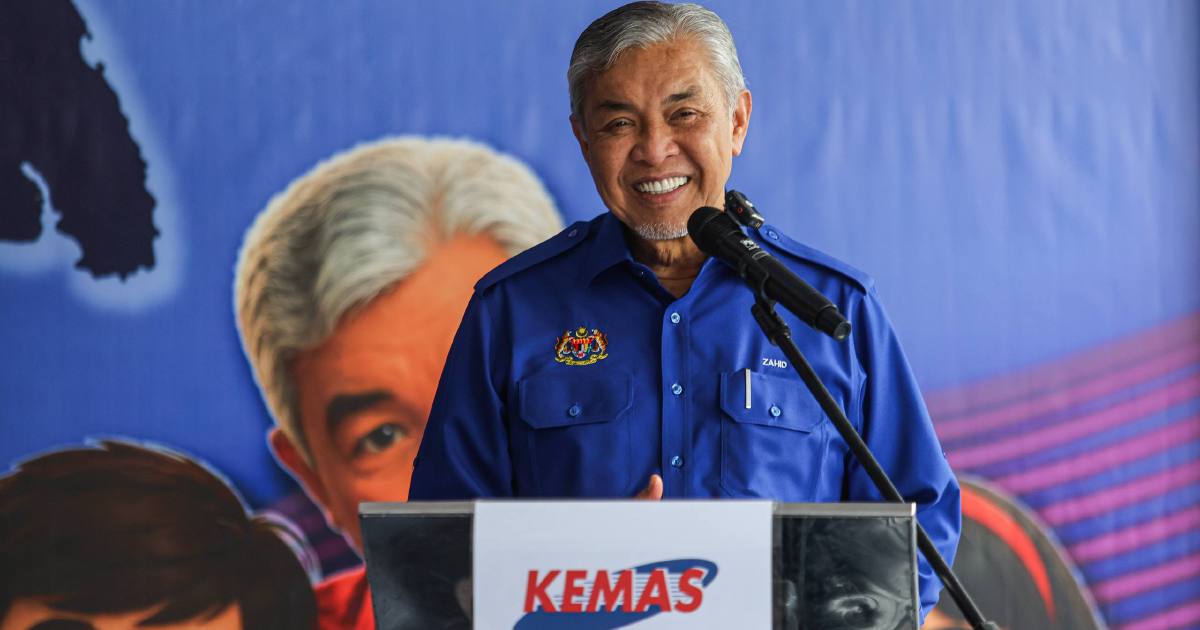
The political landscape at Malaysia's federal level appears increasingly insulated from the electoral pressures of state contests, as Deputy Prime Minister Datuk Seri Zahid Hamidi reassured supporters in Kota Tinggi that the collaborative relationship between Barisan Nasional and Pakatan Harapan remains fundamentally solid despite the competing interests at stake in the Johor state election campaign.
Zahid's statement reflects a pragmatic political reality that has gradually taken shape across Malaysian governance: the governing coalition architecture established at the federal level has developed sufficient institutional depth to withstand the cyclical stress of state-level electoral competition. This separation between federal cooperation and state-level rivalry has become a defining feature of contemporary Malaysian politics, marking a significant departure from earlier eras when state elections frequently destabilised national political arrangements.
The Johor election campaign itself represents precisely the type of electoral theatre that might conventionally threaten coalition cohesion. State contests naturally incentivise individual parties to pursue aggressive positioning and confrontational messaging to secure voter support. The Johor electorate, as one of Malaysia's most significant state blocs, carries substantial weight in political calculations across the peninsula. Yet Zahid's comments suggest that both BN and PH have established sufficient mutual interests at the centre to compartmentalise their state-level competition.
This compartmentalisation stems partly from the practical necessities of governance. At the federal level, BN and PH have collaborated on key legislative initiatives, budget allocations, and policy frameworks that serve both coalitions' interests and constituencies. Breaking this partnership over a state election would impose genuine costs on both sides—disrupting legislative schedules, undermining economic coordination, and creating uncertainty for investors and civil service planning. The institutional costs of coalition breakdown exceed the electoral gains from any single state contest.
The Malaysian political context that produced this arrangement itself deserves scrutiny. The 2022 federal election delivered a hung parliament that neither BN nor PH could control independently, creating mutual dependence. This dependence has paradoxically produced stability by forcing both coalitions to develop negotiation frameworks, dispute resolution mechanisms, and shared governance norms. Neither side possesses sufficient strength to dominate unilaterally, rendering the partnership rational rather than merely cosmetic.
For Johor specifically, the political competition remains genuine and consequential. The state contributes substantially to Malaysia's economic output and federal tax revenues, making its governance quality a matter of national concern. Both BN and PH legitimately contest for state leadership through competitive campaigns and policy differentiation. But this state-level rivalry no longer necessarily translates into federal-level animosity or coalition breakdown, representing a maturation of Malaysian political practice.
Southeast Asian observers watching Malaysia's political evolution will note this development with interest. Many regional democracies struggle to manage simultaneous competition at different governmental levels. The Philippines, Thailand, and Indonesia have all experienced situations where state or provincial conflicts destabilised national political arrangements. Malaysia's increasingly compartmentalised approach—preserving federal cooperation while permitting vigorous state competition—offers a potential model for other nations navigating similar challenges.
Yet Zahid's reassurance also carries implicit warnings. Maintaining this institutional separation requires continued good faith from both coalitions and careful management of symbolic politics. A state election defeat could theoretically tempt the losing coalition to revisit federal arrangements seeking compensation. Conversely, federal disputes could escalate into state-level recriminations. The current equilibrium remains dependent on both sides believing that the status quo serves their interests better than alternative configurations.
For Malaysian voters in Johor, Zahid's comments effectively signal that state electoral outcomes, while important for state-level governance, should not be misunderstood as referenda on federal coalition stability. The election will determine who leads Johor, but it will not determine whether BN and PH continue federal cooperation. This represents a significant conceptual shift from treating electoral contests as comprehensive political battles that encompass all governmental levels simultaneously.
The durability of this arrangement through the Johor campaign will itself constitute meaningful political data. If both coalitions successfully manage the campaign without major federal disruptions, accusations of betrayal, or coalition-threatening incidents, it will demonstrate that Malaysian political institutions have genuinely evolved beyond the zero-sum electoral patterns that characterised earlier periods. Conversely, any significant friction would suggest that the compartmentalisation remains fragile and susceptible to breakdown.
Zahid's statement, while designed primarily to reassure BN supporters, ultimately addresses a broader Malaysian political audience—signalling that the governing coalition recognises the distinction between state-level competition and federal partnership. This rhetorical move itself represents institutional maturation, distinguishing between campaign rhetoric appropriate for Johor voters and the more measured cooperation appropriate for federal governance.
Looking forward, this pattern will likely persist across other state elections scheduled for forthcoming years. Each contest will test anew whether BN and PH can maintain their federal partnership while campaigning vigorously against each other at state level. Success would consolidate a new normal in Malaysian politics; failure would revert the country toward previous patterns of electoral volatility affecting all governmental levels simultaneously.

