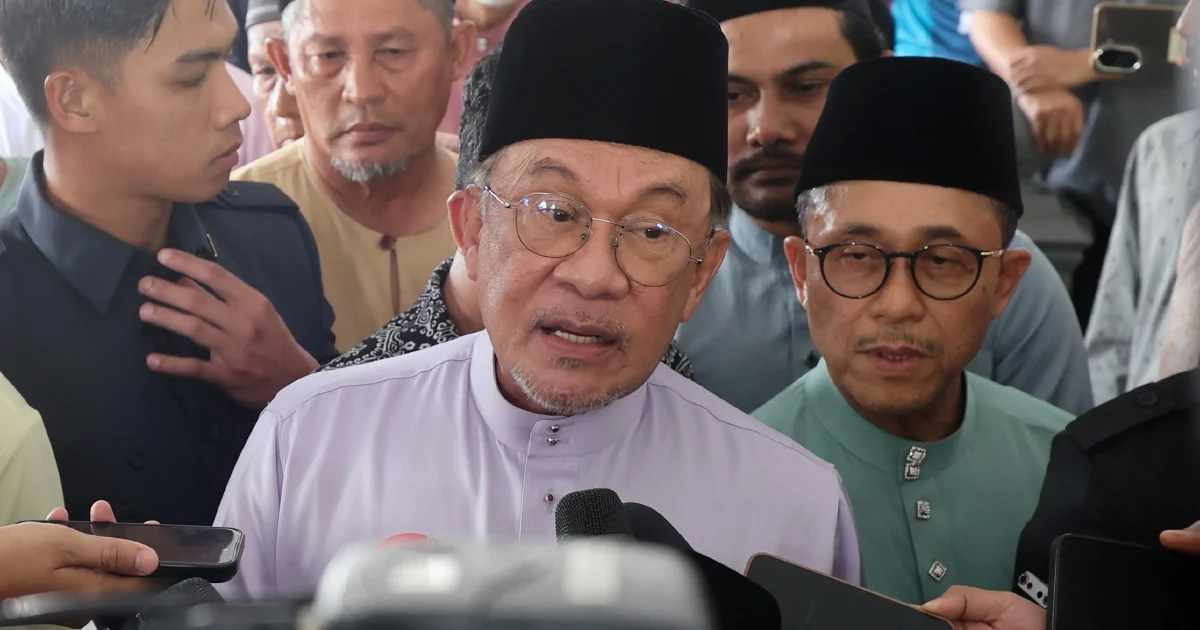
Prime Minister Datuk Seri Anwar Ibrahim has moved to allay concerns about recent proposals to elevate the institutional status of Syariah courts, emphasising that such measures pose no threat to the religious freedoms protected under the Malaysian Constitution. The clarification comes amid broader discussions about the role and authority of Islamic courts in Malaysia's plural legal framework, a sensitive issue that cuts across the country's delicate communal balance.
Anwar's statement, made in Putrajaya, represents an attempt to address anxieties among non-Muslim communities who worry that expansions of Syariah court jurisdiction or authority could have downstream effects on minority religious practices. The Prime Minister's reassurance underscores the government's commitment to the constitutional safeguards that reserve matters of Islamic law primarily to Muslim citizens, while preserving secular jurisdiction over civil matters affecting all citizens regardless of faith.
Malaysia's dual legal system—comprising civil courts and Syariah courts operating in parallel—has been a defining feature of the constitutional settlement since independence. The Syariah courts possess jurisdiction over Islamic personal law matters including marriage, divorce, inheritance, and religious offences for Muslims. This delineation has been intended to protect both the interests of the Muslim majority and the rights of non-Muslims to conduct their personal affairs according to their own laws and customs. Any restructuring of this arrangement necessarily invites scrutiny from all communities affected.
The timing of this statement is significant given recent years have witnessed periodic calls from certain quarters for expanded Syariah court authority, particularly in areas touching on Islamic criminal law and child custody matters. These proposals have sparked considerable debate among legal scholars, civil society organisations, and religious groups, with concerns raised about potential implications for constitutional guarantees of equality and freedom of conscience. Anwar's intervention suggests the government recognises the need to build consensus before proceeding with any institutional changes.
Strengthening the Syariah court system could theoretically encompass various reforms—from enhancing judicial efficiency and reducing case backlogs to improving facilities and training for Islamic judges, or clarifying the boundaries of Syariah jurisdiction. Such modernisation efforts do not inherently threaten non-Muslim rights, provided they remain focused on administrative and procedural improvements within the existing constitutional framework. The challenge lies in communicating this distinction clearly to a public often concerned about incremental shifts in power distribution.
From a governance perspective, the condition of Malaysia's Islamic courts does warrant attention. Many Syariah courts operate under resource constraints, face heavy caseloads, and would benefit from institutional reform. Addressing these practical limitations could serve the Muslim community more effectively while leaving the constitutional protections for non-Muslims entirely intact. This represents a pathway forward that multiple stakeholders might support, as it seeks efficiency without altering fundamental rights allocation.
For non-Muslim minorities in Malaysia, particularly Christian, Hindu, Buddhist, and other religious communities, the issue touches on broader questions about religious autonomy and state neutrality. These groups have developed their own institutional frameworks for personal law matters—religious marriage and family law administered through their own religious courts or councils. Any government action affecting the Islamic courts system naturally prompts these communities to examine implications for their own religious institutions and freedoms.
Anwar's role as Prime Minister is particularly notable in this context. As a longstanding advocate for constitutional reform and human rights, his reassurance carries weight with audiences concerned about religious liberalism. His statement signals that the government does not intend to use court system reforms as a vehicle for expanding religious law into spheres currently governed by secular principles, or for privileging Islamic jurisdiction over civil protections that apply to all citizens.
The practical implementation of any Syariah court reforms will likely determine whether this reassurance translates into lasting confidence. The government would need to ensure that enhancement efforts are genuinely limited to institutional strengthening, judicial training, case management improvements, and clearer articulation of jurisdictional boundaries. Transparent consultation with non-Muslim representatives, civil society, and religious minority leaders would further demonstrate commitment to protecting their interests.
Regionally, Malaysia's handling of this balance between majority religious interests and minority rights holds significance. Other Southeast Asian nations grapple with similar questions about integrating Islamic legal traditions within pluralist democracies. How Malaysia navigates Syariah court reform while maintaining confidence among its non-Muslim citizens could offer lessons for other Muslim-majority democracies managing religious diversity.
Moving forward, the government faces the challenge of substantiating this commitment through concrete policy and action. Any future reforms to the Syariah court system should be accompanied by explicit guarantees regarding constitutional protections for non-Muslims, clear jurisdictional boundaries, and inclusive consultation processes. Only through demonstrable actions can the government translate reassuring words into enduring institutional reality that safeguards the pluralistic character of Malaysian democracy.

