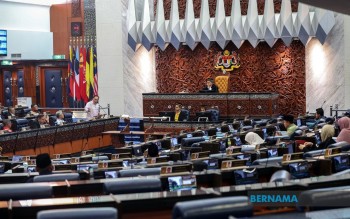
Malaysia's parliament has given the green light to the Statistics Bill 2026, a sweeping overhaul of the nation's statistical infrastructure that had remained largely unchanged for more than six decades. The legislation passed by voice vote on July 16 after consideration by 21 lawmakers, marking a decisive moment in the country's efforts to strengthen the credibility and coordination of its official data systems. The Ministry of Economy framed the approval as evidence of the government's determination to build a statistical framework capable of supporting modern, effective policymaking across all sectors of the economy.
The new bill will supersede the Statistics Act 1965, which has provided the legal scaffolding for Malaysia's statistical operations since independence. While that foundational law served its purpose through periods of rapid economic expansion and demographic change, proponents argue it has become inadequate for contemporary governance challenges. The 22-clause replacement legislation reflects extensive consultation and research spanning more than a decade, during which policymakers examined how other nations manage their statistical systems and identified gaps in Malaysia's current approach.
According to Minister of Economy Akmal Nasrullah Mohd Nasir, the bill represents far more than a routine legislative refresh. Instead, he characterised it as a pivotal investment in the nation's capacity to generate trustworthy, high-quality statistics that can drive informed decision-making. "Good data must lead to more accurate policies, more effective public services, and tangible benefits for the people," Akmal Nasrullah stated in his remarks following the parliamentary passage. This framing connects data governance directly to outcomes that affect ordinary Malaysians, linking abstract statistical infrastructure to concrete improvements in public administration and service delivery.
The legislative architecture preserves a crucial principle: ministries and agencies retain ownership of their administrative data and authority over their respective domains. Rather than centralising all data collection under a single bureaucratic roof, the bill establishes a coordinated system where the Department of Statistics Malaysia functions as an orchestrator of standards and best practices. This approach respects existing institutional arrangements while creating mechanisms for improved collaboration and information-sharing across government. Each sector remains responsible for generating statistics within its purview, but operates within a common framework designed to enhance comparability and reliability.
Among the bill's key provisions is the establishment of a National Statistics Council, a body intended to foster coordination among the various government agencies, state authorities, and other entities that contribute to Malaysia's statistical ecosystem. The legislation also codifies procedures for data collection and requests, sets out rules governing how statistics are published and communicated to the public, and establishes robust protections for data confidentiality. These provisions acknowledge growing public concern about data privacy while recognising the legitimate needs of researchers, policymakers, and businesses for access to statistical information.
The development of this legislation reflects an unusually inclusive consultation process. Between 2016 and the bill's tabling in parliament, the Ministry of Economy conducted seven rounds of stakeholder engagement that brought together representatives from ministries, federal and state government departments, local authorities, universities, industrial organisations, and the private sector. This extended dialogue ensured that the final product addressed concerns across Malaysia's diverse institutional landscape and incorporated perspectives from those who both generate and use statistics in their daily work.
International experience informed the bill's design substantially. Drafters incorporated international statistical standards and examined global best practices to ensure the legislation aligns with how developed and developing nations structure their statistical systems. This outward-looking approach positions Malaysia to participate more effectively in regional and international data-sharing initiatives and makes Malaysian statistics more readily comparable with figures produced by other countries. In an era of increasingly complex supply chains, tourism flows, and economic integration across Southeast Asia, this interoperability carries practical significance for businesses and policymakers alike.
The timing of the bill's passage reflects broader recognition within Malaysian policymaking circles that evidence-based governance has become essential to competitiveness and social progress. As the nation pursues ambitious economic diversification and digital transformation, the quality and timeliness of statistical information becomes ever more consequential. Businesses investing in new sectors need reliable data about market conditions and consumer behaviour. Public health authorities require robust epidemiological statistics. Environmental policymakers depend on accurate information about resource use and ecological conditions. The bill positions Malaysia's statistical apparatus to meet these expanding demands more effectively than the 1965 legislation could accommodate.
For Malaysian readers and regional observers, the bill's passage signals continuity of institutional modernisation efforts that have characterised recent years of governance reform. The legislation demonstrates that parliament can process complex administrative measures through deliberative processes that incorporate diverse stakeholder perspectives. It also underscores the government's assessment that investing in foundational systems—even those that operate largely behind the scenes and generate little public attention—constitutes essential groundwork for delivering superior public services and economic competitiveness.
The practical implications will unfold gradually as the Statistics Bill 2026 comes into force and implementation begins. Agencies will need to harmonise their procedures with the new framework, the National Statistics Council will establish operational protocols, and the Department of Statistics Malaysia will promulgate detailed guidance for data custodians across government. These transition steps will determine whether the legislative reform translates into tangible improvements in the timeliness, accuracy, and accessibility of official statistics. Success will mean that Malaysians and policymakers can rely on data that is not merely official, but genuinely trustworthy and fit for purpose in guiding consequential decisions about the nation's future.

