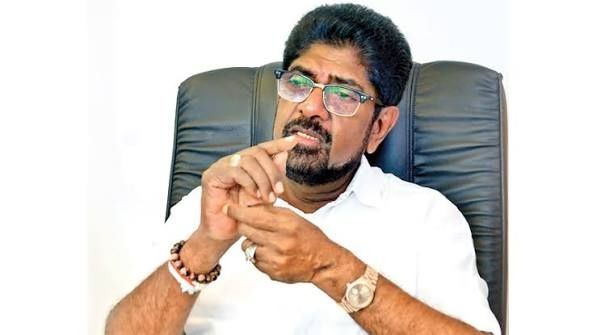
A former Sri Lankan government minister faced arrest this week following accusations that he participated in the theft of a priceless historical artefact from the palace grounds of the island nation's last Sinhala monarch. Keheliya Rambukwella was detained by authorities investigating the December 2022 removal of a decorated circular granite stepping stone, known locally as a "moonstone," which formed part of the symbolic entrance to the residence of Veera Parakrama Narendrasinghe, who reigned until 1739. The Commission to Investigate Allegations of Bribery or Corruption formally charged the politician with conspiring in the theft while holding ministerial office and subsequently obstructing police enquiries into the incident.
The moonstone represents far more than a simple architectural element in Sri Lankan cultural and historical consciousness. Such carved stones typically functioned as decorative thresholds at palace entrances and carry symbolic significance rooted in the island's rich Buddhist and royal heritage spanning centuries. The object's removal from what remains of the ancient palace complex constitutes not merely criminal theft but a violation of national patrimony, making Rambukwella's alleged involvement particularly damaging to public trust during an era when governance standards have come under intense scrutiny.
Beyond the archaeological crime, investigators have also charged Rambukwella with misusing government resources by employing six individuals for private commercial purposes while in public office. This secondary allegation points to a pattern of boundary-blurring between personal enrichment and state position that has become increasingly common in political corruption cases across South Asia, where senior officials routinely leverage their authority to advance private business interests.
Rambukwella's legal troubles extend considerably further than the palace theft. He currently faces separate court proceedings stemming from his tenure as health minister, during which authorities allege he authorised the procurement of counterfeit pharmaceuticals for state hospitals. Most shockingly, police evidence presented to the court indicates that a purported life-saving cancer medication supplied through official channels consisted merely of water, a failure that could have resulted in deaths among vulnerable patients dependent on legitimate treatments.
The false medicine scandal reached its apex during one of Sri Lanka's most acute public health crises in recent memory. When the country defaulted on approximately US$46 billion in foreign debt obligations in April 2022 and subsequently declared bankruptcy, the healthcare system experienced catastrophic medicine shortages. Patients requiring essential medications faced severe deprivation, and the state's inability to purchase genuine pharmaceuticals created dangerous gaps in cancer treatment and other critical therapies. This context transforms the counterfeit drug allegations from mere procurement fraud into a potential public health emergency affecting thousands of citizens.
Multiple senior officials within the health ministry apparatus have faced indictment related to the counterfeit drug affair, suggesting systemic corruption rather than isolated misconduct by a single administrator. The breadth of charges indicates that pharmaceutical suppliers, ministry personnel, and procurement officers may have collaborated in what amounts to a criminal enterprise operating within government structures. Such coordinated schemes typically emerge only when institutional safeguards erode completely and accountability mechanisms cease functioning.
For Malaysia and other Southeast Asian nations, the Rambukwella case illustrates the vulnerability of public institutions to exploitation by politically connected figures, particularly during periods of economic crisis. When countries face acute foreign exchange shortages and default on international obligations, desperation can motivate officials to compromise procurement standards and permit suppliers to substitute substandard or fraudulent products. The Malaysian government and regional peers have implemented various safeguards against such scenarios, yet the Sri Lankan experience demonstrates that even robust institutional frameworks require constant vigilance.
The timing and scale of Sri Lanka's economic collapse in 2022 created unprecedented pressures on state apparatus, and some officials apparently resolved those pressures through criminal conduct rather than transparent management. Rambukwella's arrest represents the anti-corruption authority's attempt to hold senior figures accountable, yet observers note that such prosecutions often occur long after damage has been inflicted on public health systems and national heritage. The delay between the December 2022 theft and August 2024 arrest suggests investigative processes moved deliberately, potentially allowing suspects time to conceal evidence or flee jurisdiction.
The sacred stone theft assumes particular significance as a violation of cultural property during a period when Sri Lanka faced economic devastation. That historical artefacts could be removed from palace grounds while the state lacked resources to purchase genuine medicines reflects a governance collapse affecting both institutional functioning and national dignity. For regional observers, the case underscores how financial crisis creates conditions permitting multiple categories of criminality simultaneously.
Moving forward, the outcomes of these proceedings will signal whether Sri Lanka's anti-corruption mechanisms retain sufficient independence and resources to pursue senior political figures through the full judicial process. Previous cases in the region have frequently stalled at prosecution stage when powerful figures mobilise political pressure or exploit procedural delays. Rambukwella's high profile and multiple serious charges mean this particular case will likely receive sustained international attention and potentially influence global perceptions of Sri Lanka's commitment to institutional reform during its post-bankruptcy recovery period.

