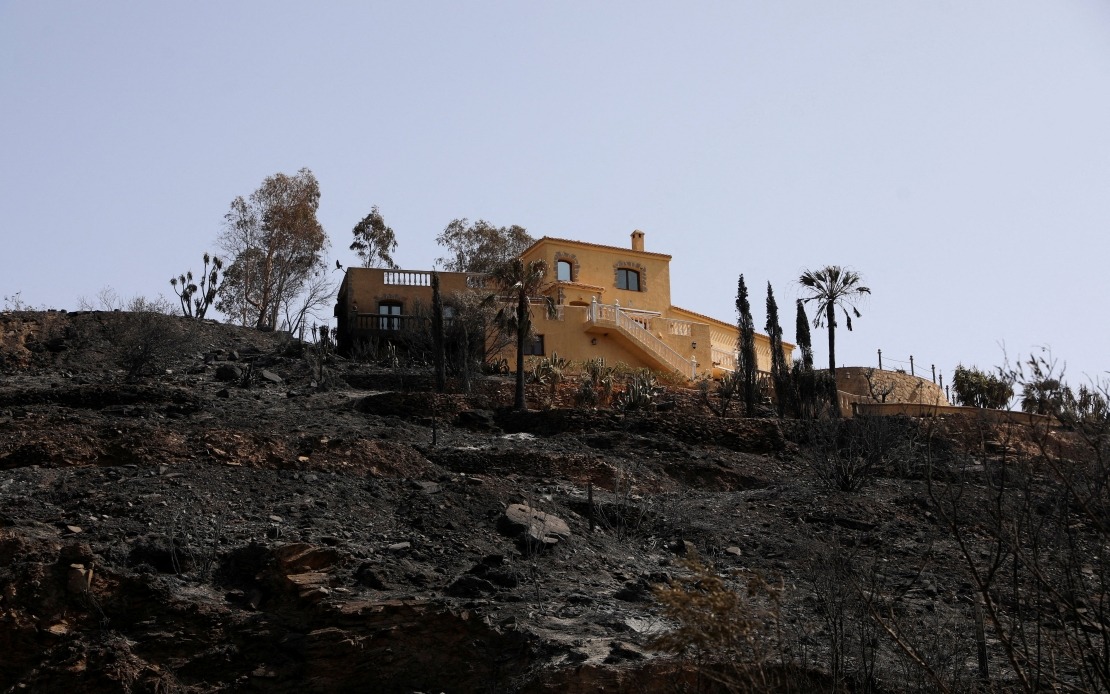
A massive wildfire that erupted in Spain's southeastern province of Almeria has claimed at least 13 lives, with regional officials confirming Sunday that the destructive blaze has been stabilised after days of intense firefighting efforts. The incident, which began on Thursday near the Los Gallardos municipality in the Andalusian region, represents one of the most serious fire emergencies in recent Spanish history and has drawn widespread international attention due to the significant number of foreign nationals affected by the disaster.
The scale of the environmental damage has been substantial, with the uncontrolled flames consuming approximately 7,000 hectares of land across the affected area. The conflagration's rapid spread initially overwhelmed local emergency response capabilities, forcing authorities to mobilise significant resources and coordinate cross-regional assistance. The stabilisation of the fire came after days of relentless work by firefighting teams, though this progress represents containment rather than complete extinguishment of the flames.
The human cost remains grimly apparent in the hospital system, where seven injured individuals continue to receive treatment, with three classified as serious cases requiring ongoing medical intervention. Additionally, ten people have been officially registered as missing, creating an atmosphere of uncertainty and distress among families awaiting news of their loved ones. The Almeria incident has particularly affected migrant communities and foreign residents living in the region, underlining the indiscriminate nature of natural disasters in affecting both local and international populations.
Juanma Moreno, the head of the Andalusian regional government, provided an assessment of the situation on Sunday, emphasising that while the fire has ceased its territorial advance and remains within its established perimeter, considerable effort must continue before authorities can declare the emergency fully resolved. His characterisation of this as the most severe wildfire in Andalusia's recent memory reflects the exceptional challenge posed by this particular disaster, which has tested the region's emergency infrastructure and response protocols.
Moreno used the crisis as a platform to highlight the escalating threat posed by climate change to Spain and the broader Mediterranean region. His public statements linking the wildfire's severity and difficulty of management to shifting climatic patterns resonated with scientific consensus about changing fire behaviour in southern Europe. The regional leader called for both ordinary citizens and government institutions to treat climate change with greater urgency and seriousness, framing wildfire preparedness as an essential element of long-term environmental policy.
The relationship between climate change and unprecedented wildfire conditions has become impossible to ignore in Mediterranean countries. Moreno's comments reflect growing recognition among Spanish political leaders that rising temperatures, extended drought periods, and altered weather patterns are creating conditions for larger and more uncontrollable fires. These fires are increasingly difficult to suppress using traditional firefighting methods, requiring constant evolution of emergency response strategies.
Evacuation measures have progressed in phases as the emergency situation improved. Approximately 600 residents received permission to return to their homes on Saturday, with the stabilisation announcement on Sunday enabling authorities to grant the remaining roughly 1,000 evacuees authorisation to return. This phased repatriation reflects the gradual reduction in immediate danger as the fire's advance was halted, though structural damage assessments and potential hazards from unstable vegetation remain ongoing concerns.
Investigations into the fire's origin are continuing, with authorities pursuing multiple lines of inquiry. The leading hypothesis suggests that the blaze may have originated from the collapse of an electricity pole or associated electrical cable, a theory grounded in circumstantial evidence gathered from the initial outbreak location. If confirmed, this could point toward infrastructure maintenance issues or weather-related damage to electrical systems. The investigation's outcome will be significant for determining responsibility, informing future prevention strategies, and potentially influencing utility company protocols across the region.
For Southeast Asian observers monitoring climate and disaster management trends, the Almeria wildfire offers sobering lessons about the escalating impacts of environmental change on developed nations. As Mediterranean Europe grapples with increasingly severe fire seasons, the region's technological resources and sophisticated emergency management systems face mounting pressure. The incident underscores that even wealthy, well-organised societies struggle to contain modern megafires, a reality with implications for less-resourced regions in Asia facing similar climate trajectories. Spain's experience suggests that adaptation strategies must extend beyond firefighting techniques to encompass urban planning, evacuation protocols, and public awareness campaigns calibrated to a new reality of larger, faster-moving wildfires.

