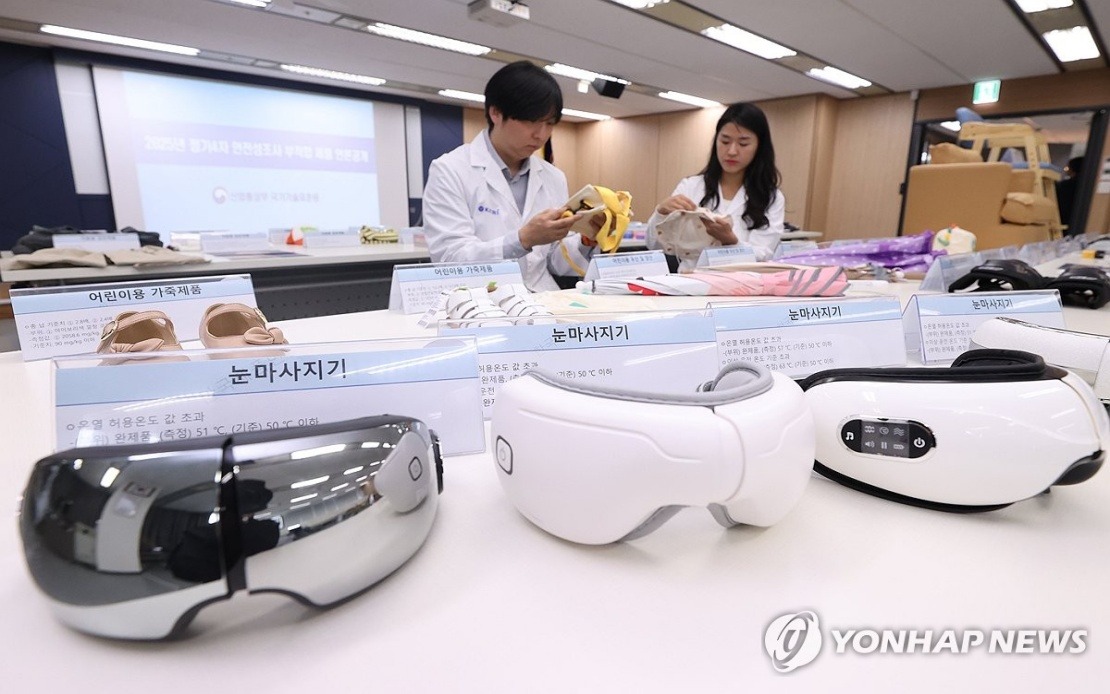
South Korea's product safety landscape deteriorated markedly in 2025, with official data revealing a sustained upward trend in consumer goods recalls that reflects mounting challenges in regulating cross-border e-commerce. The Fair Trade Commission disclosed Monday that 2,656 recall cases were documented throughout the year, exceeding the 2,537 cases recorded in 2024 by approximately 5 per cent. This steady climb underscores a persistent vulnerability in how regulatory authorities manage product safety across increasingly complex supply chains, particularly those channelled through online distribution networks that have become the primary shopping destination for millions of South Korean consumers.
The composition of violations driving these recalls tells a more troubling story than raw statistics alone suggest. Consumer Act breaches—the foundation of South Korea's product safety framework—surged dramatically to 851 cases, representing a 42 per cent year-on-year increase that dwells far above the overall recall growth rate. This disproportionate surge indicates that manufacturers and importers are not merely facing isolated safety lapses but systemic non-compliance with established regulatory standards. The phenomenon appears concentrated among imported goods, where oversight mechanisms prove less effective and enforcement becomes logistically complicated by jurisdictional boundaries and the sheer volume of cross-border transactions occurring daily through digital channels.
What distinguishes the 2025 data from previous years is the explicit role of online marketplaces as conduits for previously-recalled products entering South Korean homes. The Fair Trade Commission identified a specific pattern wherein goods already banned or withdrawn from sale in their countries of origin reappear on domestic e-commerce platforms, often at price points that make them attractive to cost-conscious consumers. This phenomenon reveals a critical vulnerability in how third-party marketplace operators vet their merchants and product inventories, particularly when dealing with international sellers operating across multiple jurisdictions with varying regulatory demands. The challenge intensifies as direct purchasing by South Korean consumers from overseas retailers—leveraging international delivery services—further circumvents traditional import checkpoints where safety certifications would normally be verified.
The industrial consumer goods category emerged as the most problematic sector, generating 1,282 recall cases and representing an 8.6 per cent increase from the prior year. This broad category encompasses everything from household appliances to personal care devices, products that directly interface with daily family life and carry significant injury potential if defective. The prevalence of industrial goods recalls suggests that manufacturers competing in price-sensitive markets may be cutting corners on safety testing and quality assurance processes, emboldened by the difficulty authorities face in policing thousands of online vendors simultaneously. Each recall represents a failure point where a potentially hazardous product reached a consumer before regulatory intervention, highlighting the lag time inherent in reactive safety systems.
Pharmaceutical and medical device recalls presented a contrasting picture that offers modest reassurance in one domain while raising concerns in another. Recalls involving medicines and herbal products declined by 13.5 per cent to 295 cases, suggesting that stringent approval processes for pharmaceutical distribution and consumers' relative caution when purchasing health products may be yielding measurable benefits. Conversely, medical device recalls climbed 8.5 per cent to 308 cases, indicating that products such as diagnostic equipment, therapeutic devices, and health monitoring tools are increasingly subject to safety problems. The distinction matters significantly because medical devices occupy a regulatory grey zone in many countries; items classified as wellness products rather than pharmaceuticals often face minimal pre-market scrutiny, allowing defective goods to proliferate through loosely regulated channels.
The Fair Trade Commission's response strategy hinges upon collaborative surveillance and preemptive sales blocking, reflecting an acknowledgment that traditional regulatory approaches prove insufficient in the digital age. By coordinating with relevant government agencies and requesting online marketplace operators to prevent listings of recalled items, authorities attempt to close the barn door after horses have escaped. This approach requires marketplace platforms—economically incentivized to minimize friction and maximize transaction volume—to invest substantially in compliance infrastructure and product verification systems. However, the sheer scale of transactions occurring daily across multiple platforms, combined with the ingenuity of merchants using alternative product descriptions or newly created accounts, ensures that enforcement remains perpetually reactive rather than preventive.
For Malaysian consumers and regulators, South Korea's experience offers instructive warnings about the pace at which e-commerce globalisation can outstrip safety infrastructure. Malaysia's own online marketplace ecosystem mirrors South Korean dynamics, with cross-border sellers and direct international purchases increasingly dominating consumer behaviour, particularly among younger demographics. The 42 per cent surge in Consumer Act violations specifically highlights how regulatory frameworks designed for traditional retail channels struggle to govern digital transactions where physical inspections prove difficult and merchant accountability becomes diffuse. Southeast Asian nations, lacking the institutional resources and enforcement capacity of South Korea's Fair Trade Commission, face even steeper challenges in managing imported hazards before they reach vulnerable populations.
The underlying economic drivers of this recall phenomenon merit deeper analysis. Import prices have incentivized both consumers and retailers to source goods from manufacturers willing to cut safety corners, creating a race-to-the-bottom dynamic where compliance becomes competitively disadvantageous. Online marketplaces amplify this problem by enabling previously-unmarketable products—those rejected by traditional retailers or banned in origin countries—to find niche buyers through algorithmically-driven recommendations and low visibility to regulatory scrutiny. The consumer's desire for affordable products intersects with merchant incentives to avoid costly safety certifications, producing an equilibrium where hazardous goods persistently circulate through supply chains despite regulatory warnings.
Government responses must contend with fundamental limitations embedded in digital commerce architecture. Requesting marketplace operators to block sales places responsibility upon private corporations whose business models depend upon minimal interference with vendor activity. The Fair Trade Commission's cooperation model assumes good faith compliance from platforms often headquartered abroad, operating under different regulatory regimes, and motivated primarily by market share and transaction fees rather than consumer welfare. Meaningful progress likely requires regulatory innovation—such as mandatory pre-listing safety certifications, vendor bonding requirements, or liability shields stripped from platforms failing to implement adequate vetting procedures—rather than relying upon voluntary industry cooperation that has demonstrably failed to prevent the observed 5 per cent annual increase in recalls.

