South Korea stands on the cusp of a profound cultural shift as the nation's dog meat industry approaches its final sunset. Come February 2027, the breeding, slaughter and commercial sale of dog meat will become illegal across the country, marking the end of a practice deeply woven into Korean history and tradition. The landmark legislation, which passed in January 2024 after decades of contentious public debate, represents a turning point for a nation grappling with modern animal welfare concerns against the weight of centuries-old customs.
The transition has already transformed the landscape considerably. According to South Korea's Ministry of Agriculture, Food and Rural Affairs, more than 80 per cent of the approximately 1,500 known dog meat farms had ceased operations by May 2026, leaving fewer than 300 farms still functioning. These figures underscore how rapidly the industry is contracting under the pressure of impending legislation. The government cushioned the blow through a three-year grace period that allowed farmers time to wind down their operations responsibly. To facilitate this transition, authorities offered compensation of up to 600,000 won (US$426) per dog, supplemented by low-interest loans and comprehensive support programmes including job-transition assistance and re-employment counselling. This carrot-and-stick approach reflects Seoul's determination to manage the economic fallout while advancing animal welfare objectives.
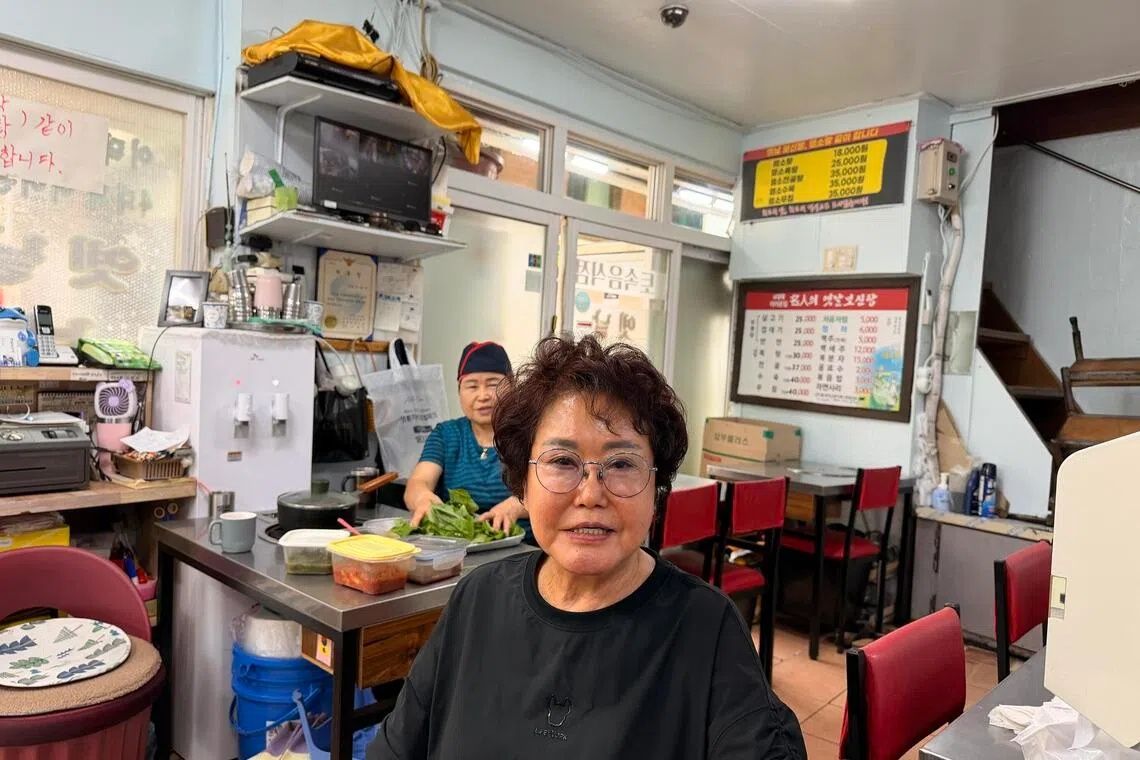
For restaurant proprietors who have built their livelihoods around dog meat cuisine, the impending deadline represents an existential threat. Lee Deok-sung, who has operated a dog meat stew restaurant near Seoul's Dongdaemun Market for 45 years, characterises this summer as a commercial catastrophe. The timing is particularly cruel, as South Korea's traditional boknal—the three hottest days of summer when dog meat consumption peaks—falls on July 15, July 25 and August 14 this year. These dates mark what may be the final chapter of a ritual stretching back through Korean history. Lee has watched her customer base erode substantially, forcing her to raise prices from 16,000 won to 25,000 won per bowl of boshintang, the spicy stew traditionally consumed during summer heat waves. Yet higher prices only further depress demand in an increasingly challenging environment. She confesses to barely breaking even on days when she cannot sell all her inventory before closing, with genuine uncertainty about her financial viability once the ban takes effect.
Across a narrow alley, Lee Kyung-ja operates another venerable boshintang restaurant that has served the neighbourhood for over four decades. Her situation mirrors her competitor's predicament, with some days bringing virtually no customers. Both establishments attempted to adapt by introducing black goat stew early in 2026, banking on the meat's textural and flavour similarities to dog meat. However, this pivot has largely failed to resonate. Regular patrons express clear preference for the traditional protein, citing superior taste alongside persistent recommendations from traditional Korean medicine practitioners who continue prescribing dog meat to recuperating patients. For Lee Kyung-ja, now 75 years old, the prospect of rebuilding a customer base around an unfamiliar product feels overwhelmingly daunting as age advances. She contemplates closing entirely if circumstances worsen further once the prohibition arrives.
The economics of the dog meat trade have shifted dramatically as supply constraints take hold. A vendor at Seoul's Gyeongdong Market, one of the few remaining distribution points, reported that prices have nearly tripled since 2024, climbing from approximately 20,000 won per kilogram to 60,000 won today. This explosive price inflation reflects the scarcity created by farm closures, yet simultaneously undermines the affordability argument that once justified the industry during periods of economic hardship. The vendor declined further comment, recognising the sensitivity surrounding the issue in contemporary South Korean society—a stark contrast to a few years prior when dog meat consumption, while controversial, remained more openly discussed.
The historical roots of Korean dog meat consumption run surprisingly deep, complicating efforts to dismiss the practice as merely marginal or recent. Historical records trace the tradition back at least to the Joseon Dynasty, with one of the most prominent references appearing in the Donguibogam, a 17th-century medical compendium compiled by royal physician Heo Jun. This influential text characterises dog meat as a warming food capable of replenishing energy and vitality—a medicinal framing that persists in folk medicine even today. The practice became substantially more widespread during Japan's colonial occupation from 1910 to 1945 and intensified during the aftermath of the Korean War's devastation, when poverty and severe food shortages compelled many Koreans to pursue inexpensive protein sources. This historical trajectory means that modern Koreans cannot entirely dismiss dog meat consumption as a foreign import or aberrant custom, but rather as an integral thread in the nation's survival narrative.
Yet contemporary South Korea has evolved substantially beyond those circumstances of desperation. The country now ranks among the world's wealthiest nations, with an abundance of alternative protein sources readily available. A younger generation of South Koreans increasingly views dog meat consumption through an animal welfare lens, particularly as pet ownership has surged and cultural attitudes toward canines have fundamentally shifted. The contrast between rescue efforts and consumption practices has become increasingly untenable for many citizens. Annie Ko, a 45-year-old musician, exemplifies this new sensibility. After witnessing a Labrador puppy named DeeJay trembling in her arms at a rescue operation in 2015, she immediately adopted him despite never having owned a pet previously. DeeJay had spent his first three months confined to a cramped cage on a dog meat farm in Wonju, about two hours' drive from Seoul, before rescue workers intervened. Ko was then interpreting for the non-profit organisation Humane World for Animals, which has extracted approximately 2,800 dogs from meat farms and facilitated their adoption overseas in the United States, Britain and Canada. DeeJay remains the sole survivor from his litter to stay in South Korea; his littermates likely faced a far grimmer fate.
The impending February 2027 deadline represents a watershed moment for South Korean society, reflecting broader tensions between tradition and modernity, cultural continuity and animal ethics. Restaurant owners face grim prospects, lacking clear alternative income pathways despite government support programmes. Black goat meat, the most obvious substitute, fails to satisfy the historical and medical preferences embedded in consumer psychology. Some proprietors may attempt to pivot toward other cuisines, yet this requires substantial retraining and business model restructuring at an age when many proprietors have limited energy for reinvention. Meanwhile, rescued dogs like DeeJay represent a counternarrative—evidence that these animals can thrive as companions rather than commodities. As South Korea approaches February 2027, the nation's final "dog days" of summer in 2026 will carry poignant historical weight, marking the end of an era even as the country moves toward more prosperous and, for many citizens, more ethically defensible economic horizons.

