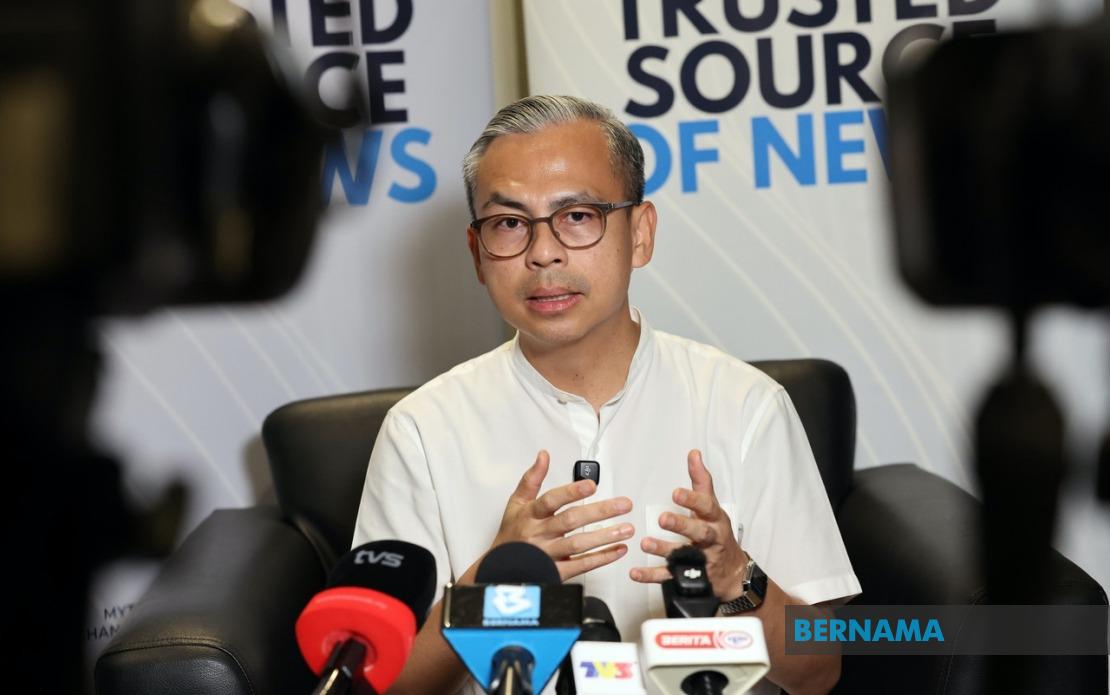
Communications Minister Datuk Fahmi Fadzil has sounded an urgent alarm about the role social media platforms must play in safeguarding the integrity of the 16th Johor state election, demanding that these companies abandon passive compliance and instead actively police the spread of electoral misinformation.
Speaking after a visit to the Malaysian National News Agency (Bernama) operations centre in Johor Bahru on July 7, Fahmi expressed particular anxiety about the final polling weekend, emphasizing that the danger of false narratives circulating unchecked grows exponentially as results begin emerging. The minister's concerns centre on a specific vulnerability: unverified claims about electoral outcomes or individual seat victories spreading rapidly through social networks could sow confusion and undermine public confidence in the democratic process before official tallies are finalized.
While acknowledging that major social media platforms maintain formal policies prohibiting the dissemination of false information, Fahmi argued that these commitments remain hollow without rigorous monitoring and swift enforcement mechanisms. The distinction he drew is crucial for understanding the misinformation challenge: platforms have established the rules but frequently fail to implement them with sufficient speed and consistency, particularly during high-stakes political moments when viral propagation accelerates dramatically.
The Communications Minister outlined an expectation that platform providers collaborate directly with the Malaysian Communications and Multimedia Commission (MCMC) to establish rapid-response protocols for identifying and removing election-related falsehoods. This proposed coordination reflects growing recognition across the region that combating digital misinformation requires public-private partnerships where regulatory bodies and technology companies function as aligned stakeholders rather than adversaries.
Fahmi also highlighted a secondary dimension of the misinformation problem that often receives less attention but carries significant impact: the misuse of media logos and official branding to fabricate credible-appearing graphics. Working with the Malaysian Media Council, MCMC has already begun addressing this vector, developing systems to identify and remove fraudulent visual content claiming spurious official origin. However, the minister cautioned that this represents only partial progress, addressing perhaps half the challenge.
The remaining complexity stems from user-generated content that social media users themselves produce and share, whether through images, videos, or written commentary containing unverified election claims. This organic misinformation—spread by ordinary citizens rather than coordinated disinformation campaigns—proves far more difficult to combat systematically, as platforms must balance content moderation against protecting legitimate political speech. Fahmi's appeal for platforms to "take action more quickly" reflects frustration that existing systems move too slowly to intercept falsehoods before they achieve significant viral reach.
Notably, the MCMC had not yet received formal complaints regarding social media campaign misconduct as of the minister's statement, suggesting either that violations remain beneath reporting thresholds or that aggrieved parties have not yet mobilized formal complaint mechanisms. This relative quiet before polling may reflect the calm before an anticipated surge in activity once results begin materializing.
Shifting focus to mobilization strategy, Fahmi underscored that Pakatan Harapan's campaign for the final week concentrated on encouraging voters working or studying outside Johor to return home for the Saturday ballot. This targeting reflects demographic realities in Malaysian electoral contests: younger voters, migrant workers, and students distributed across multiple states represent a mobile electorate whose turnout significantly influences outcomes, particularly in swing constituencies.
The government and allied private transport companies have coordinated to facilitate voter return, with bus operators offering special packages designed to reduce the logistical burden of long-distance travel during the election weekend. Such initiatives acknowledge that structural barriers—distance, transportation costs, time off work—depress turnout among otherwise engaged citizens, making accessibility investments strategically important for reaching desired constituencies.
Fahmi also referenced the Youth and Sports Skills Training Institute (ILKBS) providing student leave specifically for voting purposes, and urged employers in retail and food-and-beverage sectors to grant scheduling flexibility on polling day. These appeals target private-sector actors whose decisions substantially affect practical voting accessibility for younger workers and students, sectors typically supporting opposition parties in Malaysian elections.
Regarding turnout projections, the Communications Minister aspired to surpass the 60 percent participation threshold, framing high turnout as indicative of civic health and democratic legitimacy. His appeals to parents to encourage their children to vote resonated beyond mere procedural participation, invoking the multi-year consequences of electoral choice—a four to five-year governmental mandate in Johor's case—as rationale for families to prioritize the voting exercise.
The broader context illuminates why social media misinformation carries particular weight during Malaysian state elections: these contests often prove highly competitive, with narrow margins between major coalitions in multiple seats. False information regarding results, candidate viability, or voting logistics can theoretically influence close races, making the final 48 hours before and immediately following polls an especially volatile window for electoral integrity.

