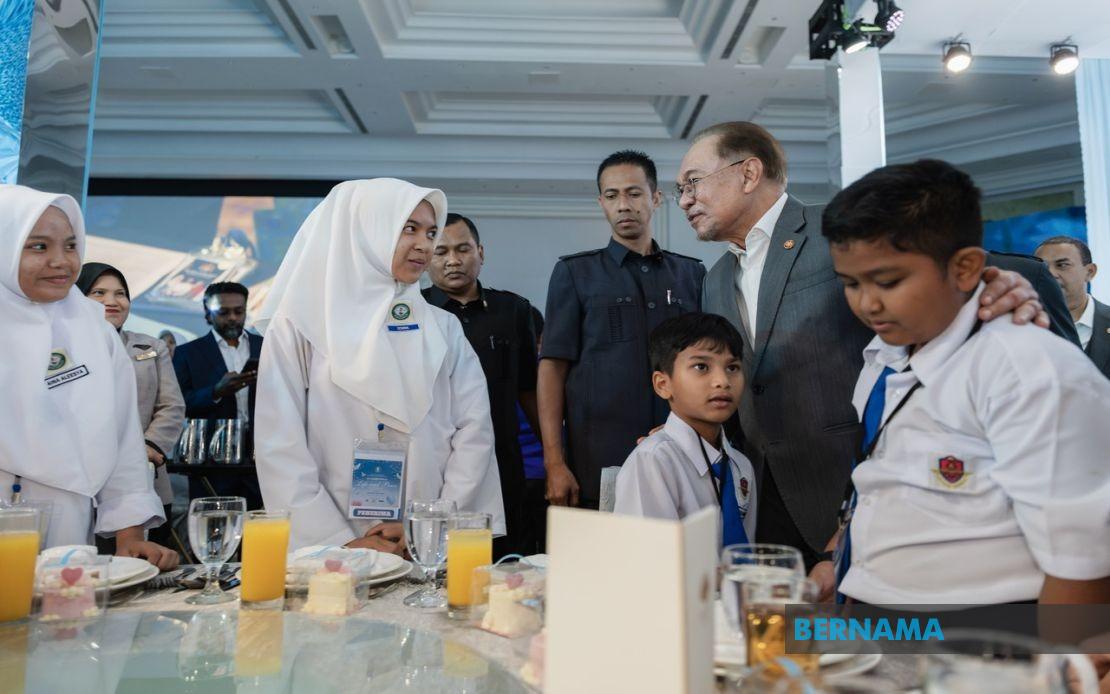
Prime Minister Datuk Seri Anwar Ibrahim has underscored a fundamental principle in education that extends far beyond examination results, emphasizing that intellectual capability must be paired with ethical character if children are to become truly valuable members of society. Speaking at a gathering of 700 schoolchildren from 47 schools across Kuala Lumpur and Putrajaya, Anwar articulated a vision of childhood development that prioritizes compassion and respect alongside academic prowess, a message that carries particular weight amid growing concerns about behavioural issues in Malaysian schools.
Addressing the assembled pupils during the "Celebration of Life and Peace" event organised by the ERM Foundation, Anwar posed a challenging rhetorical question to the young audience, asking what purpose schooling truly serves if not to cultivate goodness and knowledge alongside intellectual development. His remarks reflected mounting awareness among Malaysia's leadership that the education system must grapple with its dual responsibility to produce both knowledgeable and morally grounded citizens. The Prime Minister's intervention suggests that behavioural challenges in schools, particularly interpersonal aggression, occupy a significant place on the national policy agenda.
The core of Anwar's message centred on the dangers of disconnecting academic success from ethical conduct. He illustrated his point with stark clarity, explaining that a child who excels in their studies but simultaneously engages in bullying or harm toward peers represents a failure of education in its broadest sense. This framing transforms school bullying from a mere disciplinary matter into a systemic educational concern that undermines the foundational purpose of schooling itself. For Malaysian educators and policymakers, this emphasis suggests a need to integrate anti-bullying initiatives more deeply into academic curricula and school cultures rather than treating such behaviour as an isolated problem.
Anwar directly appealed to the young people present, encouraging them to make a personal commitment to studying diligently while simultaneously honouring their teachers through respect and their parents through love and prayer. This multilayered appeal touched on the traditional values deeply embedded in Malaysian society—filial piety and respect for authority figures—while recontextualizing them within a modern framework of personal development. By framing such behaviour as integral to becoming "useful members of our society," the Prime Minister connected individual moral conduct to broader national development objectives.
The event itself embodied the charitable impulses Anwar was advocating for among the children. Each attending schoolchild received RM500 in cash assistance, reflecting practical support that extended beyond the symbolic realm of the celebration. The provision of a special feast and entertainment activities created an occasion that acknowledged the significance of childhood and the importance of celebrating formative moments in young people's lives. This approach demonstrated that the message about kindness and compassion was being reinforced through tangible acts of generosity.
ERM Foundation founder Xin'er articulated a complementary perspective, emphasizing that celebrations such as this carried particular importance for children facing health challenges or other adversities who might otherwise miss such experiences. Her remarks highlighted the intersection between privilege and compassion, suggesting that those fortunate enough to have secure childhoods have a responsibility to acknowledge and address the disparities facing their peers. This perspective aligns with Anwar's emphasis on children becoming conscious members of a broader society rather than merely pursuing individual achievement.
Xin'er's stated wish that every child in attendance grow up peacefully, without exposure to conflict or serious illness, touched on fundamental aspects of child welfare that extend beyond the school environment into broader social and geopolitical contexts. For Malaysian readers, such wishes carry resonance in a region where economic inequality and access to resources remain persistent challenges. The founder's emphasis that birthdays should be filled with "peace, love, and happiness" and enriched by more than material gifts reflected values that transcend commercial consumerism and speak to deeper human needs.
The presence of Anwar's wife, Datuk Seri Dr Wan Azizah Wan Ismail, and his political secretary, Datuk Azman Abidin, at the event underscored its importance within government circles and suggested that Malaysia's top leadership takes seriously the agenda of childhood development and moral education. Such high-level participation at an event focused on children's welfare sends a signal about governmental priorities and lends institutional weight to the messages being conveyed about the importance of character education.
For Malaysian schools and parents, Anwar's message carries practical implications for how educational success should be measured and pursued. Rather than optimizing solely for academic rankings and examination performance, the Prime Minister's remarks suggest a need to evaluate schools based on their capacity to produce young people who combine intellectual competence with emotional maturity and ethical awareness. This represents a subtle but significant reframing of educational excellence that education administrators and parents alike must consider when assessing school performance.
The emphasis on rejecting bullying specifically addresses a persistent challenge in Malaysian educational institutions. Research globally has documented the significant psychological and academic impacts of bullying on both perpetrators and victims, yet schools frequently struggle to address such behaviour comprehensively. By elevating anti-bullying efforts to the level of a national priority articulated by the Prime Minister, Anwar has potentially created political space for schools to implement more robust interventions without viewing such measures as distractions from academic pursuits.
The intergenerational framing of Anwar's appeal—casting himself affectionately as "grandpa" to the assembled children—employed a rhetorical device that emphasized continuity between adult leadership and childhood experience. This approach bridged the hierarchical distance inherent in a prime ministerial address, creating a more intimate connection with the young audience while simultaneously positioning Malaysia's political leadership as invested in their personal development and future trajectory.
Looking forward, the convergence of government attention, charitable initiatives, and public messaging around childhood development and moral education suggests that Malaysia may be moving toward a more integrated approach to schooling that refuses to separate intellectual from ethical development. Whether this translates into sustained policy changes and resource allocation remains to be seen, but Anwar's public commitment at this high-profile event establishes a foundation upon which educators and policymakers can build more comprehensive initiatives.

