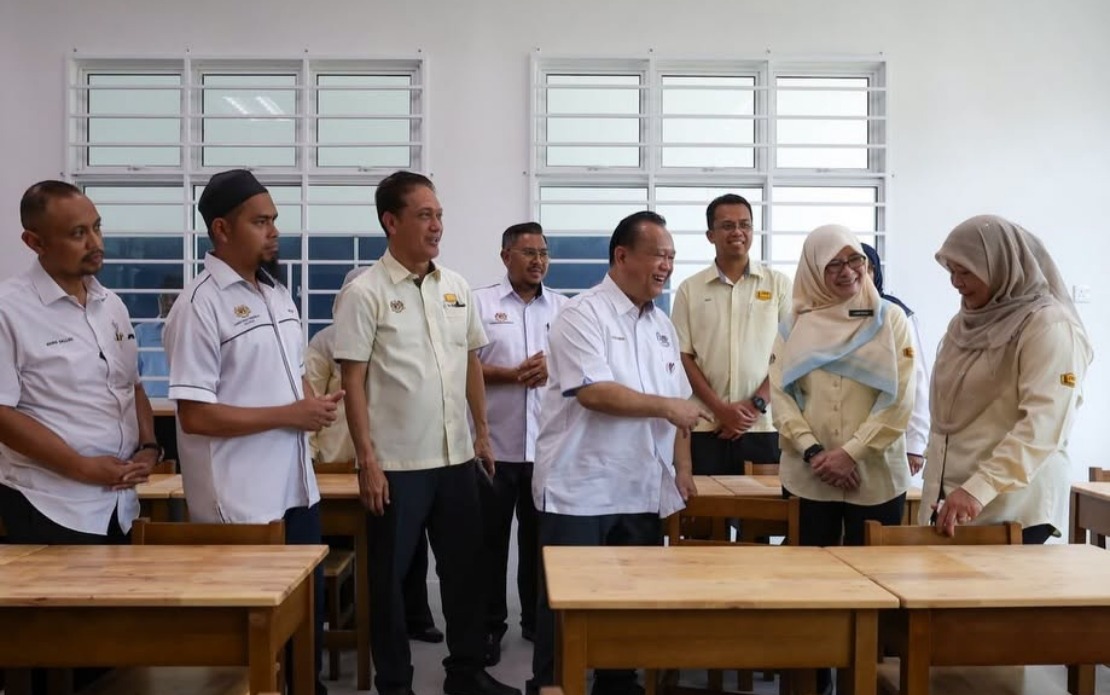
The reconstruction of a severely deteriorated building at Sekolah Kebangsaan FELDA Kota Gelanggi 1 in Jerantut has been successfully completed, with work finishing on June 26—nearly a year before the original May 2027 target date. The RM7.998 million undertaking was accomplished without any time extensions, representing a significant achievement in public infrastructure delivery that Works Minister Datuk Seri Alexander Nanta Linggi highlighted as evidence of competent project management within Malaysia's government construction framework.
The accelerated completion represents a dramatic departure from the common narrative surrounding Malaysian infrastructure projects, where delays and cost overruns frequently dominate headlines. By delivering results 310 days early without compromising quality standards, the project provides a constructive example of how effective oversight and contractor performance can yield tangible benefits for communities dependent on government facilities. This timeline compression is particularly noteworthy given the project's scope and the coordination required between multiple construction phases.
The completed facility comprises two distinct structural components designed to serve different educational needs within the school community. A new academic block contains three standard classrooms alongside specialised learning spaces, including a science laboratory and dedicated health room. Simultaneously, a Special Education Integration Programme (PPKI) block has been established with equipment and infrastructure specifically configured to accommodate pupils with diverse special educational needs, addressing a historically underfunded aspect of Malaysian primary education.
Directly benefiting from these enhanced facilities are 17 pupils currently enrolled at the school who require specialised educational support. For these students, the arrival of purpose-built spaces equipped with appropriate resources represents a meaningful improvement in their learning environment. Previously, such pupils often navigated mainstream school infrastructure designed without consideration for accessibility or their specific pedagogical requirements. The dedicated PPKI block therefore addresses not merely convenience but fundamental equity in educational access within rural Pahang communities.
Nanta's remarks at the handover ceremony underscored the broader implications of the project's success for Pahang's infrastructure renewal programme. Multiple additional construction and upgrading initiatives targeting dilapidated school buildings are currently in progress across the state, with the Works Ministry expressing optimism that similar accelerated delivery schedules may be achieved. This forward-looking commentary suggests a systematic approach to addressing the backlog of ageing educational infrastructure that affects learning outcomes across rural Malaysia.
The minister's emphasis on contractor accountability during the defect liability period reflects awareness of a common weakness in Malaysian public works delivery—the tendency for maintenance issues to emerge months after handover, sometimes creating additional costs and disruption. By insisting on rigorous attention to defects and repairs during this critical phase, Nanta signalled that early project completion must not come at the expense of durability or long-term value for money. This stipulation acknowledges that accelerated delivery schedules require careful quality assurance mechanisms.
The Public Works Department's designated role in post-handover monitoring introduces an important institutional element to the project's narrative. Rather than treating handover as a final transaction, the continued departmental oversight ensures that facilities remain safely operational and continue meeting prescribed standards throughout their functional lifespan. For schools in rural areas, where maintenance expertise and funding may be constrained, such departmental vigilance provides crucial reassurance regarding asset preservation and longevity.
Context matters substantially when evaluating this project's significance for Malaysian education policy. Rural schools, particularly those in estate communities such as FELDA settlements, have historically received less capital investment and infrastructure attention than their urban counterparts. The Jerantut location places this facility within Pahang's interior regions, where infrastructure development often lags coastal and metropolitan areas. Completing such a project ahead of schedule therefore carries symbolic weight beyond the immediate benefits to 17 pupils with special needs, signalling renewed commitment to educational equity across geographically dispersed communities.
The project timeline itself—beginning January 13 and concluding June 26—demonstrates that Malaysian contractors are capable of maintaining accelerated schedules without systematic quality deterioration, provided appropriate incentives and oversight mechanisms exist. This performance suggests that standard timelines for similar-scale projects might themselves incorporate unnecessary contingency buffers, and that more aggressive scheduling coupled with rigorous accountability could unlock efficiency gains across the public works portfolio. Whether this represents a replicable model or a singular achievement dependent on specific circumstances remains to be seen as other Pahang projects progress.
For Malaysian stakeholders monitoring public sector efficiency, the SK FELDA Kota Gelanggi 1 project offers empirical evidence that government-led infrastructure delivery can achieve international standards of punctuality and quality. In a regional context where infrastructure development remains critical to inclusive growth and educational access, such demonstrations of capable project execution strengthen public confidence in institutional capacity. The distinction lies not in exceptional circumstances but in demonstrable application of project management disciplines and contractor performance standards—assets theoretically available across Malaysia's construction sector.
Looking forward, this completion creates opportunities for examining what factors enabled such performance, with findings potentially applicable to other government projects. Whether success stemmed from contractor selection, design clarity, scope management, or supervisory attention, understanding the mechanics of achievement could inform systemic improvements across Malaysia's public works apparatus. For communities awaiting infrastructure improvements, the Jerantut school represents both immediate functional benefit and broader promise that government delivery mechanisms, when properly configured, can serve public expectations with efficiency.

