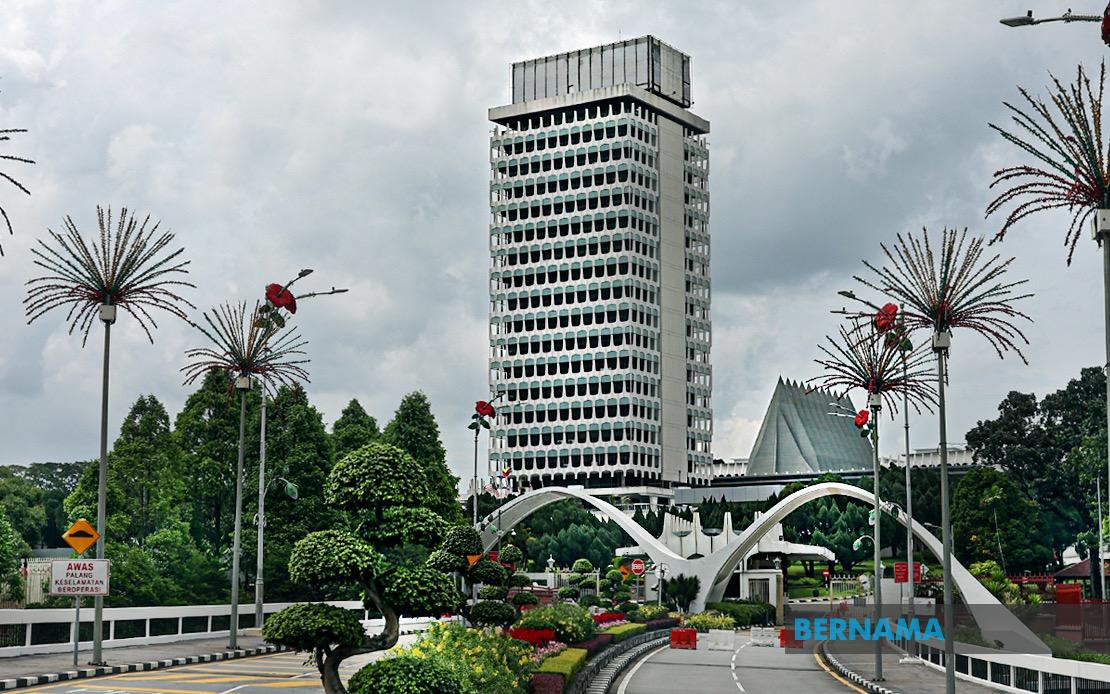
The parliamentary calendar's opening week proved modest in legislative output, with lawmakers passing only the Road Transport (Amendment) Bill 2026 during the Second Meeting of the Fifth Session of the 15th Parliament. Transport Minister Anthony Loke presented the legislation as a crucial fix to an enforcement gap that has hampered authorities' ability to tackle illegal street racing, a persistent public safety concern across Malaysian urban centres. The Bill's centrepiece is Section 42A, which fundamentally reshapes how officers can respond to dangerous driving behaviour by permitting intervention before an accident, injury, or fatality occurs—a significant departure from the previous requirement to document actual harm before prosecution could proceed.
The existing legal framework had created perverse incentives, forcing enforcement personnel to wait for tragic consequences before building a case against illegal racers. This reactive rather than proactive posture left authorities chasing incidents rather than preventing them. Loke framed the amendment as sealing a loophole that made the regulator's job unnecessarily difficult and prolonged public exposure to road hazards. The minister signalled additional amendments are in the pipeline, indicating that Parliament is moving methodically through a broader transport law modernisation agenda that will ultimately introduce victim compensation schemes funded by convictions for impaired driving, layering new financial consequences atop existing custodial and monetary penalties.
Not all government legislative ambitions proceeded smoothly. The Prison (Amendment) Bill 2026, designed to authorise electronic monitoring of prisoners and formalise volunteer roles in rehabilitation efforts, encountered headwinds and was referred back to the Parliamentary Select Committee for further vetting. This setback underscores the reality that even government-backed measures face scrutiny and may require substantial revision before advancing. The decision to refer rather than proceed reflects committee concerns that merit closer examination before the measure returns for full parliamentary consideration, a procedural reminder that legislative momentum cannot be assumed.
Parliament also tabled four additional Bills for first reading: the Sexual Offences Against Children (Amendment) Act 2026, Competition (Amendment) Bill 2026, Competition Commission (Amendment) Bill 2026, and the Cybercrime Act 2026. The cybercrime legislation is particularly significant for Malaysian digital governance, as it seeks to supersede the Computer Crimes Act 1997, reflecting evolving threats in online spaces and a recognition that three-decade-old statutes require wholesale reimagining rather than patchwork revision. These tabled measures indicate Parliament's concern across multiple policy domains, though none advanced beyond the formality of first reading during the opening week.
Beyond the chamber itself, Parliament confirmed administrative changes affecting its operations and personnel. Speaker Tan Sri Johari Abdul reinstated Larut MP Datuk Seri Hamzah Zainudin as opposition leader effective June 18, a development with implications for parliamentary dynamics and opposition coordination. The Speaker also formalised casual vacancies in Pandan and Setiawangsa seats following the May 18 resignations of Datuk Seri Rafizi Ramli and Nik Nazmi Nik Ahmad, notifications to the Election Commission that trigger the machinery for by-elections at those constituencies. These procedural matters, while administrative in character, shape the composition of Parliament and its political balance as the sitting progresses through mid-July.
Question Time revealed the depth of government preoccupation with labour market instability. Human Resources Minister Datuk Seri R. Ramanan disclosed that 42,807 workers faced retrenchment between January and mid-June, a figure that frames Malaysia's economic headwinds in human terms. The statistics pointed toward company closures and workforce downsizing as primary culprits, painting a picture of corporate stress reverberating through working families. However, Economy Minister Akmal Nasrullah Mohd Nasir offered a more measured perspective, emphasising that June retrenchments declined 20 percent compared with May, while labour force participation held steady at 70.9 percent. This tension between alarming retrenchment numbers and official reassurances about labour market fundamentals suggests complexity in Malaysia's employment situation that warrants sustained monitoring.
National security preoccupied lawmakers throughout the week. Home Minister Datuk Seri Saifuddin Nasution Ismail announced government approval of RM22 million in capital funding to equip the Malaysia Border Control and Protection Agency with firearms and ancillary equipment, signalling heightened investment in physical border infrastructure and enforcement capacity. This appropriation reflects government determination to strengthen the first line of defence against smuggling, human trafficking, and other transnational threats that plague maritime and terrestrial borders. The commitment also acknowledges that border agencies have labour power without adequate operational resources, a vulnerability that budgetary allocation is intended to remedy.
Online safety emerged as another parliamentary focal point, with Communications Minister Datuk Fahmi Fadzil highlighting the June 1 commencement of Child Protection Code and Risk Mitigation Code requirements. Social media platforms operating in Malaysia must now implement age-verification mechanisms to shield younger users from inappropriate content and contact, with the Online Safety Act 2025 threatening penalties reaching RM10 million for non-compliance. For Malaysia's technology sector and regional social media operators, these requirements represent a significant regulatory shift, compelling platform-level investments in user authentication and content filtering. The enforcement threat carries teeth sufficient to motivate compliance among major platforms.
Commodity policy intersected with energy transition concerns when the Ministry of Plantation and Commodities indicated it would assess whether B50 biodiesel rollout remains viable given existing blending depot infrastructure limitations. The cost of upgrading facilities to accommodate higher biodiesel concentrations apparently prompted the ministry to pause expansion plans pending feasibility reassessment. This cautious approach reflects the genuine tension between sustainability aspirations and practical economic constraints, a dilemma affecting multiple Malaysian policy sectors simultaneously.
The 16-day sitting scheduled from June 22 to July 16 provides Parliament ample opportunity to progress beyond the opening week's measured output. The legislative agenda encompasses criminal law modernisation, competition policy refinement, digital governance restructuring, and transport safety enhancement—a portfolio addressing diverse national concerns from labour market shocks to childhood protection. However, the first week's single passage suggests Parliament's deliberative pace may frustrate those expecting accelerated legislative action, a reality that may reflect either the complexity of contemporary policy challenges or the priority Parliament accords committee-level scrutiny before final passage. For Malaysian observers and regional analysts tracking governance momentum, the coming weeks will reveal whether this opening week's restrained output represents a settling-in phase or a harbinger of broader legislative congestion.

