Singapore's Prime Minister Lawrence Wong has formally expressed the city-state's deepest sympathies to Indonesia following a catastrophic earthquake that ravaged the island of Flores in eastern Indonesia last weekend. The 7.7-magnitude tremor struck on Saturday, August 15, unleashing significant destruction across the region and prompting immediate humanitarian concern from neighbouring governments throughout Southeast Asia.
The seismic event proved particularly lethal, claiming the lives of more than 50 people according to Indonesian authorities' assessment released on August 16. The human toll extends well beyond fatalities, with at least 135 individuals sustaining injuries from the quake and its violent aftermath. The physical destruction was equally alarming, as hundreds of residential and commercial structures sustained damage or collapsed entirely, leaving entire communities facing acute housing shortages and accelerating calls for emergency shelter provisions.
PM Wong transmitted his formal expression of sympathy through official correspondence addressed directly to Indonesia's President Prabowo Subianto, underscoring Singapore's commitment to regional solidarity during moments of crisis. The message conveyed sincere condolences on behalf of the entire Singapore Government, extending compassion toward affected families and communities grappling with the aftermath. Through his statement posted on Facebook on Sunday, August 16, Wong acknowledged both the immediate loss of life and the broader devastation reverberating through the affected territories.
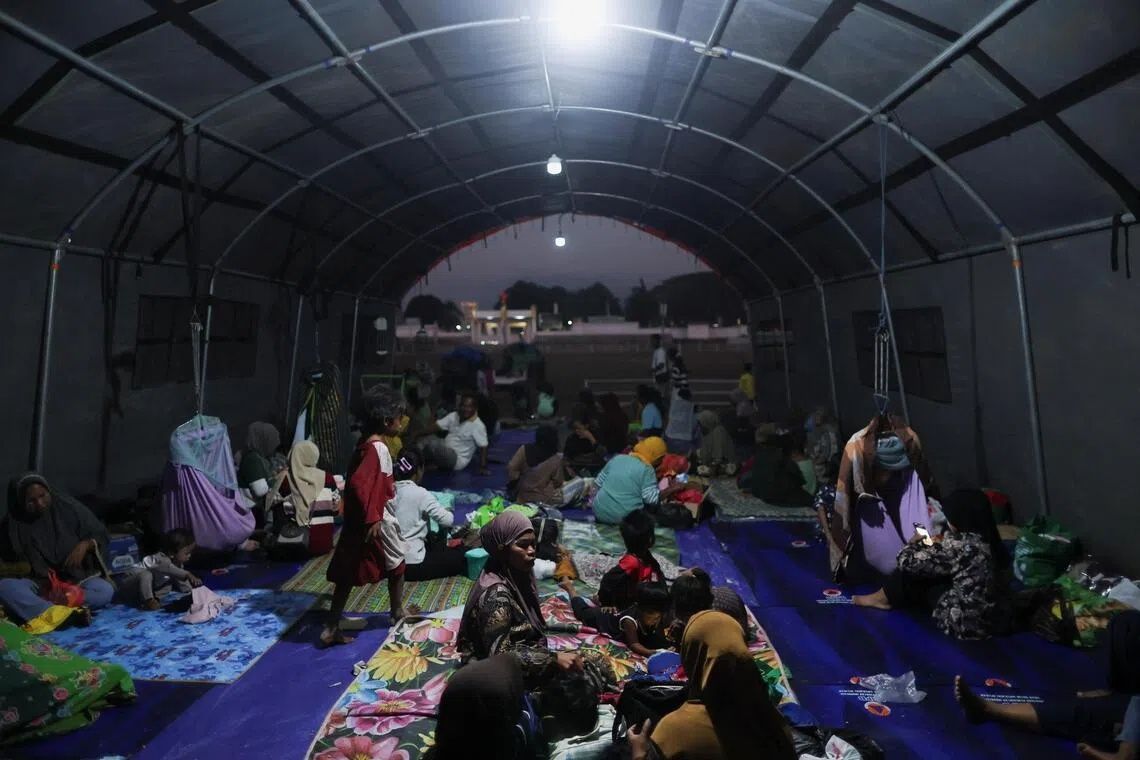
The earthquake triggered an immediate humanitarian response, with approximately 5,000 residents forced to abandon their homes as the ground shook violently across Flores on the morning of August 15. Indonesia's national disaster management agency documented nearly 1,000 aftershocks in the immediate hours following the initial tremor, perpetuating fear among survivors and complicating rescue and recovery operations. These secondary seismic events significantly hamper reconstruction efforts, as structures weakened by the primary quake face additional stress from continued ground movement, and rescue workers must navigate dangerous terrain with ongoing instability.
The earthquake was not an isolated event. Just hours after the initial Flores disaster, a second seismic event measuring 6.1 in magnitude struck off the coast of northern Sumatra, adding another dimension to Indonesia's emergency response framework. While this secondary quake had not initially produced reported casualties as of August 16, it nonetheless compounded the strain on Indonesian disaster management resources already stretched thin by the Flores crisis. The sequence of major earthquakes across geographically distant regions highlights Indonesia's persistent vulnerability as a nation situated along the Pacific Ring of Fire, where tectonic plate interactions generate frequent seismic activity.
Survivors occupying shelters and temporary camps faced desperate conditions in the days immediately following the disaster. Rescue officials documented urgent requirements for emergency tents, basic food supplies, essential medications, potable water, and electrical generators to restore fundamental services. The scale of need underscores the sudden transition from normalcy to crisis that characterised the earthquake's impact, leaving communities unable to access basic necessities that modern infrastructure typically provides. Without rapid international and domestic supply chains, humanitarian conditions could deteriorate rapidly, particularly affecting vulnerable populations including elderly residents, children, and those with pre-existing medical conditions.
The earthquake's occurrence carries particular significance for regional diplomatic relations and humanitarian cooperation frameworks. Singapore, as a small but wealthy developed economy surrounded by larger Southeast Asian neighbours, maintains established protocols for expressing solidarity during natural disasters. PM Wong's public acknowledgment reflects not merely ceremonial protocol but genuine concern for regional stability and human welfare. The exchange of formal communications between Singapore and Indonesia demonstrates the functioning of established diplomatic channels during emergencies and reinforces the region's shared understanding that natural disasters transcend national boundaries and demand collective response.
For Malaysia and other Southeast Asian nations, the Flores earthquake serves as a sobering reminder of the region's exposure to natural hazards and the importance of maintaining robust disaster preparedness infrastructure. Indonesia's experience navigating multiple simultaneous seismic events across distant regions illustrates how single geological events can generate cascading challenges for national emergency management systems. Malaysian authorities often look to Indonesia's handling of such crises as instructive examples for enhancing domestic preparedness frameworks, particularly given both nations' shared geological and meteorological vulnerabilities.
The international community's response to Indonesia's earthquake demonstrates the functioning of humanitarian networks that connect Southeast Asian governments and disaster relief organizations. Beyond Singapore's formal diplomatic gesture, international aid agencies and neighbouring governments typically mobilize resources to support recovery operations. Indonesia's experience managing the human and infrastructure dimensions of major earthquakes has increasingly become a model for studying effective disaster response in developing economies facing resource constraints. The Flores quake, coupled with the Sumatra tremor, will likely generate analytical studies examining how authorities prioritized limited rescue and recovery assets across multiple crisis zones simultaneously.
As reconstruction efforts commenced and assessment teams documented the full extent of damage, Indonesian authorities faced the complex challenge of balancing immediate emergency response with longer-term recovery planning. The aftershock sequence complicated these efforts, as teams could not safely access certain structures for several days. International expressions of condolence, while primarily symbolic, carry practical importance in mobilizing both financial support and technical expertise from developed economies. Singapore's gesture, alongside similar communications from other governments, helps establish the political framework necessary for securing international aid that supplements Indonesia's domestic response capacity.

