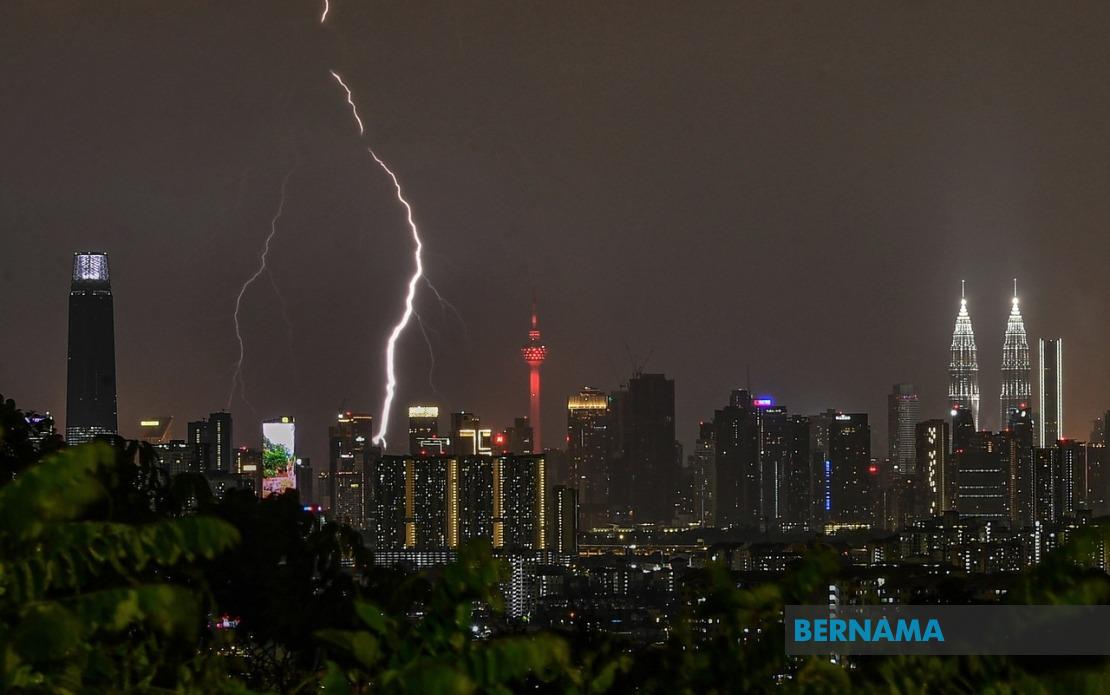
The Malaysian Meteorological Department issued a severe weather warning on Thursday afternoon covering Kuala Lumpur and eight states, alerting the public to prepare for thunderstorms accompanied by heavy downpours and strong winds until 5 pm. The alert, released at 2 pm, signals potential disruptions to daily activities across a significant swath of Malaysia's population centres during the afternoon peak hours.
The warning encompasses the entire states of Melaka and Penang, rendering both territories vulnerable to the approaching weather system. These two states, both densely populated and economically significant, face the prospect of severe disruptions to commerce, transport, and public services if the forecasted conditions materialise as predicted. The comprehensive coverage indicates a broad atmospheric disturbance affecting the western and southwestern portions of Peninsular Malaysia.
In Kedah, the vulnerable zones extend across five districts: Kuala Muda, Sik, Baling, Kulim, and Bandar Baharu. These agricultural and residential areas may experience flooding or temporary transportation disruptions if rainfall intensity exceeds normal thresholds. Similarly, Perak residents in Kerian, Larut, Matang, Selama, Hulu Perak, Kuala Kangsar, Kinta, Kampar, Batang Padang, and Muallim should brace for potential weather-related complications affecting their immediate surroundings.
Pahang's higher-altitude and rural districts face particular vulnerability given their geographic characteristics. Cameron Highlands, Lipis, Raub, Bentong, Pekan, and Rompin are listed among affected areas, with Cameron Highlands representing a major tourism destination where sudden weather changes could disrupt operations and traveller safety. The warning suggests meteorological conditions capable of affecting districts spanning from highland plateaus to coastal plains.
The Greater Kuala Lumpur region, encompassing Selangor's sprawling districts, faces substantial operational challenges should the warning conditions manifest. Sabak Bernam, Kuala Selangor, Hulu Selangor, Klang, Gombak, Petaling, and Hulu Langat represent residential, commercial, and industrial heartlands where severe weather could cause traffic congestion, power disruptions, and flooding in low-lying areas. The inclusion of multiple Selangor districts indicates the capital region's vulnerability to the approaching weather system.
Negeri Sembilan's Jelebu district and Johor's six listed districts—Tangkak, Segamat, Muar, Batu Pahat, Kluang, and Mersing—round out the affected zone, extending the warning's reach southward into economically important areas. These southern districts handle significant commerce and contain substantial population concentrations that depend on reliable infrastructure during adverse weather events.
Thunderstorms of this magnitude pose multifaceted challenges for regional authorities and residents alike. Beyond the immediate hazards of lightning strikes and heavy rainfall, such weather systems frequently trigger secondary effects including flash flooding, temporary road closures, disrupted electrical services, and communication interruptions. Schools, workplaces, and public facilities may face operational disruptions, particularly during afternoon and evening hours when the warning remains active.
The Malaysian Meteorological Department's advisory urges heightened vigilance and continuous monitoring of official weather updates, acknowledging that atmospheric conditions remain dynamic and subject to rapid changes. This messaging reflects the inherent uncertainty in weather forecasting and the potential for conditions to either intensify beyond current predictions or dissipate more rapidly than anticipated. Residents are implicitly encouraged to take preventive measures, including securing outdoor items, preparing alternative transportation arrangements, and avoiding unnecessary outdoor activities during peak warning hours.
For businesses, transportation operators, and public service providers across the affected regions, this warning necessitates contingency planning and resource mobilization. Construction sites may require shutdown procedures, while transportation networks must prepare for potential congestion and delays. Emergency services in all affected districts should position personnel and equipment for rapid response to weather-related incidents.
The geographic breadth of this warning—affecting multiple states and encompassing both urban and rural areas—underscores the scale of the atmospheric disturbance. Such peninsular-wide weather events demand coordinated response mechanisms across state boundaries, with federal authorities potentially supporting local capacity where severe impacts materialise. The afternoon timing means peak-hour commuters face increased risk, making real-time weather updates particularly valuable for journey planning.
Residents in all affected areas should remain attentive to subsequent meteorological bulletins, as the 5 pm expiration represents the current forecast boundary. Should atmospheric conditions warrant extension of the warning period beyond this timeframe, authorities would issue updated guidance. In the interim, maintaining awareness and preparing household and workplace contingencies represents prudent preparation for the forecasted severe weather event.

