The Sejahtera MADANI initiative in Perak is entering an expanded phase following the allocation of an additional RM3 million in government funding. To date, the programme has successfully distributed RM2.3 million in assistance to approximately 2,000 beneficiaries across the state, with plans to broaden its reach and deepen its impact in the coming months. The injection of fresh capital signals renewed confidence in the grassroots welfare scheme, which forms a cornerstone of the current administration's social safety net strategy.
Muhammad Kamil Abdul Munim, the Finance Minister's political secretary, unveiled the funding increase during an event in Kuala Kangsar on June 30, emphasising that the boost would unlock opportunities for vulnerable segments of the population. The targeted groups include micro-entrepreneurs struggling to scale their operations, working-class households facing economic pressures, and academically talented students whose potential might otherwise be constrained by financial limitations. By concentrating resources on these groups, the initiative attempts to address root causes of poverty and underemployment rather than offering temporary relief alone.
What distinguishes the Sejahtera MADANI approach is its multi-faceted support structure extending beyond simple cash transfers. The programme pairs financial aid with practical tools designed to enhance economic self-sufficiency. Small-scale business owners receive not just money but equipment and resources to boost productivity, a recognition that capital alone does not guarantee entrepreneurial success without complementary infrastructure and skills. Similarly, high-achieving students entering tertiary education are provided with laptops, acknowledging that educational advancement requires access to digital technology—a prerequisite increasingly non-negotiable in Malaysia's knowledge-based economy.
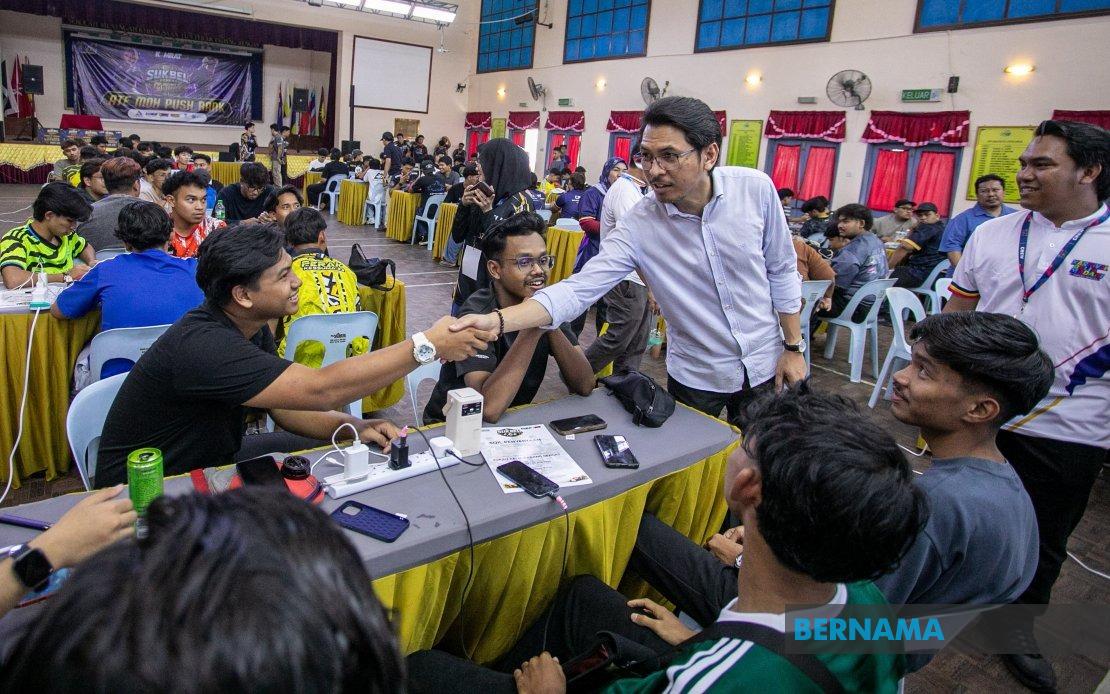
During the Padang Rengas parliamentary constituency roadshow held at Millennium Hall in Lubok Merbau, the programme demonstrated its commitment to tangible delivery by presenting 13 high-performing SPM students with laptops and equipping five entrepreneurs with business equipment. These symbolic acts underscore the government's intention to translate policy into concrete outcomes that beneficiaries can immediately access and deploy. The selection of high-achieving students also sends a deliberate message that merit and academic excellence deserve recognition and support, encouraging educational investment among disadvantaged communities.
Muhammad Kamil characterised the Sejahtera MADANI initiative as a reflection of the MADANI Government's broader commitment to precision-targeted welfare. Rather than scattering resources indiscriminately, the scheme attempts to channel aid where it can generate measurable improvements in living standards and educational outcomes. This philosophy represents a departure from earlier welfare approaches that critics argued lacked clear mechanisms to prevent leakage or ensure effectiveness. The government's articulated aim is to move beyond headline-grabbing spending figures toward demonstrable, verifiable results that translate into tangible change in beneficiaries' circumstances.
However, Muhammad Kamil also acknowledged that implementation challenges have marred the wider portfolio of community-driven initiatives. The SejaTi MADANI grant scheme—a related but distinct programme that empowers local communities to identify and fund their own development priorities—has experienced setbacks including project failures and incomplete implementation. These operational difficulties prompted a frank admission that the original model of allowing grassroots communities extensive autonomy over fund allocation, while philosophically appealing, generated accountability gaps in practice.
In response, the government is imposing stricter oversight mechanisms across the SejaTi MADANI scheme to prevent future mismanagement and fraud. Muhammad Kamil stressed that enhanced monitoring represents not a loss of community agency but a necessary safeguard protecting public funds and ensuring projects deliver intended benefits. The tension between local control and centralised accountability reflects a broader governance challenge across development programmes in Malaysia and the region—balancing democratic principles of community participation with the practical need for financial probity and delivery standards.
The enhanced supervision framework acknowledges that implementation flaws are inevitable in complex, decentralised programmes but insists that continuous monitoring and oversight can minimise fraud, prevent resource leakage, and catch problems before they cascade into programme-wide failures. This two-pronged approach—expanding the Sejahtera MADANI initiative while tightening controls on related schemes—suggests the government is attempting to learn from previous shortcomings while maintaining commitment to grassroots welfare expansion.
For Malaysian observers, the Perak initiative carries implications extending beyond that state alone. The Sejahtera MADANI model, if successfully executed, could inform welfare policy development nationally, particularly as the government navigates post-pandemic economic recovery and rising cost-of-living pressures affecting households across income levels. The scheme's focus on enabling entrepreneurship and educational advancement also reflects recognition that sustainable poverty reduction requires supply-side investments in productive capacity and human capital, not merely demand-side income support.
The allocation of RM3 million in additional funding also demonstrates sustained political priority for welfare expansion despite broader fiscal constraints confronting Malaysia's federal budget. This commitment, coupled with the emphasis on targeted delivery and enhanced accountability, suggests the government views the Sejahtera MADANI initiative as a political and policy priority worth defending and expanding. How effectively the enhanced monitoring mechanisms operate, whether subsequent expansion phases maintain delivery quality, and whether the model influences national welfare architecture remain questions that will shape Malaysia's social protection landscape over coming years.

