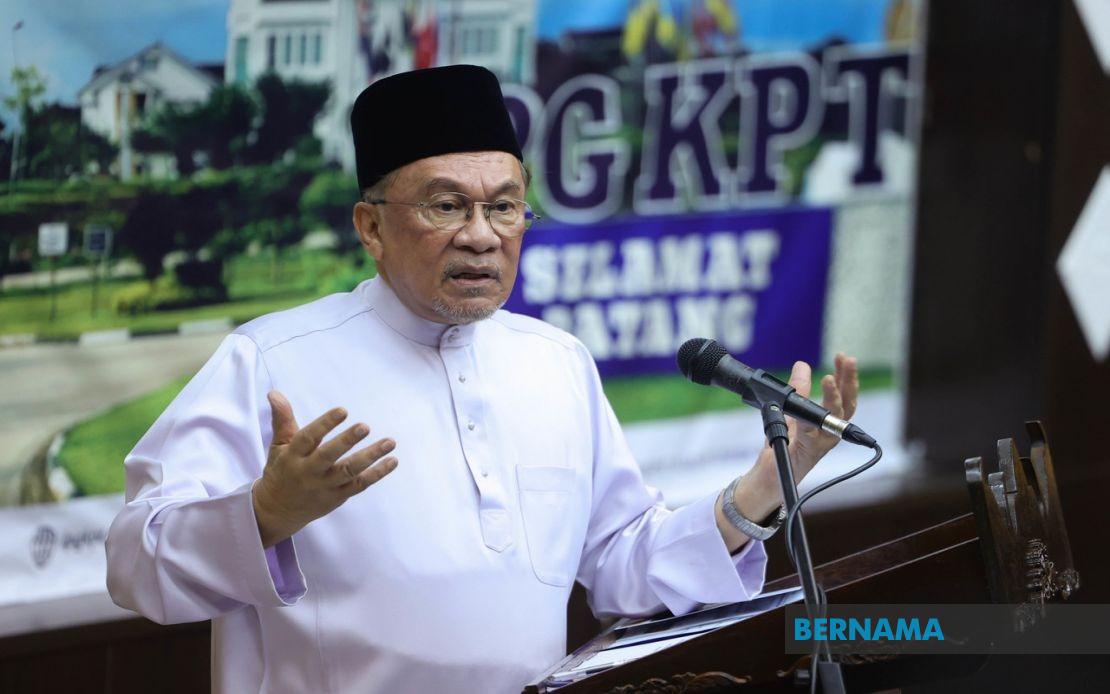
Prime Minister Datuk Seri Anwar Ibrahim has issued a direct warning to Malaysian schools against concealing bullying incidents behind closed doors to shield their institutional reputation, instead urging administrators to act swiftly and transparently when such problems emerge. Speaking in Nilai on July 17, the Premier underscored that victims of bullying suffer significant psychological and emotional harm, making the suppression of such cases both ethically questionable and counterproductive to the wellbeing of affected students.
Anwar's intervention addresses a troubling pattern in which some educational institutions have chosen silence over disclosure, prioritizing brand image over student safety. The Prime Minister made clear that reporting bullying cases should not be viewed as a mark against a school's leadership or performance. Rather, he suggested that institutional failure lies not in the acknowledgment of problems but in the failure to address them substantively once discovered.
To illustrate his point, Anwar offered a pragmatic perspective on the mathematics of school safety. A secondary school enrolling 1,000 students that transparently reports two bullying incidents during a year demonstrates appropriate vigilance and accountability. The headteacher or principal responsible for such reporting should not face censure for bringing these matters to light, the Premier explained. The true dereliction of duty occurs when administrators become aware of bullying but choose to bury the matter rather than implement corrective action and support mechanisms.
This stance reflects broader concerns within Malaysia's education system about institutional culture and the pressures schools face in a competitive environment where rankings, reputations, and enrollment numbers increasingly matter. Parents seeking quality institutions often weigh safety records, and schools fearful of negative publicity may calculate that discretion serves their interests better than disclosure. Anwar's remarks challenge this calculus, arguing that such thinking ultimately weakens the institutions it aims to protect.
Beyond the immediate issue of bullying management, Anwar widened his critique to encompass the philosophical direction of Malaysian education itself. He suggested that the prevalence of bullying indicates deeper shortcomings in character formation and moral development within schools, gaps that persist despite increased access to religious education compared with previous generations. This observation touches on a fundamental tension in education policy: whether schools are primarily vehicles for academic and technical excellence, or whether they bear equal responsibility for shaping ethical citizens.
The Prime Minister argued forcefully for a holistic conception of educational success that extends well beyond academic achievement or technical competence. He questioned the value of producing graduates equipped with advanced qualifications—whether as technocrats, information technology specialists, or doctoral degree holders—if such individuals lack grounding in humanitarian values and basic respect for others. This critique resonates with Malaysian society's ongoing anxieties about whether rapid economic development and technological advancement have outpaced moral and spiritual development among younger generations.
Anwar emphasized that teachers occupy a pivotal position in addressing this challenge. Educators, he suggested, must understand their role as stewards not merely of curriculum delivery but of institutional environments where learning flourishes and students absorb lessons about faith, ethics, and compassion alongside algebra and history. The responsibilities placed on Malaysia's teaching profession are therefore substantial, demanding far more than subject matter expertise.
Education Minister Fadhlina Sidek attended the event, signaling ministerial support for the Prime Minister's emphasis on tackling bullying and integrating character development into school life. This ministerial presence suggests that antibullying initiatives and values-based education are likely to feature prominently in coming policy discussions and curriculum revisions.
Anwar acknowledged the achievements of Malaysia's teaching profession, which he assessed as performing at high standards, and expressed optimism that performance levels would continue advancing as the nation pursues its broader goal of elevating overall education quality to international benchmarks. However, this recognition of current strengths was coupled with his challenge to the profession to embed even greater emphasis on moral formation and student welfare alongside traditional academic measures.
The Prime Minister's remarks carry implications extending beyond school administration. They touch on questions of institutional accountability, the balance between organizational self-interest and public good, and the proper ends of education in a developing nation. By explicitly rejecting cover-ups of bullying, Anwar signaled that Malaysian schools should prioritize transparency and student protection over institutional image management—a position that may require cultural shift within some educational communities accustomed to handling sensitive matters privately.
For parents and students, the message offers some reassurance that Malaysia's political leadership recognizes bullying as a serious concern demanding proportionate response. For school administrators, it establishes clear expectations that reporting bullying incidents represents responsible governance rather than institutional failure. The broader challenge Anwar articulated—how to ensure schools produce graduates who combine technical capability with ethical awareness and human compassion—remains an ongoing endeavor requiring sustained commitment from educators, policymakers, and society at large.

