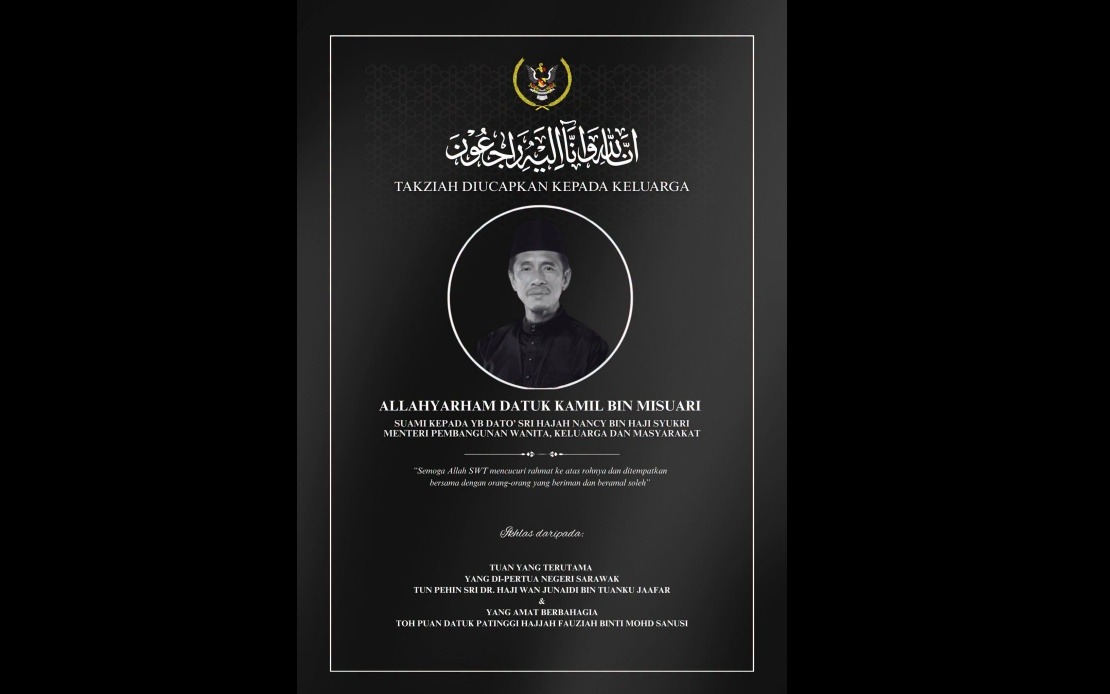
Tun Dr Wan Junaidi Tuanku Jaafar, the Yang Dipertua Negeri Sarawak, has expressed his deepest sympathies to Women, Family and Community Development Minister Datuk Seri Nancy Shukri following the passing of her husband, Datuk Kamil Misuari. The death occurred on June 18 at a hospital in Kuala Lumpur, bringing to an end a marriage that had endured for nearly four decades and produced three children.
In an official statement released through Astana Sarawak, the state governor and his wife, Toh Puan Fauziah Mohd Sanusi, offered Islamic prayers for the deceased. The message conveyed hopes that Allah SWT would grant blessings upon Kamil's soul, acknowledge his virtuous deeds during his lifetime, and grant him a place amongst the righteous in the hereafter—a traditional expression of Muslim condolence that underscores the spiritual dimensions of grief within Malaysian culture.
The statement further articulated prayers for the grieving family, requesting divine strength and patience for Nancy and her children as they navigate the immediate aftermath of their loss. Such expressions of state-level support carry particular weight in Malaysia's federal system, where regional leaders often serve as symbols of communal solidarity during times of personal tragedy affecting public figures.
Nancy Shukri, who holds one of Malaysia's most prominent ministerial portfolios responsible for women's welfare, family services, and community development, now faces the dual challenge of managing her grief while maintaining her public responsibilities. The timing of her husband's death during her tenure as minister adds another layer of complexity to her situation, as she balances personal mourning with the demands of high office—a situation not uncommon among Malaysia's female political leaders who have increasingly assumed senior positions in recent years.
Datuk Kamil Misuari was 65 years old at the time of his death. The couple had been married since 1985, marking 39 years of partnership that had produced three offspring. While details about Kamil's professional background or life accomplishments remain limited in public statements, his passing represents the end of a significant chapter in Nancy's personal narrative, one that had supported her rise through Malaysia's competitive political landscape.
Arrangements made swiftly following his death reflect the customs and practices within Malaysia's bureaucratic and social systems. His remains are scheduled for transport to Kuching, the capital of Sarawak, on June 19, where he will be laid to rest at the Samariang Muslim Cemetery. This return to Sarawak, presumably Nancy's home state and political base, carries symbolic significance in Malaysian society, where burial in one's ancestral homeland or adopted home often takes precedence over other considerations.
The announcement came through official channels including the Office of the Minister of Women, Family and Community Development, ensuring that Nancy's constituents and the broader public were informed through proper governmental protocols. Such formal notifications serve multiple functions: they acknowledge the humanity of public figures beyond their official roles, inform the public of potential changes in ministerial capacity, and allow the nation's leadership structure to respond appropriately to circumstances affecting key members of government.
Sarawak's governance structure, as reflected in the involvement of the Yang Dipertua Negeri, demonstrates how Malaysia's federal system maintains distinct state-level protocols and hierarchies alongside national institutions. The state governor's personal intervention in expressing condolences—rather than leaving it to lower-ranking officials—indicates the significance accorded to Nancy Shukri's position and standing within Malaysia's political establishment.
For Malaysian readers observing this development, the incident underscores the human dimensions beneath high political office. Despite their public prominence and governmental authority, senior ministers remain subject to the universal experiences of loss and grief that affect all Malaysians. Nancy Shukri's situation may also prompt broader reflection on the support systems available to female political leaders managing personal crises while maintaining demanding professional roles—a consideration increasingly relevant as women occupy more senior positions across Malaysia's government and corporate sectors.