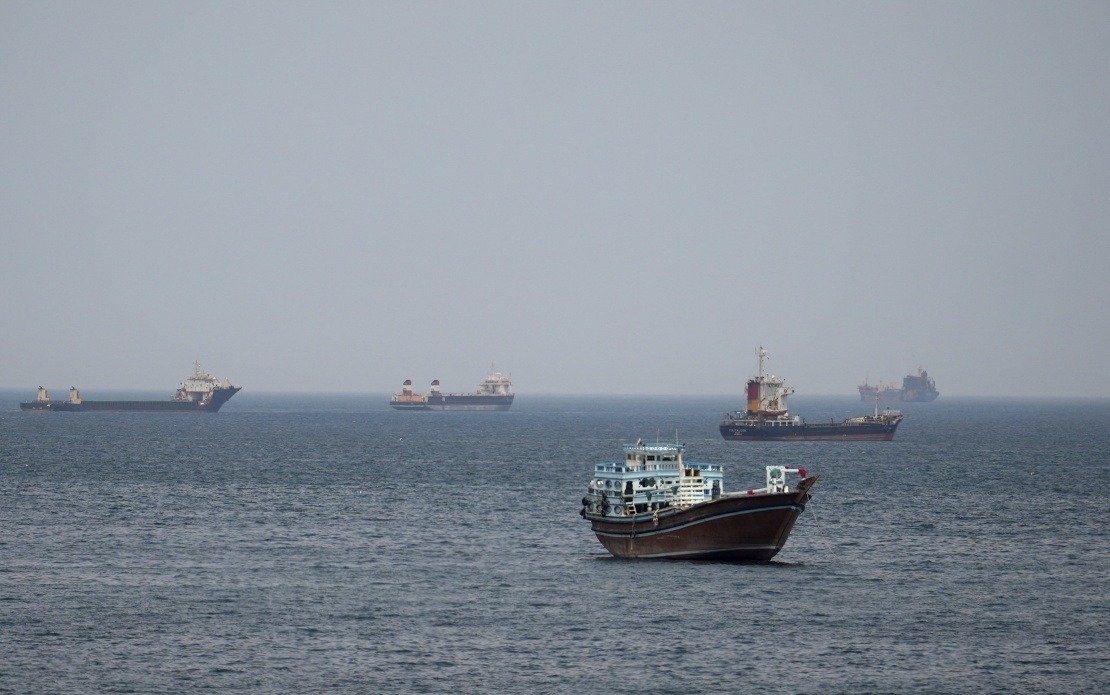
The interim agreement between the United States and Iran formally commenced on Thursday, marking a dramatic shift in one of the world's most consequential geopolitical standoffs. With the deal now operational, oil tankers have resumed movement through the Strait of Hormuz, a critical waterway that typically channels roughly one-fifth of the planet's seaborne petroleum supply. The symbolic and practical significance of restored shipping flows cannot be overstated for regional economies and global energy markets, particularly for energy-dependent nations like Malaysia that rely heavily on stable crude supplies and predictable pricing.
Financial markets immediately reflected the improved security outlook. Crude oil prices collapsed to their lowest point since hostilities erupted on February 28, as traders priced in the expectation that normal export volumes will gradually return through the strait over the coming months. This development carries substantial implications for Southeast Asian economies, where energy costs directly influence manufacturing competitiveness, transportation expenses, and overall inflation trajectories. For Malaysian refineries and petrochemical producers, the price decline creates both opportunities for cheaper feedstock and margin compression that will require careful management.
Yet the fragility of this arrangement became evident almost immediately. Despite the ceasefire agreement's central text, Israeli military forces continued launching airstrikes against Hezbollah targets in Lebanon throughout Thursday morning, displacing over one million civilians and casting serious doubt over the deal's enforceability. This disconnect between the formal peace terms and ground-level military reality highlights a fundamental challenge facing the agreement: President Donald Trump's capacity to compel his regional allies to comply with provisions he has publicly endorsed.
Trump's negotiating position underwent a remarkable transformation from his original maximalist demands. When initiating the conflict nearly four months earlier, the American president articulated sweeping objectives encompassing the complete dismantling of Iran's nuclear weapons capability, the elimination of Tehran's capacity to threaten neighbouring states, the cessation of Iranian support for regional militant organisations, and the facilitation of internal regime change. The signed agreement delivers none of these stated goals, prompting criticism from Republican congressional allies who contend the president surrendered excessive leverage in pursuit of ending an unpopular conflict before the American election cycle.
Iran's Supreme Leader Ayatollah Moitaba Khamenei characterised Trump's decision to sign the accord as driven by "desperation," signalling that forthcoming negotiations over Iran's nuclear programme—ostensibly Trump's original cause for initiating hostilities—will prove contentious and unlikely to yield American demands. Khamenei explicitly warned that Tehran will reject any requirements it deems excessively demanding, essentially announcing advance resistance to potentially stringent restrictions on uranium enrichment or weapons development pathways. This posture suggests that the 60-day negotiating window established by the interim accord faces formidable obstacles in translating temporary cessation of violence into permanent diplomatic resolution.
The agreement's financial architecture aims to address Iranian economic grievances through a proposed reconstruction fund worth three hundred billion dollars and supplementary financial incentives designed to encourage compliance. However, these inducements come paired with continuing complications, as the United States simultaneously pursues additional restrictions on Iran's long-range missile capabilities—an ambition that Vice President JD Vance, designated to lead the American negotiating team, has already publicly articulated. Iran, having weathered sustained military pressure and demonstrated its capacity to influence global energy supplies through Hormuz control, likely feels emboldened to resist constraints it previously might have considered.
Iran has explicitly signalled its intention to maintain supervisory control over the Strait of Hormuz during the interim period, announcing that it will continue issuing transit permits and directing traffic flows, though no financial levies will be imposed during these sixty days. This arrangement effectively grants Tehran de facto administrative authority over one of the world's most strategically vital chokepoints, a concession that previous American administrations would have considered intolerable. For Malaysian policymakers watching energy security developments, Iran's enhanced leverage over Hormuz shipping represents a structural shift in regional power dynamics that could have enduring consequences for Southeast Asian energy supplies.
The Lebanon dimension presents perhaps the most immediate threat to the agreement's sustainability. Israeli authorities notably declined participation in the negotiations, subsequently announced they harbour no withdrawal intentions from Lebanese territory, and released cartographic materials depicting an expanded occupation perimeter. These actions directly contradict the ceasefire agreement's explicit provisions mandating the "permanent termination" of Lebanon's war and the assurance of Lebanese "territorial integrity and sovereignty." The disconnect between Trump's public commitments and his allies' battlefield conduct creates a credibility problem that could unravel the entire arrangement if escalation resumes.
Trump has responded to Israeli intransigence with unusually blunt criticism, declaring that attacking one's primary regional ally constitutes strategic folly. His comment that he would question such decisions if serving in an Israeli cabinet represents a remarkable public rebuke from an American president typically protective of Israeli operational freedom. This friction between Washington and Jerusalem, described by observers as representing one of the deepest rifts in decades, underscores the president's determination to enforce the ceasefire terms he has publicly championed. However, Trump's rhetorical criticism has not translated into concrete enforcement mechanisms that would compel Israeli compliance with Lebanese boundary provisions.
For Malaysia and other Southeast Asian nations, the deal's stability directly affects energy market trajectories and regional strategic alignments. A collapse of the ceasefire could trigger renewed Hormuz disruptions, returning oil markets to the volatility that characterised the conflict's darkest periods. Conversely, successful implementation would stabilise global energy supplies and reduce geopolitical risk premiums embedded in crude pricing. The negotiating period ahead will determine whether temporary military restraint can evolve into durable diplomatic settlement or whether underlying tensions will reassert themselves with renewed intensity.
The fundamental question confronting all stakeholders—including Southeast Asian economies dependent on predictable energy flows—concerns whether this interim arrangement represents a genuine turning point in regional conflict or merely a temporary pause in hostilities. Trump's unmet original objectives, Iran's apparent confidence in its strengthened position, Israeli refusal to submit to ceasefire constraints, and the compressed timeline for nuclear negotiations all suggest the path forward bristles with obstacles. The coming sixty days will illuminate whether the parties possess sufficient commitment to peace to overcome these considerable impediments or whether the region will return to confrontation.