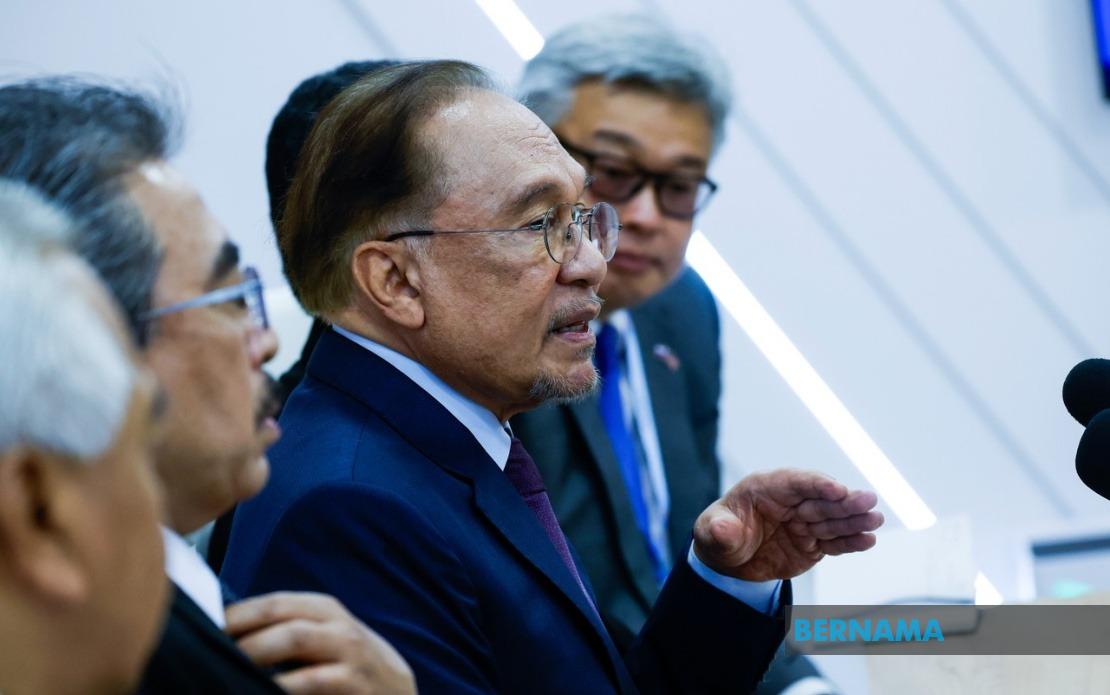
Prime Minister Datuk Seri Anwar Ibrahim concluded a strategically significant two-day working visit to Kazan with a major energy security win: Russia's formal commitment to furnish Malaysia with long-term supplies of petroleum, oil, and gas rather than relying on the precarious cycle of annual or seasonal renewals. This departure from short-term transactional arrangements signals a fundamental shift in how Malaysia approaches energy security in an increasingly volatile global market, replacing the uncertainty of spot-market purchases with predictable, multi-year supply frameworks that offer budget certainty and operational stability.
Addressing Malaysian journalists at the closing press conference following the ASEAN-Russia Commemorative Summit, Anwar revealed that the groundwork for this transformative agreement had already advanced substantially. The underlying principles had been endorsed by both governments, the technical draft was complete, and company representatives had already travelled to Russia to conduct final negotiations. What remained was the procedural formality of signature and ratification. Anwar pledged to accelerate the process immediately upon returning to Kuala Lumpur, emphasising that delegations would be instructed to expedite review and formalise the understanding without delay.
The timing of this energy breakthrough carries particular significance for Malaysia and the broader region. Global energy markets remain susceptible to geopolitical shocks, supply chain disruptions, and volatile pricing driven by conflicts in oil-producing regions and shifting demand patterns. By locking in reliable sourcing from Russia, a major hydrocarbon exporter controlling vast reserves, Malaysia reduces its exposure to spot-market price spikes and supply interruptions. The arrangement also strengthens ASEAN's collective energy resilience, as regional nations increasingly recognise that energy security cannot be taken for granted in a fragmented, tension-filled world.
Beyond the headline energy deal, Anwar articulated a broader strategic vision for Malaysia-Russia relations that extended across multiple economic and diplomatic domains. He specifically highlighted expanded cooperation with state-owned Petronas and praised President Vladimir Putin's personal backing for deepened energy collaboration. The bilateral framework now encompasses trade, investment, financial services, and the halal economy—a portfolio approach that reduces over-dependence on any single sector and creates multiple channels for mutual benefit. This diversified architecture mirrors Malaysia's hedging strategy across global partnerships, ensuring that ties with Russia complement rather than substitute relationships with Western and Asian powers.
At the regional summit, Anwar welcomed the formalisation of the ASEAN-Russia Strategic Programme on Trade and Investment Cooperation 2026-2035, framing it as a foundational platform for the next decade of economic engagement. The bilateral trade figures underscore why such frameworks matter: ASEAN-Russia trade reached US$18.1 billion in 2024, with Russian foreign direct investment into the bloc totalling RM367.90 million. For Malaysia specifically, Russia ranked as the ninth-largest European trading partner in 2025, with bilateral commerce valued at RM8.72 billion. Malaysia exports electrical and electronic products, machinery, and processed food to Russia, while importing petroleum products, minerals, and chemicals—a complementary pattern that creates natural incentives for deepened commercial ties.
Anwar's separate bilateral engagement with Rustam Minnikhanov, the head of the Republic of Tatarstan, reinforced Russia's regional dimension. Tatarstan, one of Russia's leading oil-producing territories, represents both a source of hydrocarbon supplies and a potential investment hub for Malaysian firms interested in downstream activities, refining, and petrochemicals. The discussion signalled that Malaysia is not merely negotiating with Moscow's central government but actively cultivating relationships with Russia's constituent regions—a sophisticated approach that creates redundancy in supply chains and opens doors for state-level commercial initiatives.
The Prime Minister articulated a more assertive philosophy regarding Malaysia's international economic engagement, arguing that the nation could no longer afford excessive caution in expanding partnerships with emerging markets and alternative economic partners. This rhetorical stance reflects growing recognition that Malaysia's prosperity cannot depend exclusively on Western markets or traditional Asian alignments. By actively deepening ties with Russia, Central Asia, and other non-Western regions, Malaysia diversifies its economic footprint, reduces vulnerability to sanctions regimes or geopolitical exclusion, and positions itself as a genuinely non-aligned power capable of balancing multiple great-power interests.
Anwar called for practical measures to facilitate people-to-people exchange and tourism flows between Malaysia and Russia, specifically advocating visa-free travel arrangements and direct airline connections. These infrastructure improvements matter beyond tourism metrics; they create the foundational networks through which commercial relationships deepen, university partnerships flourish, and cultural understanding grows. The absence of direct flights and visa complications has historically constrained Malaysia-Russia engagement despite geographic and economic rationale for closer ties. Removing these friction points could unlock substantial untapped potential in both directions.
The energy security imperative driving this engagement cannot be overstated for Malaysian policymakers. The nation faces a structural energy challenge: domestic crude oil reserves are finite and declining, while demand continues rising alongside industrial growth and expanding electricity consumption. Oil and gas revenues have historically funded government budgets and sovereign wealth funds. Securing stable, long-term sourcing from Russia provides both immediate supply reassurance and medium-term strategic flexibility. It also sends a signal to Malaysia's existing energy suppliers—the Gulf states, Australia, and others—that Malaysia is actively diversifying its supplier base and will not remain dependent on any single source.
Anwar's subsequent departure for Turkmenistan, the next leg of his Central Asian energy tour, extended this diversification logic geographically. Turkmenistan possesses substantial natural gas reserves and has strategic importance as a transportation hub for Central Asian energy flows. By visiting both Russia and Turkmenistan in quick succession, Anwar demonstrated that Malaysia's energy strategy encompasses not merely bilateral relationships but a regional architecture spanning multiple hydrocarbon-rich states. This approach mirrors successful energy-diversification strategies pursued by European nations in response to past supply disruptions, adapted for Malaysia's Indo-Pacific context.
The Prime Minister's optimistic remarks about potential US-Iran peace negotiations reflected a wider geostrategic concern underpinning the energy mission. Persistent conflict and sanctions in the Middle East create uncertainty for global oil and gas markets, with potential flashpoint conflicts threatening critical shipping lanes and production facilities. By cultivating strong energy relationships with Russia and Central Asian states, Malaysia hedges against any prolonged disruption to traditional Gulf sourcing. Should West Asian tensions escalate further, Malaysia's Central Asian partnerships would provide crucial alternative supply routes and reserves.
Anwar travelled to Kazan alongside Investment, Trade and Industry Minister Datuk Seri Johari Abdul Ghani and Economy Minister Akmal Nasrullah Mohd Nasir, signalling the delegation's focus on practical commercial and investment outcomes rather than ceremonial diplomacy. This composition reflected the mission's substantive nature: the discussions encompassed technical energy negotiations, trade facilitation, and investment framework development—matters requiring expertise and decision-making authority concentrated in ministerial hands.
The convergence of Malaysia's energy security imperatives, Russia's willingness to offer long-term supply commitments, and the formal ASEAN-Russia strategic framework represents a rare alignment of interests and capabilities. For Malaysia's economy, stable energy sourcing removes a critical uncertainty that has constrained long-term planning for energy-intensive industries. For ASEAN collectively, it diversifies the region's energy suppliers and reduces vulnerability to any single power's dominance. For Russia, it secures long-term demand for its energy products and positions Moscow as a reliable partner for Asian economies navigating great-power competition. The Kazan breakthrough thus illustrates how energy diplomacy can serve as a platform for broader strategic realignment in an increasingly multipolar world.