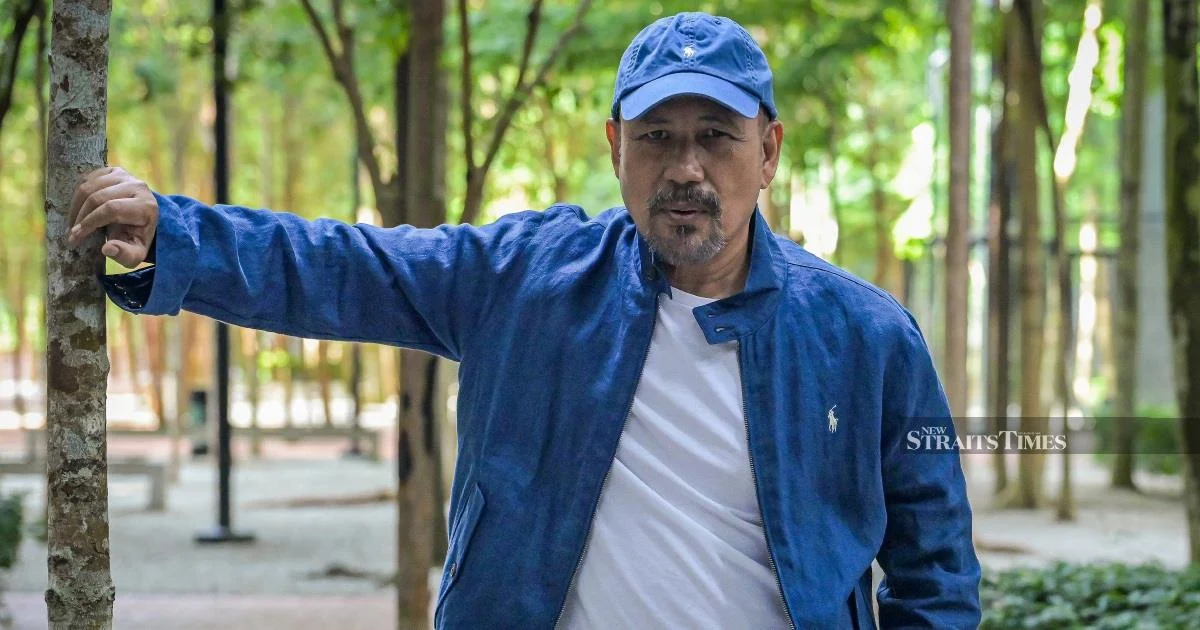
Legendary Malaysian musician Datuk M. Nasir has initiated legal proceedings seeking RM5 million in damages from MyTeksi Sdn Bhd, the company operating Grab's ride-sharing services in Malaysia, stemming from what he characterises as an unauthorised commercial exploitation of his identity. The veteran artist, speaking from Petaling Jaya, has chosen to maintain considerable discretion about the specifics of the dispute, preferring instead to focus on the broader principle at stake in the confrontation.
At the heart of the controversy lies the alleged deployment of M. Nasir's name—without his consent or knowledge—in promotional campaigns for a beverage product marketed through the Grab platform. For an artist of M. Nasir's stature, whose four-decade career has established him as one of Southeast Asia's most recognisable musical figures, such unauthorised commercial association represents a significant breach of personal autonomy and professional integrity. The incident raises critical questions about corporate accountability in the digital economy and the extent to which companies may exploit public figures' identities for commercial gain.
M. Nasir's insistence on framing this as a matter of "moral right" reflects a sophisticated understanding of intellectual property law and personal identity protection. Under Malaysian law, individuals possess inherent rights over their own name, image, and reputation—rights that extend beyond mere contractual agreements. These moral rights exist independently of commercial arrangements and cannot be surrendered simply because someone becomes a public figure. The artist's determination to pursue this matter through the courts suggests he views the infringement as sufficiently egregious to warrant legal action despite its inevitable media attention and the costs involved.
The Grab platform's involvement adds another layer of complexity to the situation. As Southeast Asia's dominant ride-hailing application, Grab has expanded aggressively beyond transportation into food delivery, financial services, and merchant partnerships. This diversification strategy has occasionally generated friction with partners and public figures regarding data usage, brand association, and commercial practices. The MyTeksi subsidiary's alleged misstep in this instance may reflect broader operational challenges as the company navigates rapid expansion across multiple business verticals in a region with varying regulatory standards.
For Malaysian audiences, this dispute carries implications extending well beyond one celebrity's grievance. The case touches upon fundamental questions about digital commerce ethics and consumer protection in an era when algorithms and automated systems can propagate commercial messages at scale with minimal human oversight. If companies can appropriate public figures' identities without consequence, it establishes a troubling precedent for how Malaysian consumers and personalities might find themselves involuntarily enrolled in marketing campaigns.
The incident also illustrates the vulnerability of public figures in the social media age, where identity—once carefully managed through traditional media channels—has become a dispersed digital asset susceptible to misappropriation. M. Nasir's decision to litigate rather than settle quietly sends a message that even well-established personalities will defend their rights rigorously. This contrasts with earlier eras when celebrities might have absorbed such infractions as minor inconveniences or settled privately through back-channel negotiations.
MyTeksi's response to the allegations remains notably subdued. The company has not issued detailed public statements addressing the specific claims, instead maintaining the kind of cautious silence typical of organisations navigating potential reputational damage. Whether this reflects ongoing settlement discussions, legal advice to avoid prejudicial statements, or genuine indifference to the allegation remains unclear. From a corporate perspective, the RM5 million figure—substantial though not catastrophic for Grab's regional operations—may indeed encourage serious negotiation.
The broader context of celebrity rights protection in Malaysia has been evolving. Recent years have witnessed increasing awareness among entertainers that their professional reputations constitute valuable assets warranting legal safeguards. This case could establish useful precedent regarding what constitutes permissible commercial association and what crosses into unlawful exploitation. Courts' handling of such disputes increasingly influences how corporations calculate the risks of appropriating public figures' identities without explicit authorisation.
For M. Nasir personally, the decision to pursue litigation represents a statement about principles transcending commercial calculation. Despite his iconic status potentially making settlement advantageous from a public relations standpoint, his emphasis on moral rights suggests he views the matter as one of principle—an assertion that even celebrated entertainers retain fundamental control over their identities and cannot be conscripted into commercial enterprises against their will. This stance, maintained despite his relative discretion about case details, underscores the depth of his conviction regarding the violation.
As the legal proceedings advance, Malaysian entertainment industry observers will likely monitor the case closely for its implications regarding identity rights, corporate accountability, and the evolving relationship between traditional celebrities and digital commerce platforms. The outcome could substantially influence how comparable disputes are negotiated across the region, potentially establishing clearer boundaries around the commercial use of public figures' names and likenesses without explicit permission.