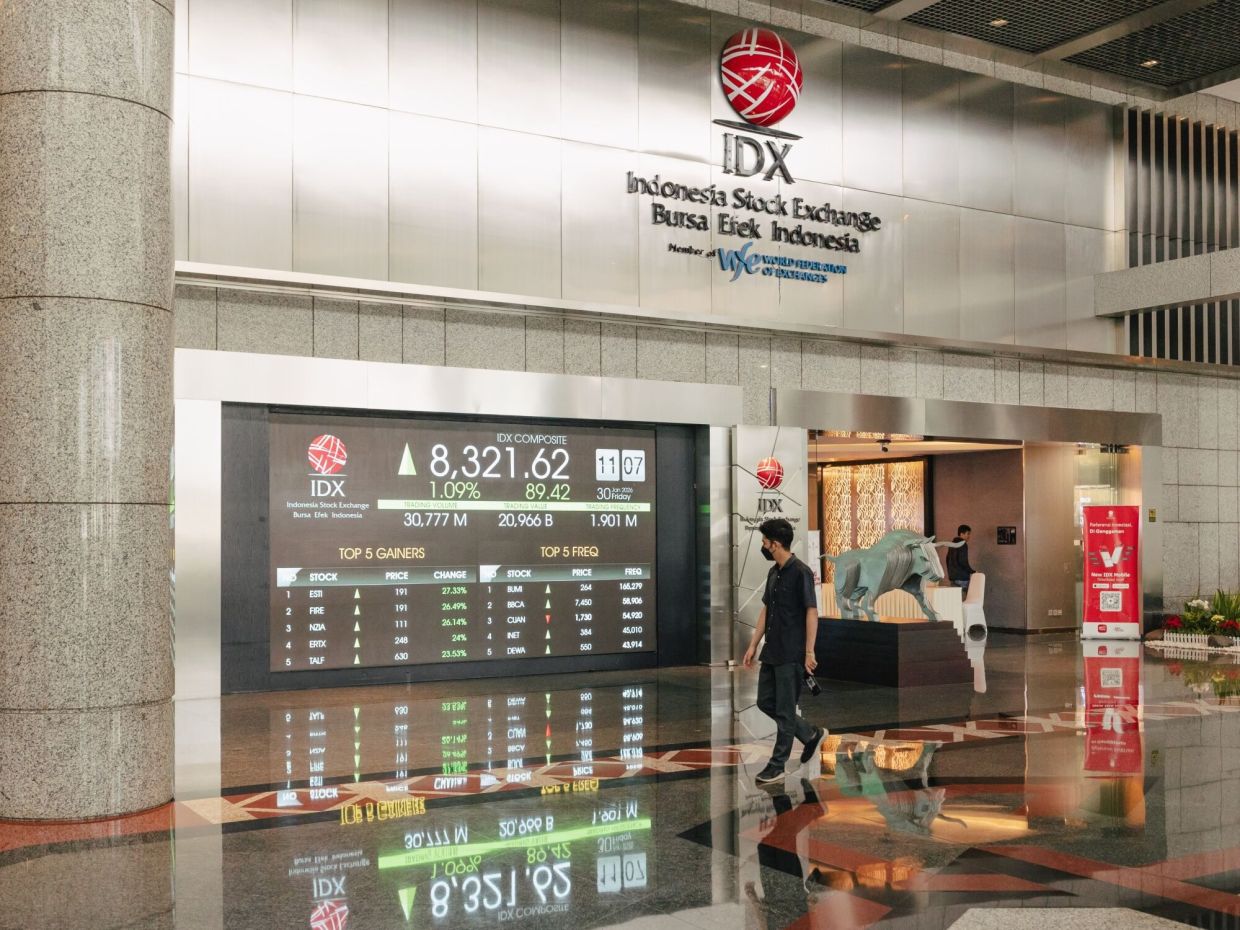
Indonesia's battle to retain its emerging market status with MSCI took a dramatic turn Thursday when the influential index provider disclosed fresh transparency deficiencies in one of Asia's largest economies. The revelation zeroes in on murky ownership patterns and coordinated trading activity that obscure true market dynamics, landing another significant blow to a stock market already battered by months of investor retreat.
The timing could hardly be more critical. Next week, MSCI will announce whether to strip Indonesia of its emerging market classification and relegate it to frontier status—a technical reclassification that would carry enormous financial consequences. Analysts estimate such a downgrade would force roughly $13 billion in outflows from tracking funds and other passive investors who mechanically follow MSCI's index weights. For a nation already seeing significant foreign capital departure, the impact would be severe.
Indonesia's equity markets have endured a punishing year. Since MSCI first flagged transparency risks in January, the broader investment climate has deteriorated considerably. The index provider's Thursday assessment specifically downgraded Indonesia's information flow metric to negative status, reflecting persistent opacity in how shareholdings are disclosed and how trades occur in the marketplace. This lack of clarity directly undermines the formation of accurate prices and makes it exceptionally difficult for global fund managers to calculate the true proportion of shares genuinely available for purchase by foreign investors—a crucial metric for assessing market accessibility.
Yet the evaluation may not be entirely bleak. Mohit Mirpuri, a portfolio manager at SGMC Capital in Singapore, cautioned against reading the review as uniformly damaging to Indonesia's prospects. He noted that only one accessibility measure slipped backward, while Indonesia maintained respectable scores relative to other major emerging economies including South Korea, China, and India on numerous important benchmarks. His base case remains that Indonesia will retain its emerging market designation when MSCI announces its verdict.
Indonesia's authorities have not been passive observers. Following MSCI's January warning, regulators and the stock exchange implemented several corrective initiatives, most notably doubling the minimum free float requirement for listed firms to 15 percent of shares. The urgency was underscored when the exchange's chief executive and the financial regulator's leader both departed on the same day in January—a dramatic move signalling how seriously policymakers took the threat.
The scope of the problem became clearer in subsequent months. MSCI extended its broader review into April and then removed six companies from its indexes in May, many with connections to prominent business tycoons. This pruning exercise triggered additional share price declines across the market, intensifying the pressure on investors already nervous about Indonesia's direction.
The stakes of MSCI's decision extend beyond mere index mechanics. The index provider's classifications drive the investment decisions of trillions of dollars globally. Passive funds tracking MSCI benchmarks would be forced to liquidate Indonesian holdings, while active managers with MSCI-based performance targets would be pressured to reduce their exposure. The cumulative selling effect could be devastating for market liquidity and valuations.
Broader economic headwinds are compounding the index classification crisis. President Prabowo Subianto's administration has pursued populist policies that have stirred investor anxiety about fiscal discipline, while the Indonesian rupiah has slumped to record weakness against the US dollar. The central bank has responded by tightening monetary policy in recent weeks, hiking interest rates to defend the currency—a move that constrains economic activity but signals officials recognise the severity of capital flight.
MSCI has also highlighted a structural weakness: Indonesia lacks an efficient offshore currency trading market, while onshore currency markets face significant restrictions. This limitation complicates hedging strategies for foreign investors and adds friction to cross-border capital flows. Combined with transparency issues, it presents a less attractive proposition for global fund managers.
The international credit markets have already rendered their own verdict. Moody's and Fitch, two of the world's three major sovereign rating agencies, downgraded Indonesia's debt outlook to negative earlier this year, citing eroded policy credibility and sliding investor confidence. This assessment underscores how the country's challenges extend well beyond equity market mechanics into fundamental questions about governance and macroeconomic stewardship.
The Jakarta Composite Index has fallen 29 percent through this year, a dramatic retreat for a market that once attracted foreign money as a key growth story in Southeast Asia. Foreign investors have pulled approximately $3.65 billion from Indonesian equities so far in 2026, evidence that the MSCI transparency concerns and emerging market downgrade threat are already reshaping capital allocation decisions across Asia's investment community. Indonesia's $1.4 trillion economy, once celebrated as a stable emerging market champion, now confronts investor scepticism that may take years to reverse even if authorities implement comprehensive reforms.