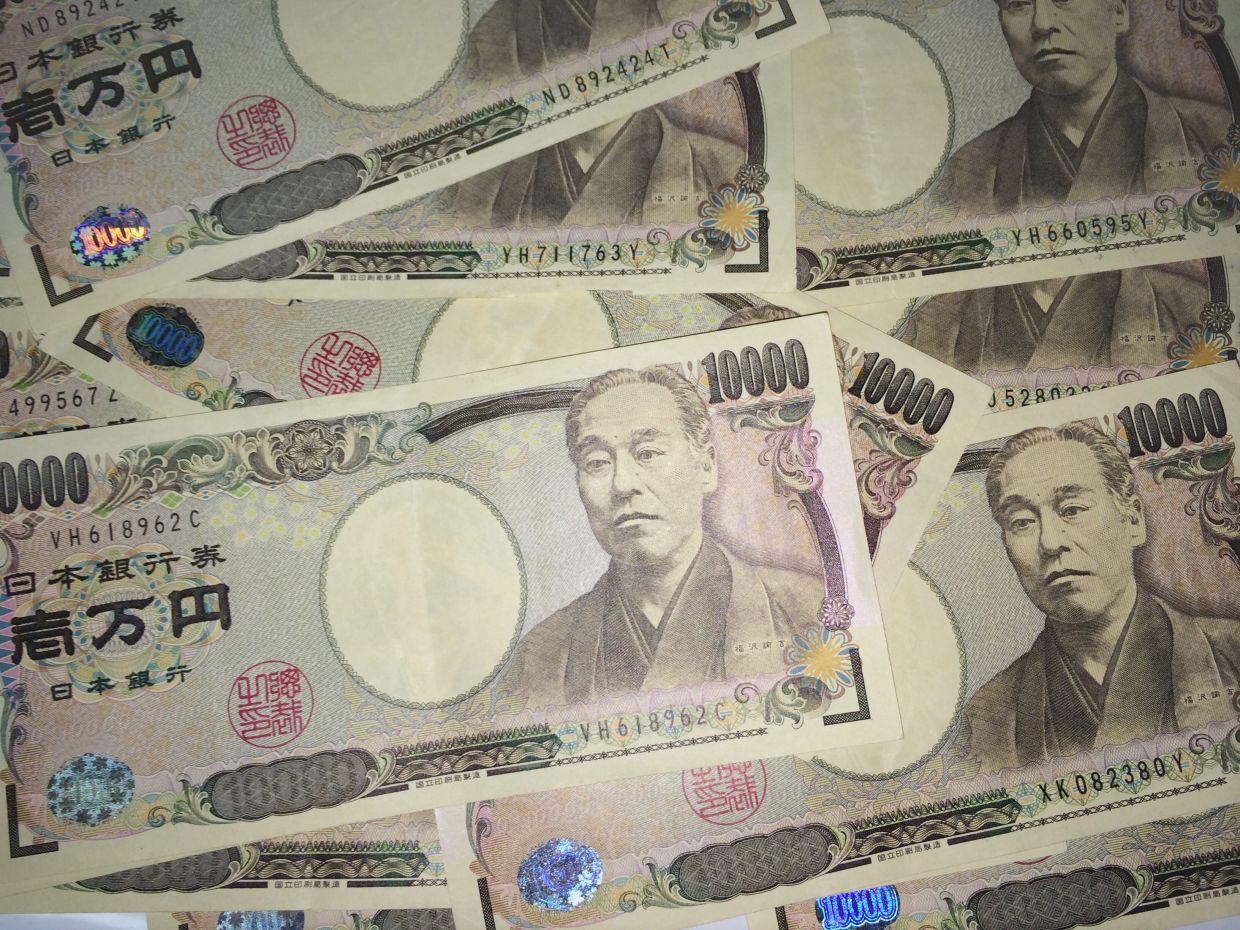
The Japanese yen continued its downward trajectory on Friday, hovering near four-decade lows as market participants braced for potential government intervention despite recent policy efforts aimed at stabilising the currency. Trading at 161.205 against the U.S. dollar—marginally stronger than the previous day's two-year low—the yen's persistent weakness has emerged as a significant concern for Japanese policymakers and investors across the region. The resilience of the slide underscores the complexity of currency dynamics in an era of competing economic pressures and geopolitical tensions.
Two major policy moves failed to arrest the yen's decline, raising questions about the effectiveness of Japan's monetary and fiscal tools. The Bank of Japan raised interest rates to their highest level in 31 years last week, a move conventionally expected to support a currency by making yen-denominated assets more attractive. Simultaneously, the Ministry of Finance conducted dollar-selling interventions earlier in the year, directly attempting to purchase yen and reduce its supply. Yet these measures have proven insufficient, reflecting deeper investor anxieties about Japan's economic trajectory and fiscal sustainability. Market observers suggest that scepticism persists about whether these policy responses address the root causes of capital outflows from Japan.
The thinning of global liquidity on Friday, driven by holidays across the United States and much of Asia, limited trading volumes and likely contributed to the yen's inability to stabilise at more meaningful levels. When trading volumes diminish, currency markets become more susceptible to sharp swings, and interventions may have reduced impact. Regional traders noted that broader currency movements remained subdued, with most major currencies showing little directional momentum. The normalisation of shipping in the Strait of Hormuz following the U.S.-Iran peace deal earlier in the week provided some relief to markets concerned about supply disruptions, yet this positive development has translated into only modest currency support for the yen.
Analysts at IG in Sydney have outlined a critical inflection point for Japan's intervention strategy. According to their assessment, the Ministry of Finance is likely to defend the 161.95 yen-per-dollar level initially, deploying firepower comparable to interventions mounted in April and May—when approximately 11.7 trillion yen was deployed. However, this approach carries substantial risks. Using 11 to 12 percent of Japan's total foreign exchange reserves in a compressed timeframe would be extraordinary, leaving limited ammunition for future defence of the currency. The mathematical reality suggests that without a fundamental shift in investor sentiment toward Japan, repeated interventions at similar scales would exhaust policy flexibility and erode credibility with global markets.
The strategic dilemma confronting Japanese policymakers reflects broader concerns about Prime Minister Sanae Takaichi's spending initiatives. Investor confidence has deteriorated partly due to uncertainty surrounding fiscal commitments that could exacerbate Japan's already-substantial debt burden. A large fiscal stimulus, combined with accommodative monetary policy, typically weighs on a nation's currency as it suggests future inflation and capital outflows. Markets are pricing in the possibility that the government may persist with expansionary policies, reducing the appeal of yen-denominated investments relative to opportunities elsewhere. This dynamic has created a self-reinforcing cycle in which weakness begets further weakness.
Inflation developments in Japan present a paradoxical picture that complicates the central bank's policy stance. Core inflation remained below the Bank of Japan's 2 percent target for the fourth consecutive month in May, restrained by government fuel price subsidies that have sheltered consumers from volatile Middle East energy costs. Yet this temporary relief masks inflationary pressures building beneath the surface. Capital Economics analysts project that as fuel subsidies taper and utilities companies pass through higher input costs, headline inflation could accelerate to approximately 3.5 percent by early 2027. This trajectory would represent substantial overshoot relative to the central bank's target, creating a policy bind in which current weakness demands tighter money but future inflation risks demand vigilance.
The Bank of Japan's own internal discussions reveal awareness of these tensions. Minutes from the April monetary policy meeting, released on Friday, disclosed that several board members advocated for more aggressive rate increases if Middle East geopolitical tensions persist and risk driving underlying inflation above target levels. Deputy Governor Ryozo Himino reinforced this message, stating explicitly that the central bank will continue raising interest rates while monitoring the risk of inflation exceeding its 2 percent objective. This messaging signals determination to prevent a spiral of rising price expectations, yet it conflicts with the currency weakness evident in markets. Higher rates should theoretically strengthen the yen, creating a credibility question about whether markets believe the central bank will follow through on its hawkish rhetoric.
Cross-asset movements elsewhere provided limited guidance for Japanese investors navigating this environment. The U.S. dollar index, measuring the greenback against a basket of six major currencies, held steady at 100.81 following a 0.5 percent climb to one-year highs on Thursday. The British pound remained flat at $1.3205 after the Bank of England kept rates unchanged at 3.75 percent, with policymakers judging that premature tightening could prove counterproductive given uncertainty about inflation persistence. Political developments in Britain added another variable, with traders monitoring a Greater Manchester by-election that could trigger a challenge to Prime Minister Keir Starmer from Labour Party rivals should Andy Burnham succeed.
The weakness in regional currencies mirrored the broader caution evident in Asian markets. The Australian dollar declined 0.1 percent to $0.7011, while the New Zealand dollar remained steady at $0.5756. These marginal movements reflected the thin trading environment rather than fundamental shifts in investor positioning toward Oceania-linked assets. Cryptocurrency markets similarly showed minimal volatility, with Bitcoin declining 0.2 percent to $62,868.18 and Ethereum unchanged at $1,708.98, suggesting that risk appetite remained subdued across multiple asset classes.
For Malaysian and Southeast Asian investors, the persistent yen weakness carries significant implications. Japanese investment remains a cornerstone of regional manufacturing, with substantial yen-denominated liabilities and revenue streams in the region's corporations. A weaker yen cheapens exports from Japanese competitors, potentially pressuring margins for regional exporters competing with Japanese firms. Simultaneously, a weaker yen reduces the effective returns on Japanese investments in Malaysian ringgit terms for local investors holding yen-based assets. The currency instability also complicates cross-border financing and hedging decisions for Southeast Asian firms with Japanese exposure, adding to the cost of doing business across the region.
The broader question confronting markets is whether Japan's policy arsenal can succeed where recent attempts have faltered. If the Ministry of Finance exhausts its intervention capacity without achieving stabilisation, a more precipitous yen decline could follow, potentially triggering capital flight and a broader reassessment of Japanese assets. Conversely, if the Bank of Japan succeeds in raising rates sufficiently to attract demand for yen-denominated investments while maintaining credibility, a gradual stabilisation could unfold. The coming weeks will test whether Japanese policymakers can thread this needle while managing the fiscal pressures and inflation risks that have complicated their task.
%22%2F%3E%3C%2Fpattern%3E%3C%2Fdefs%3E%3Crect%20width%3D%22100%25%22%20height%3D%22100%25%22%20fill%3D%22url(%23ph5i5e3g)%22%2F%3E%3Crect%20width%3D%22100%25%22%20height%3D%22100%25%22%20fill%3D%22url(%23ph5i5e3p)%22%2F%3E%3Ctext%20x%3D%2250%25%22%20y%3D%2250%25%22%20text-anchor%3D%22middle%22%20dominant-baseline%3D%22central%22%20fill%3D%22rgba(255%2C255%2C255%2C0.95)%22%20font-family%3D%22Georgia%2C%20'Times%20New%20Roman'%2C%20serif%22%20font-weight%3D%22700%22%20font-size%3D%22272%22%20letter-spacing%3D%22-0.02em%22%3EAnwar%3C%2Ftext%3E%3C%2Fsvg%3E)
%22%2F%3E%3C%2Fpattern%3E%3C%2Fdefs%3E%3Crect%20width%3D%22100%25%22%20height%3D%22100%25%22%20fill%3D%22url(%23ph2oh7yg)%22%2F%3E%3Crect%20width%3D%22100%25%22%20height%3D%22100%25%22%20fill%3D%22url(%23ph2oh7yp)%22%2F%3E%3Ctext%20x%3D%2250%25%22%20y%3D%2250%25%22%20text-anchor%3D%22middle%22%20dominant-baseline%3D%22central%22%20fill%3D%22rgba(255%2C255%2C255%2C0.95)%22%20font-family%3D%22Georgia%2C%20'Times%20New%20Roman'%2C%20serif%22%20font-weight%3D%22700%22%20font-size%3D%22226%22%20letter-spacing%3D%22-0.02em%22%3EPolice%3C%2Ftext%3E%3C%2Fsvg%3E)