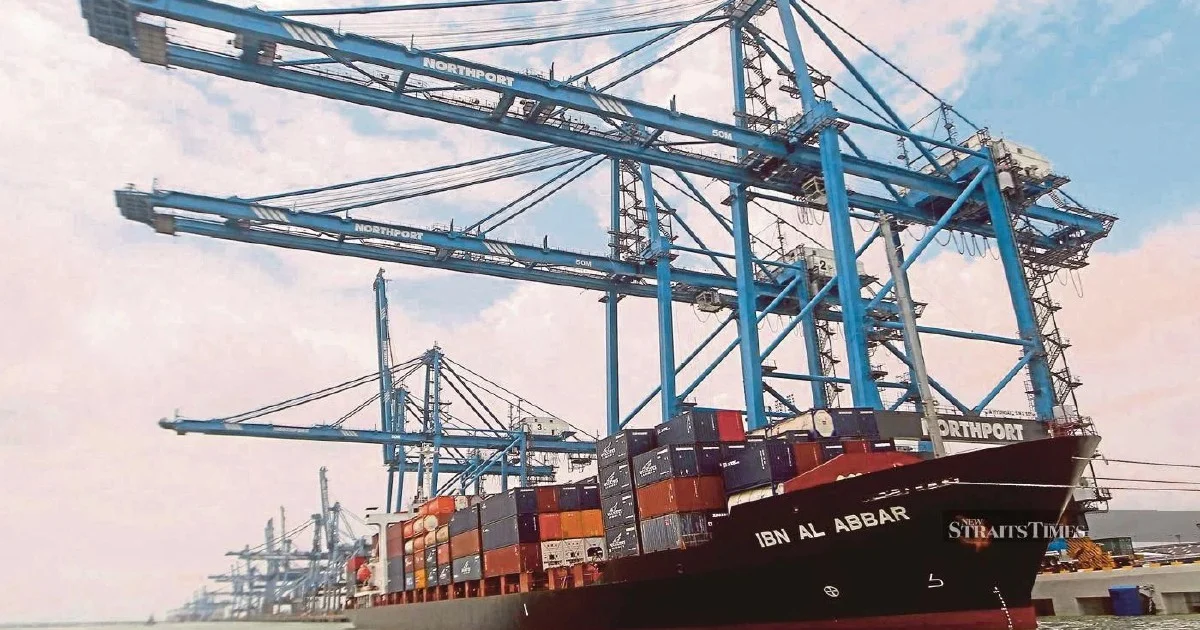
Transport Minister Anthony Loke has signalled that Malaysia's ambitious Port Klang 3 expansion remains operationally viable and could break ground as soon as this year, conditional on settling outstanding property negotiations with the Selangor state government. Speaking in Port Klang, Loke indicated that the project has retained momentum despite the administrative hurdles that have delayed its commencement, with resolution of territorial complications becoming the primary catalyst for accelerating development timelines.
The Port Klang 3 initiative represents a significant strategic investment in Malaysia's port infrastructure, intended to enhance the nation's capacity to handle growing container volumes and competing more effectively with neighbouring regional hubs. The expansion aligns with broader government objectives to modernise maritime logistics networks and solidify the country's position as a key transhipment centre in Southeast Asia. The project's advancement would demonstrate a commitment to long-term infrastructure development even amid economic uncertainties affecting global trade patterns.
Land acquisition and boundary demarcation have emerged as the principal administrative obstacles preventing immediate commencement of the undertaking. The Selangor government holds jurisdictional interests in portions of the proposed development site, necessitating inter-governmental coordination and property-rights clarification before construction permits can be issued. These negotiations, while protracted, are described as progressing constructively, suggesting that a breakthrough could materialise within coming months rather than extending into subsequent quarters.
The timing of Loke's announcement carries particular significance given Malaysia's broader economic trajectory and regional competitive positioning. Port Klang currently operates as Southeast Asia's second-busiest container terminal, yet capacity constraints increasingly limit its ability to accommodate expanding shipment volumes. A successful Port Klang 3 launch would augment operational capabilities and reinforce investor confidence in Malaysia's infrastructure development agenda, potentially attracting additional foreign direct investment in manufacturing and logistics sectors that depend on efficient port operations.
From a regional perspective, Port Klang 3's progression matters substantially for Malaysian businesses engaged in export-oriented industries, particularly electronics manufacturing, petrochemicals, and palm oil processing. Expanded port capacity directly translates into reduced shipping costs and faster cargo clearance, competitive advantages that reverberate throughout supply chains. Neighbouring countries including Singapore, Thailand, and Indonesia are simultaneously upgrading their own maritime facilities, making Malaysia's infrastructure modernisation imperative for maintaining market share in regional and global trade networks.
The project's financial structure remains intricate, involving multiple stakeholders including port operators, governmental entities, and potential private-sector partners. Clarity regarding funding mechanisms and operational arrangements constitutes secondary but important considerations affecting actual implementation schedules. Loke's confidence in achieving construction commencement suggests that preliminary financing discussions have progressed sufficiently to warrant public optimism, though formal investment commitments may await formal governmental approvals.
Selangor's involvement in the expansion reflects the state's economic importance within Malaysia's broader development strategy. The state government's cooperation proves essential not merely for land transfers but for integrated planning ensuring that port expansion aligns with supporting infrastructure—road networks, rail connections, and industrial zones—that maximise the facility's operational effectiveness. Multi-level governmental coordination of this complexity occasionally produces delays, yet successful navigation of these bureaucratic requirements ultimately yields more comprehensive and sustainable development outcomes.
Industry observers anticipate that Port Klang 3 could expand the facility's annual container-handling capacity by several million twenty-foot equivalent units, substantially increasing Malaysia's competitive positioning relative to other Southeast Asian ports. This expansion would prove particularly beneficial for Malaysian companies seeking to reduce logistics costs during economically challenging periods when operational efficiency gains directly strengthen competitiveness. Shipping lines and freight forwarders operating throughout the region similarly view port capacity expansion as critical infrastructure investment supporting broader regional trade acceleration.
The minister's conditional timeline indicates that remaining hurdles are primarily administrative rather than technical or financial in character. Engineering and operational planning for the expansion has apparently progressed sufficiently that construction could commence promptly once land matters achieve resolution. This distinction matters considerably for assessing project viability, suggesting that delays reflect jurisdictional coordination rather than fundamental project-feasibility concerns that might necessitate broader strategy reconsideration.
Malaysian port authorities and logistics stakeholders have invested considerable effort in advancing Port Klang 3, recognising that the nation's economic prosperity increasingly depends on seamless integration into global and regional supply networks. The project's advancement would validate their strategic perspective and provide concrete evidence that long-term infrastructure planning can proceed despite short-term political and administrative complexities. Success here potentially establishes valuable precedents for managing similarly complicated future infrastructure initiatives requiring multi-stakeholder coordination.
As negotiations with Selangor continue, stakeholders across Malaysia's manufacturing, shipping, and logistics sectors remain attentive to developments. Port Klang 3's commencement would signal resilience in Malaysia's infrastructure development agenda and reaffirm governmental commitment to maintaining the competitive advantages that have sustained the nation's prosperity within increasingly interconnected regional and global economies.

%22%2F%3E%3C%2Fpattern%3E%3C%2Fdefs%3E%3Crect%20width%3D%22100%25%22%20height%3D%22100%25%22%20fill%3D%22url(%23ph5dzoeg)%22%2F%3E%3Crect%20width%3D%22100%25%22%20height%3D%22100%25%22%20fill%3D%22url(%23ph5dzoep)%22%2F%3E%3Ctext%20x%3D%2250%25%22%20y%3D%2250%25%22%20text-anchor%3D%22middle%22%20dominant-baseline%3D%22central%22%20fill%3D%22rgba(255%2C255%2C255%2C0.95)%22%20font-family%3D%22Georgia%2C%20'Times%20New%20Roman'%2C%20serif%22%20font-weight%3D%22700%22%20font-size%3D%22170%22%20letter-spacing%3D%22-0.02em%22%3EMalaysia%3C%2Ftext%3E%3C%2Fsvg%3E)