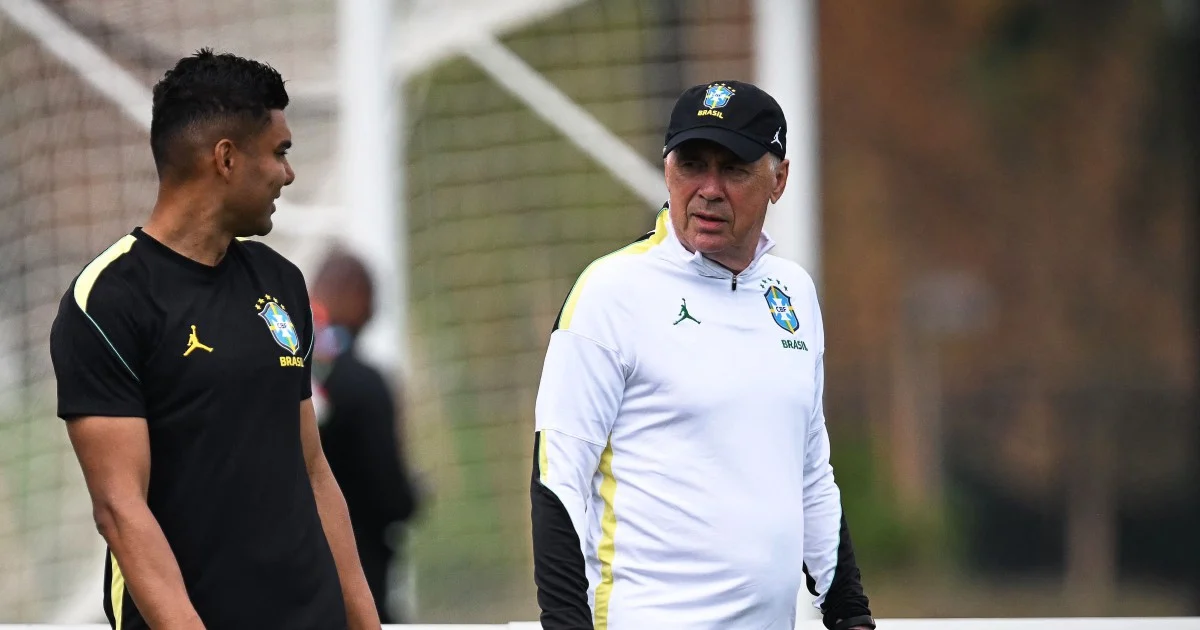
Brazil's World Cup campaign has begun with a sobering reminder that even the tournament's most decorated nations cannot afford to take early fixtures for granted. Following their 1-1 stalemate with Morocco in the opening match of their Group C campaign, coach Carlo Ancelotti is taking a measured approach to the setback, rejecting any suggestion of crisis while acknowledging that Friday's clash with Haiti presents an immediate opportunity to refocus his squad's efforts and demonstrate the quality expected of them.
Ancelotti's composure in the wake of the Morocco result reflects both his experience managing elite European clubs and his understanding that World Cup campaigns rarely follow a linear trajectory. The veteran Italian tactician has been through enough high-pressure tournaments to recognise that opening matches often produce unexpected results, and that squads capable of winning the competition are those that respond effectively to early adversity. By refusing to enter panic mode, he is sending a calculated signal to his players that the work of refinement and adjustment begins immediately rather than spiralling into destructive self-doubt.
The 1-1 draw with Morocco exposed specific vulnerabilities that demand urgent correction before the Haiti match. Brazil's defensive shape at times appeared disorganised, suggesting lapses in concentration and positioning that a more ruthless opponent could capitalise upon with devastating effect. In midfield, the transition game—often a hallmark of Brazilian football—lacked the fluidity and control that enables the team to dominate possession and dictate play. These are correctable issues, not fundamental flaws in the squad's composition, but their resolution requires both tactical adjustment and mental reset.
Offensively, Brazil created chances without converting them at the rate expected of a side featuring world-class forwards. The margin between drawing 1-1 and winning comfortably can often be measured in clinical finishing rather than fundamental tactical differences. Ancelotti's challenge lies in improving both the creation of chances and the execution of them, transforming Brazil's dominance in phases of play into tangible results on the scoreboard.
Haiti, emerging as Group C's perceived weakest side, represents the type of opponent where Brazil should establish the dominance they failed to achieve against Morocco. Historically, such fixtures have provided clear platforms for stronger nations to reset momentum and confidence, allowing coaches to implement adjustments in a lower-pressure environment. The significance of Haiti in Brazil's campaign trajectory cannot be overstated—victory would restore confidence and points while simultaneously providing Ancelotti with valuable evidence of whether his tactical adjustments have yielded improvement.
The context of playing in Philadelphia adds a particular dimension to this fixture, transporting Brazil to American soil for what is fundamentally a must-win situation in group-stage terms. The logistical and environmental factors of competing in the United States, combined with the weight of national expectation in Brazil itself, create additional pressure that experienced squads navigate by maintaining operational focus rather than emotional volatility. Ancelotti's calm demeanour helps establish that mental framework.
For Malaysian and Southeast Asian observers of the World Cup, Brazil's situation carries broader lessons about tournament dynamics. Even nations with deeper talent pools and resources cannot guarantee smooth progress, and the margin between success and disappointment often rests on marginal factors—individual errors, defensive lapse, or missing clear-cut opportunities. The Haiti fixture demonstrates how quickly the narrative can shift, and how managing expectations and maintaining composure becomes as vital as tactical sophistication.
Ancelotti's approach also reflects the strategic reality that different opponents require different tactical solutions. Morocco's defensive structure and shape presented different problems than Haiti will, and the Brazilian coach has indicated awareness that his team's approach may need contextual adjustment. Rather than implementing identical tactics regardless of opposition, astute managers recognise that flexibility and adaptation separate champions from underperformers.
The broader picture for Brazil's World Cup ambitions depends significantly on whether they can demonstrate the consistency and intensity required to navigate a competitive group stage. Morocco's opening performance proved that even unfancied opponents can pose genuine problems to established powers, and Haiti—though ranked far lower—will present its own challenges. By maintaining calm focus rather than reactive panic, Ancelotti positions his squad to learn from the Morocco experience and convert that learning into improved performance.
The Haiti match therefore transcends a routine group-stage fixture, becoming instead the test of whether Brazil and Ancelotti can genuinely implement the corrections identified in their opening performance. The coach's unflappable demeanour suggests confidence in his team's quality and his own ability to guide them through the adjustments required, but confidence alone rarely wins matches—execution of the identified improvements will ultimately determine whether Friday in Philadelphia represents a turning point or merely the continuation of an unconvincing campaign.