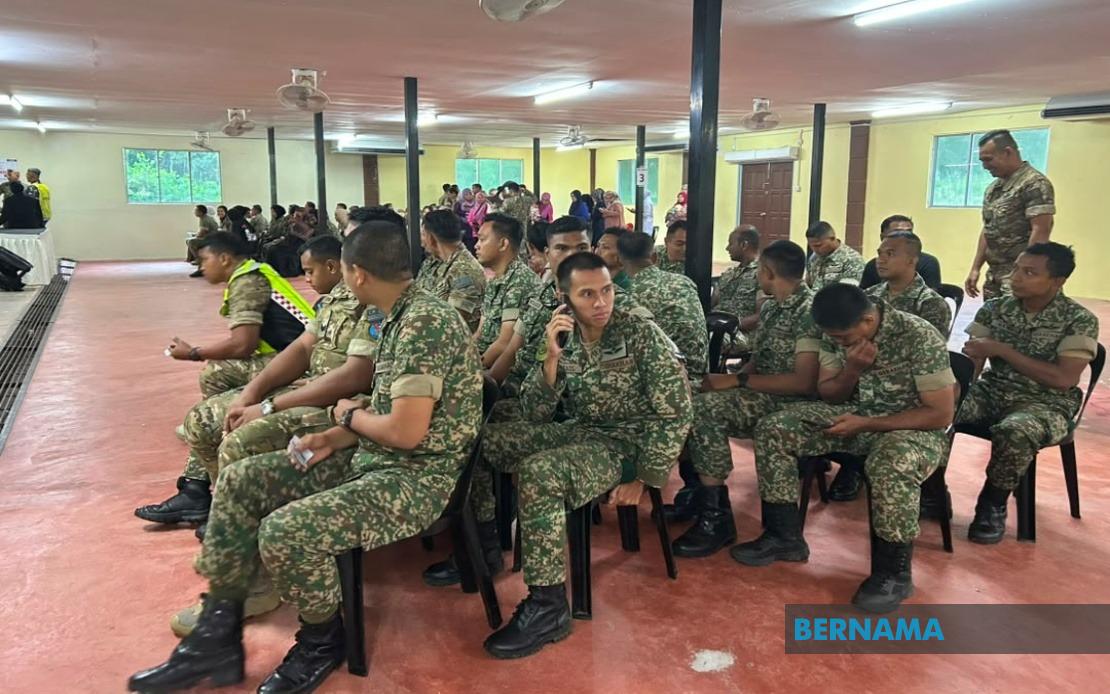
Security personnel across Johor cast their ballots on July 7 in an early voting process for the state's 16th general election, prompted by calls from the nation's Home and Defence Ministers to approach the exercise with democratic responsibility. The appeal underscores the significance of the electoral process even before the main polling day, as military and police officers exercise their franchise ahead of the general electorate.
Home Minister Datuk Seri Saifuddin Nasution Ismail and Defence Minister Datuk Seri Mohamed Khaled Nordin issued their exhortations through Facebook messages, reaching out to 24,751 eligible early voters to ensure the voting procedure unfolded smoothly and without incident. Both ministers framed participation as a solemn civic obligation rather than a mere procedural formality, emphasising that every ballot cast represented an investment in the state's democratic future. The dual messaging from two senior cabinet figures reflected the federal government's determination to maintain electoral integrity across all constituencies and voter categories.
Saifuddin Nasution, who additionally serves as secretary-general of the ruling Pakatan Harapan coalition, articulated the government's position with particular clarity, reminding voters that their participation should be guided by democratic principles and a sense of personal accountability. His statement extended beyond the immediate voting exercise to encompass the broader campaign environment, directing PH's election machinery to sustain engagement with voters throughout the remaining campaign period. This guidance proved significant, as it signalled to party workers and volunteers the importance of maintaining professional and decorous conduct right through to Saturday's main polling day.
Mohammad Khaled approached the matter from a different angle, framing early voting as an opportunity for security personnel to contribute to Johor's continued development and stability. His message resonated with the idea that those who serve the nation's security interests possess a particular responsibility to participate meaningfully in the democratic process. The Defence Minister's emphasis on progress and continuity aligned with broader messaging emerging from both electoral coalitions competing for voter support in the state.
Meanwhile, Menteri Besar Datuk Onn Hafiz Ghazi issued a separate appeal on behalf of the Barisan Nasional coalition, urging early voters to place their confidence in BN candidates and their vision for sustaining economic growth, infrastructural advancement, and welfare provisions. The timing and coordination of these statements from leaders representing different political formations highlighted how the election had captured the attention of Malaysia's highest-ranking officials, regardless of party affiliation. The mutual emphasis on orderliness and democratic conduct suggested a shared commitment to preventing any electoral irregularities or disturbances.
The early voting cohort comprised two distinct security-related populations: 12,041 personnel from the Malaysian Armed Forces and their spouses, alongside 12,710 members of the police force and their families. This segmentation recognised that security personnel, whether military or law enforcement, often face operational constraints that prevent them from participating in standard polling procedures. Providing dedicated early voting arrangements reflected long-standing electoral practice designed to ensure that those protecting the nation could exercise their democratic rights without compromising their operational duties.
Logistics for the early voting exercise involved 64 designated polling centres that opened at 8 am, with staggered closing times ranging from noon to 6 pm depending on individual venue circumstances and voter registration numbers. This distribution of voting locations across Johor aimed to prevent bottlenecks and facilitate orderly participation among security personnel and their dependents. The careful calibration of opening hours and centre locations demonstrated the Election Commission's investment in ensuring accessibility for all eligible early voters.
The 16th Johor State Election represents a significant electoral contest, with both major coalitions fielding candidates across all 56 state assembly constituencies. A combined total of 172 candidates from Pakatan Harapan and Barisan Nasional are contesting for state assembly seats, making this a comprehensive electoral engagement. The saturation of all constituencies by both major coalitions suggests a competitive electoral environment, with neither side conceding any seat without mounting a serious campaign effort.
Saturday's main polling day will determine which coalition secures the mandate to govern Johor for the next state legislative term. Early voting results will provide initial indicators of electoral momentum, though full results will emerge only after main polling concludes and votes are tallied across all 56 constituencies. For Malaysian political observers and regional analysts, the Johor election carries implications beyond the state itself, potentially signalling broader shifts in voter sentiment and coalition dynamics that may influence federal-level politics and other state electoral contests.

