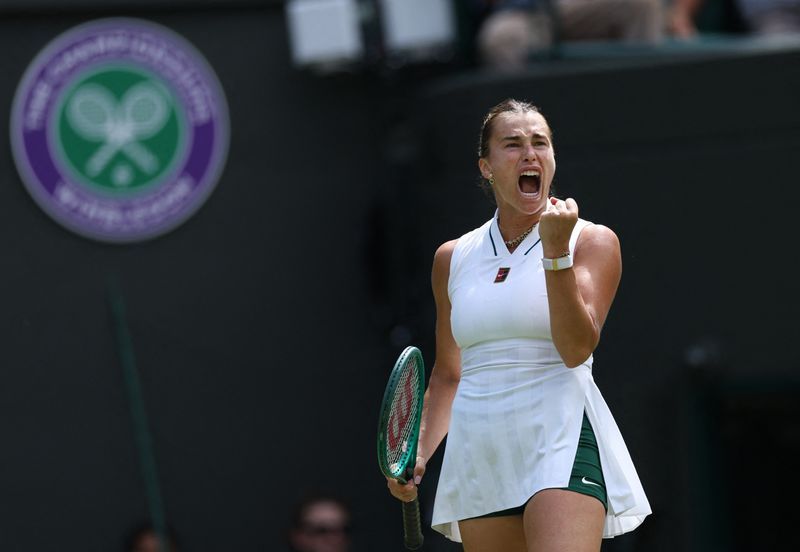
Aryna Sabalenka's complicated relationship with Wimbledon's grass continued to provide drama on Wednesday as the Belarusian world number one fought off a spirited challenge from American McCartney Kessler to secure a 6-1 7-6(9) victory in the second round. The match at the All England Club underscored both Sabalenka's capacity to adapt when necessary and the genuine difficulties she faces on the sport's most distinctive surface, where power and precision must coexist in ways that suit some players far more naturally than others.
The opening set revealed no such difficulties. Sabalenka dismantled her American opponent with the kind of commanding performance that reminded spectators why she sits atop the world rankings. Her aggressive baseline game proved overwhelmingly effective, allowing her to close out the set 6-1 with minimal resistance from Kessler. At this stage, the match appeared destined for a comfortable victory, with Sabalenka looking every bit the favourite to claim the title outright.
The second set, however, told an entirely different story. Kessler suddenly found her range and her confidence, surging ahead to a commanding 5-2 lead that prompted visible frustration from the Belarusian, who could be seen repeatedly striking her thigh in anger as missed opportunities mounted. The American, who had earned the remarkable distinction of reaching the second round without dropping a single game before facing Sabalenka, appeared positioned to force a decisive third set. With two set points at 5-3 and subsequently two more during the tiebreak itself, Kessler had multiple opportunities to completely turn the trajectory of the match.
What transpired over the next crucial minutes demonstrated precisely why Sabalenka remains the sport's commanding force despite her acknowledged discomfort on grass. Rather than crumble under the mounting pressure, she leaned on the weight and depth of her ground strokes to gradually wrestle back control. Her experience at the highest levels of professional tennis proved invaluable, allowing her to navigate the tiebreak's pivotal moments with composure that eluded her younger opponent. After one hour 39 minutes of compelling tennis, Sabalenka finally converted her third match point, securing passage to the next round.
The victory carries genuine significance for Sabalenka's career aspirations. She remains in pursuit of her first Grand Slam title won on a surface other than hard courts, a distinction that would broaden her legacy and mark an important career milestone. Hard courts have long been her domain, where her powerful game finds natural expression, yet Grand Slam tournament success across multiple surfaces remains the defining test of all-round excellence in professional tennis.
Sabalenka herself acknowledged the difficulty of the challenge presented by Kessler. Speaking immediately after the match, she expressed considerable relief at having navigated the test successfully. The top seed recognised that her opponent had delivered a genuinely intimidating display of aggression and tactical execution, particularly during the second set when the momentum had swung decisively in the American's favour. Her comments reflected not merely standard post-match courtesy but genuine recognition of how close she came to departing the tournament.
The mental and physical demands of grass court tennis differ meaningfully from the hard court environment where Sabalenka has built her dominance. The surface's characteristics—the quicker pace of play, the lower and more irregular bounces, the emphasis on net approach and serve-and-volley technique—require different rhythms and adjustment from the baseline game. Sabalenka's natural aggression can become a liability on grass if not carefully calibrated, yet her retreat towards a more measured approach also invites opponents to take greater liberties with their shot selection.
Kessler's second-set performance suggested that exploiting these vulnerabilities remains possible for players willing to accept the higher risk that such an approach demands. The American's decision to elevate her aggression and take more chances on returning and during rallies paid significant dividends, even if it ultimately fell short of producing a successful outcome. For context, reaching the second round without dropping a set represents an exceptional achievement that speaks to either dominant play or fortunate draws—likely both in Kessler's case—making her sudden competitiveness against the world number one particularly noteworthy.
Sabalenka's passage through to the third round sets up a meeting with Latvia's Jelena Ostapenko, another player whose aggressive baseline game and powerful stroke production creates a natural tactical matchup. Ostapenko, a former French Open champion, possesses the attacking credentials to trouble the world number one, particularly if Sabalenka's grass court adjustment remains incomplete. Successive matches against players who demand high levels of tactical precision and willingness to engage in extended baseline rallies may provide either valuable seasoning or concerning evidence of incomplete preparation for the tournament's latter stages.
For Malaysian tennis enthusiasts and Southeast Asian observers, Sabalenka's journey at Wimbledon offers broader lessons about athletic persistence and the importance of mental fortitude when circumstances turn unfavourable. Her ability to recover from a 5-2 deficit and then hold firm through a closely contested tiebreak demonstrates qualities that transcend sport itself. The resilience she displayed when facing elimination—converting a third match point only after previous opportunities slipped away—reflects the survival instincts that have defined her competitive approach throughout her career.

