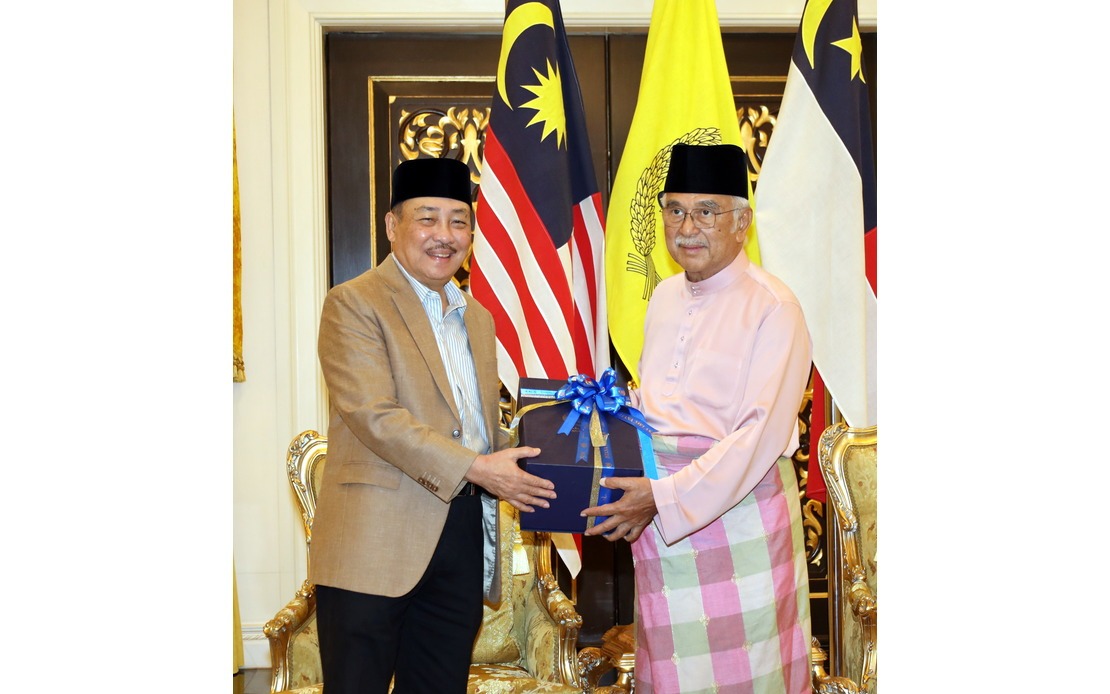
Sabah Chief Minister Datuk Seri Hajiji Noor travelled to Melaka recently for a formal courtesy call on Yang Dipertua Negeri Tun Dr Mohd Ali Mohd Rustam, marking another step in deepening the connection between Malaysia's easternmost state and the historic Peninsular territory. The visit underscores the importance placed by state leaders on maintaining robust bilateral relations across the federation, a practice that has become increasingly central to addressing shared governance challenges and fostering collaborative economic development.
The meeting occurred at Istana Melaka in Bukit Beruang, where Hajiji and his accompanying delegation arrived at approximately 3.35 pm and were welcomed by the Yang Dipertua Negeri. Such formal visits between state leaders, though sometimes appearing ceremonial on the surface, serve as critical opportunities for establishing personal rapport and clarifying policy positions on issues that transcend state boundaries. In Malaysia's federal structure, where powers are distributed between national and state governments, these interpersonal connections often prove instrumental in facilitating smoother cooperation on matters ranging from infrastructure development to resource management.
According to the Sabah Chief Minister's Office, the discussions during the meeting encompassed various subjects of shared concern to both Sabah and Melaka. While the specific agenda items were not detailed publicly, such state-level dialogues typically address economic collaboration opportunities, coordinated approaches to addressing developmental challenges, and alignment on matters requiring federal-state coordination. For observers tracking Malaysian politics, these gatherings provide insight into emerging coalitions and the health of inter-state relations within the broader context of federal governance.
The composition of Hajiji's delegation itself carried significance, reflecting the breadth of governmental interests being brought to the table. Accompanying the Chief Minister were Sabah Rural Development Minister Datuk Rubin Balang, Agriculture, Fisheries and Food Industry Minister Datuk Jamawi Jaafar, and Nominated Member of the Sabah State Legislative Assembly Datuk Mohd Razali Mohd Razi. The inclusion of ministers overseeing rural development and agricultural sectors suggests that discussions may have touched upon areas where Melaka and Sabah could explore complementary initiatives, particularly given Melaka's position as a developed industrial and tourism hub and Sabah's resource-rich agricultural and maritime landscape.
For Malaysian stakeholders, especially those monitoring regional economic development, such visits carry implications beyond mere protocol. Sabah's geographic location on Borneo positions it as strategically important for Southeast Asian trade and connectivity initiatives. Melaka, with its historical significance and coastal advantages, continues to function as a vital node in regional commerce. Strengthening the working relationship between their respective leadership structures creates potential for collaboration on infrastructure projects, investment coordination, and joint advocacy within national policy circles.
The meeting concluded with afternoon tea hosted by Tun Mohd Ali, a customary closing gesture that emphasised the cordial nature of the engagement. These informal concluding moments often facilitate candid conversations away from the formality of seated discussions, allowing leaders to establish personal chemistry that can smooth future negotiations or policy coordination. Such relationship-building is particularly valuable in Malaysia's multiethnic and multisectoral political landscape, where consensus-building frequently depends on trust established through repeated personal interaction.
From a broader governance perspective, the visit exemplifies the federal principle in action—states actively engaging with one another rather than operating in isolation. This approach contrasts with more centralised systems and reflects Malaysia's constitutional framework, which intentionally distributes authority to encourage regional ownership of development priorities. When state chief ministers travel to meet counterparts, they signal that they view their responsibility as extending beyond administering their own territories to contributing to national coherence and cross-state problem-solving.
The timing of such courtesy calls also warrants consideration. Regular engagement between state leaders helps prevent the emergence of regional grievances that, if left unaddressed, might fester into more significant political tensions. In Malaysian politics, where state-level politics can significantly influence national dynamics, maintaining these channels of communication serves the broader interest of political stability. For investors and businesses operating across multiple states, knowing that state governments maintain productive working relationships provides assurance regarding the predictability of the operating environment.
Looking forward, visits of this nature often lay groundwork for more substantive collaborative projects. Whether the discussions between Hajiji and Tun Mohd Ali will yield concrete initiatives in areas like agricultural trade, tourism promotion, or infrastructure connectivity remains to be seen. However, the commitment to face-to-face engagement and dialogue sends a positive signal about the willingness of Sabah's leadership to strengthen ties with other Malaysian states and to participate actively in the networks of interstate cooperation that increasingly characterise Malaysian governance.

