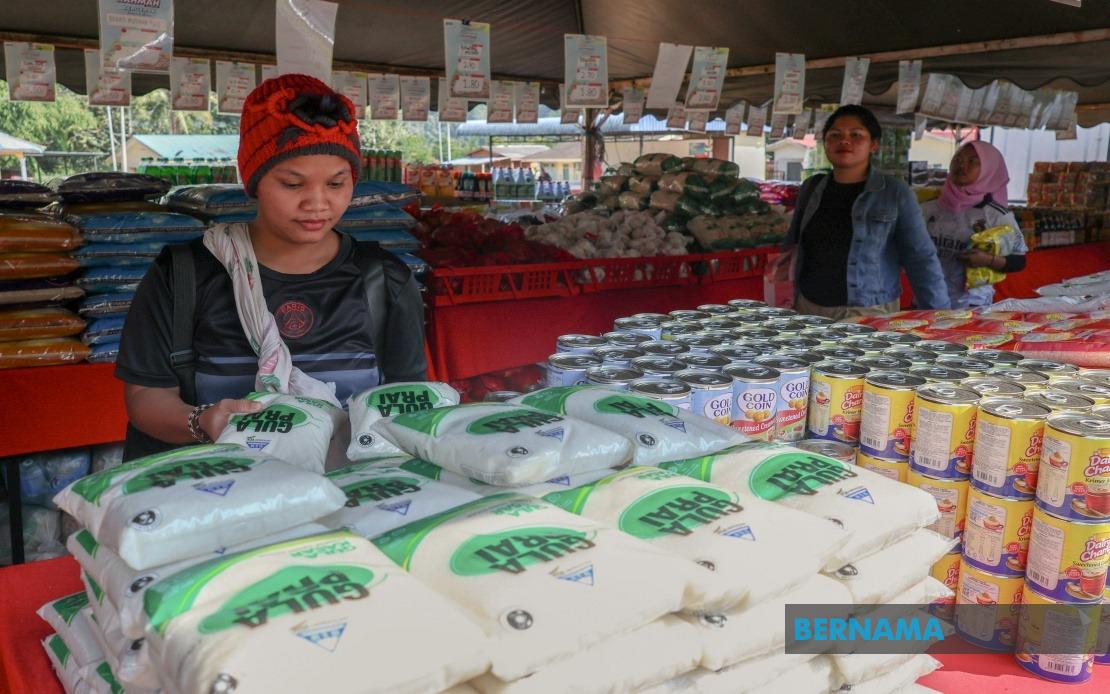
The Domestic Trade and Cost of Living Ministry (KPDN) has reported tangible success in its Essential Goods Distribution Programme, which aims to eliminate the pricing disparities that have long disadvantaged rural and remote communities. The initiative, which standardises prices for seven essential commodities including sugar, wheat flour, packet cooking oil, white rice, liquefied petroleum gas, RON95 petrol and diesel, represents a significant intervention in the ongoing challenge of cost-of-living pressures affecting Malaysian households outside urban centres.
Rural residents have historically faced a hidden tax on their geographic location, paying substantially more for identical products due to transport costs and limited competition. The programme directly addresses this inequity by establishing controlled pricing mechanisms that apply uniformly across designated zones. The results have been measurable: in the Pulau Libaran zone of Sabah, LPG cylinders that once cost residents RM39 now retail at the controlled price of RM26.60—a reduction of approximately 32 percent that translates into meaningful savings for households dependent on gas for cooking and heating.
Packet cooking oil illustrates the programme's impact even more starkly. Previously available only at RM3.50 per packet in remote areas, the same product now sells at the controlled price of RM2.50, representing a 29 percent discount. These are not abstract statistics; they represent real household budget relief for families in areas where transportation networks limit supply competition and retailers traditionally marked up prices to cover logistics and spoilage risks.
The scale of the programme reflects both its ambition and the magnitude of the challenge it addresses. With RM250 million allocated for 2024 alone, the initiative reaches 1.03 million residents distributed across six states: Sabah, Sarawak, Terengganu, Kelantan, Pahang and Kedah. These are predominantly states with significant rural populations and geographical challenges that make commodity distribution inherently more expensive than in densely populated urban areas. The infrastructure supporting this effort spans 212 distribution zones, 828 individual distribution areas, and 1,532 points of sale—a logistical undertaking requiring coordination between federal and state authorities.
Sabah commands particular attention within the programme, receiving RM107.3 million of the annual allocation to service 492,566 recipients across 78 zones, 228 distribution areas and 587 points of sale. This substantial investment reflects both the state's geographic challenges—characterised by dispersed populations across islands and mountainous terrain—and its economic vulnerability to cost-of-living pressures. The Libaran parliamentary constituency alone benefits from RM1.76 million in support, with nine designated points of sale serving 17,061 residents across eight distribution areas, demonstrating the programme's granular approach to reaching even relatively small remote populations.
Implementing price controls across geographically dispersed areas requires robust systems to prevent diversion and black-market leakage. KPDN has established standardised operating procedures governing deliveries and established Programme Monitoring and Coordination Committees at both ministry and state levels. This governance architecture attempts to balance the competing demands of efficient logistics and integrity monitoring. Without such oversight mechanisms, controlled-price commodities risk being redirected to higher-margin markets, undermining both the programme's effectiveness and its equity objectives.
The political dimension of the programme deserves consideration. Parliamentary questions from rural representatives like Datuk Suhaimi Nasir (BN-Libaran) indicate constituency awareness of commodity costs as a ballot-box issue. The government's detailed response—citing specific price reductions in named areas—signals political investment in demonstrating responsiveness to rural economic concerns. This is particularly relevant as Malaysia navigates post-pandemic economic recovery while managing inflation expectations and household income pressures.
Beyond immediate price relief, the programme's structure reflects broader policy thinking about rural development and equity. Rather than subsidising rural residents directly through cash transfers, the government has chosen to intervene in commodity distribution networks themselves. This approach has the advantage of controlling exactly which items receive support and ensuring benefits reach intended beneficiaries, though it requires continuous operational management and creates dependencies on government logistics systems.
Program evaluation data suggests broad acceptance among beneficiaries. The Programme Outcome Evaluation Committee found that most surveyed participants reported that the initiative directly helped ease their cost-of-living burdens and expressed desire for continuation. This validation from target communities is important; cost-of-living programmes risk political backlash if perceived as ineffective or poorly targeted, and community endorsement strengthens the case for sustained investment and potential expansion.
Looking forward, the programme raises questions about scalability and sustainability. Currently benefiting 1.03 million Malaysians across six states, there are other rural constituencies—including parts of Peninsular Malaysia—with similar geographic and economic challenges. As inflation pressures persist globally and domestically, demand for such programmes may intensify. The RM250 million annual expenditure, while significant, represents a policy choice about competing budgetary priorities; extending the programme would require either finding additional funding or redirecting resources from other initiatives.
The Essential Goods Distribution Programme also reflects recognition that market mechanisms alone may not efficiently serve dispersed populations with limited purchasing power. By treating rural price alignment as a legitimate government responsibility rather than a pure commercial issue, Malaysia acknowledges that geographic isolation creates market failures requiring policy intervention. This perspective contrasts with approaches emphasizing deregulation and market liberalisation, instead embracing targeted state involvement in essential commodity distribution.
For Southeast Asian policymakers observing Malaysia's experience, the programme offers lessons about rural economic inclusion and the practical challenges of implementing price controls at scale. Success depends not merely on budgetary allocation but on operational execution, intergovernmental coordination, monitoring systems, and maintaining political commitment to rural equity objectives even when budget pressures mount.

