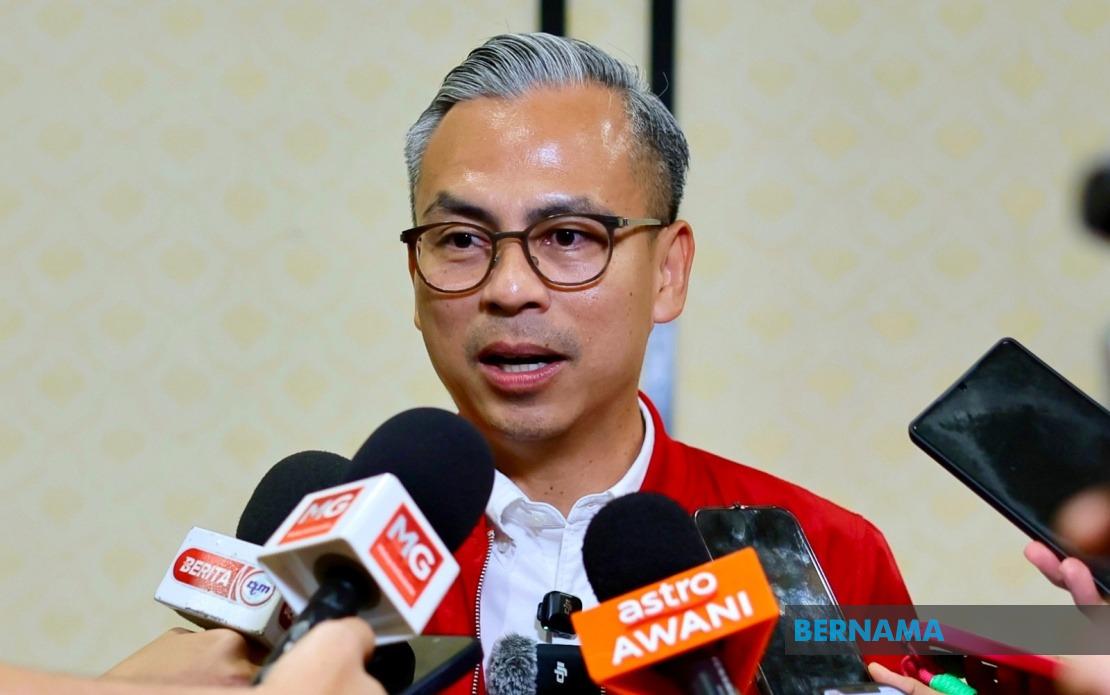
Communications Minister Datuk Fahmi Fadzil has extended an invitation for Johor Menteri Besar Datuk Onn Hafiz Ghazi to participate in a live broadcast dialogue with Pakatan Harapan's Puteri Wangsa candidate Dr Maszlee Malik on Radio Televisyen Malaysia, signalling the government's readiness to facilitate substantive political engagement as the state election campaign intensifies ahead of the July 11 polling day.
Speaking in Muar, Fahmi underscored that RTM stands prepared to offer its television platform should both candidates reach agreement on the terms of engagement. The proposed dialogue would not be restricted by geography or timing constraints, with Fahmi indicating flexibility on venue selection, including the possibility of hosting the event in Johor Bahru or other mutually acceptable locations. This flexibility demonstrates an attempt to remove logistical barriers that might otherwise prevent such an exchange.
Crucially, Fahmi framed the initiative as a platform for substantive policy discussion rather than adversarial confrontation. He stressed that the dialogue would focus on Johor's development trajectory and long-term aspirations, deliberately steering away from partisan attacks or point-scoring rhetoric. This distinction carries significance in Malaysian political discourse, where the line between healthy democratic debate and unproductive mudslinging often becomes blurred during election campaigns. By positioning the exercise as an ideas-exchange focused on governance and development outcomes, the Communications Minister appears intent on elevating the tenor of campaign discussions.
The offer responds to earlier criticisms from certain quarters suggesting that Pakatan Harapan should first publicly announce its Menteri Besar candidate before committing to any public debate or interactive session. Fahmi's intervention sidesteps this chicken-and-egg dilemma by proposing dialogue without preconditions, effectively challenging the incumbent administration to demonstrate confidence in defending its record and vision. His suggestion that leadership quality inherently requires the capacity to engage respectfully with divergent perspectives and constructive criticism subtly frames participation as a measure of gubernatorial suitability.
Fahmi also highlighted Dr Maszlee's recent initiative to conduct interactive sessions with 41 youths discussing the state's development vision. This commendation serves dual purposes: it reinforces that Pakatan Harapan's candidate is actively engaging with constituencies and formulating policy positions, while implicitly suggesting that openness to dialogue demonstrates readiness for higher office. The emphasis on youth engagement also reflects broader recognition within Malaysian politics that younger voters increasingly seek substantive engagement on issues affecting their economic prospects and quality of life, rather than traditional election theatre.
The Puteri Wangsa constituency contest has evolved into a multi-candidate affair that complicates the electoral landscape. Dr Maszlee faces competition from Barisan Nasional's Teow Chia Ling, Nicholas Paul Vincent representing the smaller coalition party Parti Bersama Malaysia, MUDA's Rashifa Aljunied, and independent candidate Wang Wee Seong. This fragmentation means that victory does not necessarily require majority support but rather relative vote concentration, a dynamic that could incentivize candidates to differentiate themselves through policy articulation rather than personality-driven appeals.
Meanwhile, in the Machap constituency, incumbent Onn Hafiz faces a direct contest against Pakatan Harapan's Nor Hafiz Roslan, providing a clearer two-candidate narrative. As Johor's Menteri Besar, Onn Hafiz's performance in this seat will carry symbolic weight for the broader election outcome. His willingness to participate in the proposed RTM dialogue could significantly influence perceptions of incumbent confidence and accessibility among voters.
The timing of Fahmi's intervention reflects the compressed campaign schedule preceding the July 11 polling day, with early voting scheduled for July 7. This narrow window means that any public debate would need to occur within the next few days to meaningfully influence voter deliberation. The urgency underscores why the Communications Minister has seized the initiative to propose immediate engagement rather than allowing the question to drift through the campaign period.
For Malaysian viewers and the broader electorate, the prospect of a televised policy dialogue offers potential insight into how candidates address substantive governance questions when afforded extended speaking time. Malaysian election campaigns have historically been dominated by rally speeches, social media skirmishes, and paid advertising, with genuine extended policy dialogue remaining relatively rare. RTM's traditional role as a national broadcaster carrying state television transmissions gives such a platform particular reach, potentially exposing the dialogue to audiences beyond partisan political junkies.
The invitation also illuminates broader tensions within Malaysian electoral politics regarding debate formats and public discourse standards. Fahmi's insistence on development-focused discussion rather than partisan sparring reflects aspiration to elevate political engagement, yet the proposal itself has become politicized, with its acceptance or rejection now carrying implications for how candidates are perceived. The very offer of the platform becomes a statement about confidence, openness, and leadership capability—making the dynamics around whether such dialogue actually occurs almost as significant as the substance of any discussion that might transpire.
From a Southeast Asian perspective, Malaysia's competitive electoral environment has increasingly featured televised debates and public forums, following models established in more mature democracies. The Johor contest represents another incremental step toward institutionalizing such formats, potentially establishing expectations that candidates should be prepared to defend their positions in real-time public forums. This gradual shift toward greater transparency and direct voter engagement, even when contested and sometimes reluctant, reflects evolving democratic expectations among Malaysian constituencies.

