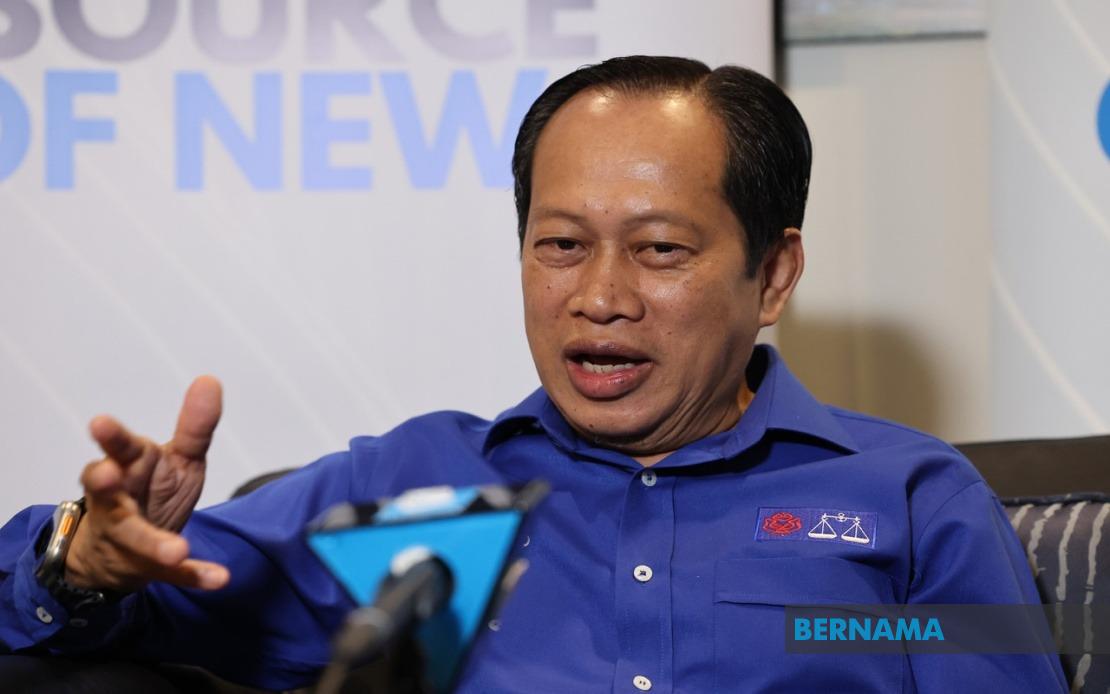
Addressing road deterioration across Malaysia demands a collaborative approach involving elected officials at all levels and the relevant government bodies tasked with infrastructure upkeep, Deputy Works Minister Datuk Seri Dr Ahmad Maslan has stressed. Speaking in Johor Bahru on July 2, Ahmad underscored that no single entity can effectively tackle the nation's road maintenance challenges in isolation, and that success depends on stakeholders fulfilling their designated responsibilities with urgency and coordination.
The minister has directed the Public Works Department (JKR) to accelerate repair work on roads showing signs of damage, while calling on all involved parties to discharge their roles conscientiously. Ahmad's remarks came as he highlighted the distributed nature of road maintenance responsibilities across Malaysia's administrative structure, where state assemblymen, Members of Parliament, and local authorities each hold specific duties in identifying and prioritizing problem areas within their constituencies.
In Johor alone, the state operates ten district-level JKR offices, each tasked with managing road conditions across their respective jurisdictions. Ahmad disclosed that he has personally visited all ten offices to review development priorities and assess their operational capacity. During these visits, he has emphasized the importance of swift action whenever roads are reported to be in need of repair or maintenance, setting clear expectations for the pace of response to citizen complaints and emerging infrastructure problems.
The minister's comments appear to reference recent public attention drawn to road conditions on Jalan Tebrau, a significant arterial route in Johor. Pakatan Harapan candidate for the Puteri Wangsa state seat Dr Maszlee Malik conducted a high-profile inspection of the road on June 29, driving a Perodua Myvi from Kampung Melayu Majidi to Ulu Tiram following numerous complaints aired on social media platforms about deteriorating surfaces and traffic congestion affecting commuters along the corridor.
During his journey, Maszlee documented his experience and subsequently shared observations that the vehicle experienced significant jolting at multiple points along the route due to uneven and damaged road surfaces. He also noted encountering substantial traffic congestion during peak commuting hours, suggesting the road conditions contribute to broader mobility challenges in the area. His publicized inspection effectively brought attention to maintenance failures in a populated corridor, prompting official comment from the Works Ministry.
Ahmad's intervention highlights the political and administrative complexity surrounding infrastructure maintenance in Malaysia. While the minister's directive to JKR addresses the operational side of the challenge, the involvement of elected representatives from different political coalitions—Ahmad representing the ruling coalition's perspective while Maszlee represents the opposition—underscores the partisan dimensions that sometimes accompany infrastructure issues. The minister's emphasis on bipartisan cooperation in road maintenance suggests an attempt to frame the issue above electoral politics, though the very fact that Maszlee's inspection became noteworthy enough to warrant ministerial comment indicates the extent to which such matters can become politicized.
The financial and administrative architecture supporting road maintenance in Malaysia involves multiple layers of government. Ahmad explained that funding allocations for federal roads, highways, and bridges flow through the State Economic Planning Unit (UPEN) and the state executive council rather than being deployed directly by the federal Works Ministry. This structure means that applications for road repair must navigate an assessment and prioritization process at the state level before securing approval, potentially creating bureaucratic delays even when federal resources are theoretically available.
This procedural framework has significant implications for the speed and responsiveness of road maintenance. When citizens report deteriorating road conditions in their constituencies, the responsibility for escalating these concerns through appropriate channels falls initially on local elected representatives. The process then typically requires submission through UPEN, where applications compete against other development priorities for inclusion in state-level budgets. Only after state-level approval does funding flow to JKR for actual repair work, meaning even urgent problems can face weeks or months of processing time before work begins.
For Malaysian drivers and commuters, particularly those in urban and peri-urban areas of Johor where traffic volumes remain substantial, the quality of road surfaces directly affects travel times, vehicle maintenance costs, and safety outcomes. Roads that deteriorate due to maintenance backlogs impose real economic costs on households and businesses relying on them for daily mobility. The Jalan Tebrau corridor, connecting residential areas with commercial and industrial zones, exemplifies how neglected road maintenance affects multiple stakeholder groups simultaneously—commuters, local businesses dependent on the route, and public transport operators.
Ahmad's call for renewed cooperation and commitment from all stakeholders implicitly acknowledges that previous levels of coordination have proven insufficient to prevent the accumulation of maintenance backlogs that led to the Jalan Tebrau situation. His emphasis on rapid response protocols and personal engagement with district JKR offices suggests an attempt to inject greater momentum into the maintenance process, though whether this represents a permanent shift in operational priority or a temporary political response to the recent public attention remains uncertain.
The minister's framing of road maintenance as requiring collaborative effort across elected officials and agencies reflects an understanding that infrastructure challenges at this scale cannot be resolved through any single government body acting in isolation. However, translating this principle into consistent, expeditious action requires clear accountability mechanisms, adequate resource allocation, and genuine priority-setting at state and federal levels. For Southeast Asian readers observing Malaysian governance, Ahmad's comments offer a revealing glimpse into the institutional complexities that can impede infrastructure delivery even in an upper-middle-income nation with established administrative structures and maintenance frameworks already in place.

