Malaysia's Ministry of Housing and Local Government (KPKT) has committed RM200 million over four years from 2023 onwards to support the upkeep of non-Muslim houses of worship across the country, marking a significant investment in interfaith infrastructure. The Non-Muslim Houses of Worship (RIBI) Maintenance Initiative extends assistance to churches, gurdwaras, Hindu temples, Chinese temples, and various religious associations, demonstrating what the government describes as an inclusive approach to development that transcends religious and ethnic boundaries.
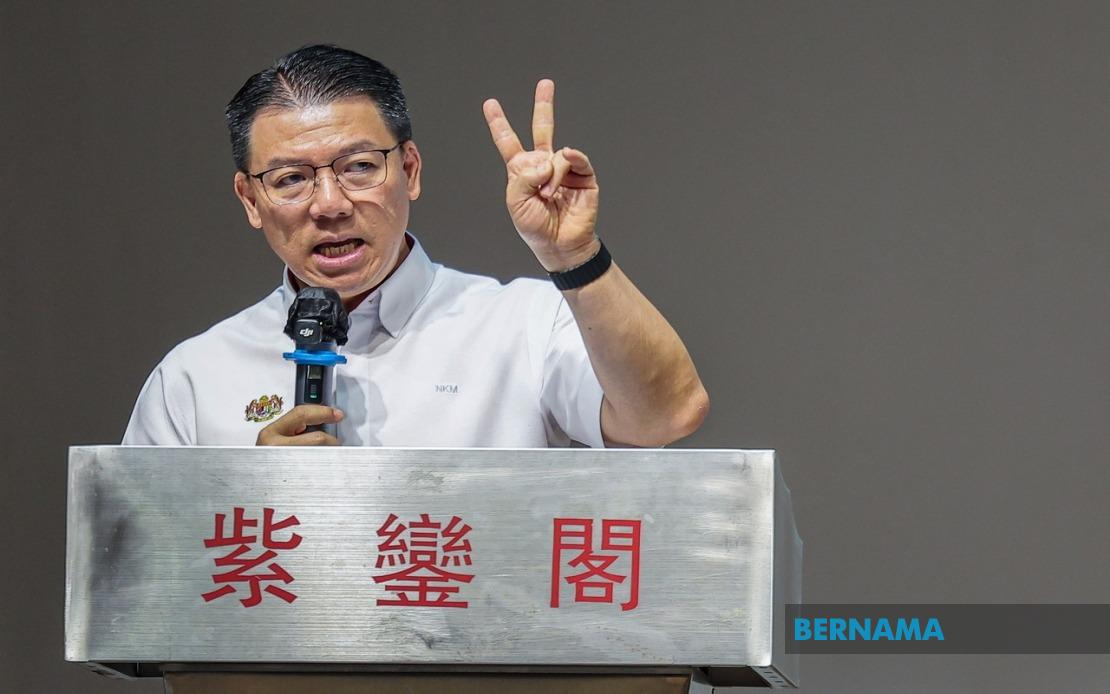
Minister Nga Kor Ming unveiled the programme's progress during a ceremonial allocation handover in Kluang, Johor, underscoring that the initiative reflects the MADANI government's foundational principle of leaving no segment of society behind. Speaking at the event, Nga framed the maintenance initiative as evidence of the administration's commitment to fair treatment across all demographics, regardless of faith or ethnicity. The government's willingness to direct substantial public resources toward minority religious infrastructure represents a deliberate policy choice to strengthen social cohesion at a time when communal tensions occasionally surface in national discourse.
The take-up of the programme has exceeded initial expectations, with the e-RIBI System receiving 1,478 applications valued at over RM279 million to date. This figure substantially exceeds the original RM200 million allocation, suggesting that demand from religious organisations far outpaces available funding. The gap between applications and budget availability highlights the extent of deferred maintenance across places of worship serving Malaysia's Christian, Hindu, Sikh, and other minority communities. Many such institutions operate on limited budgets and rely heavily on community contributions, making government support crucial for undertaking significant structural repairs or safety upgrades.
Johor emerged as a particular focus of the allocation ceremony, receiving RM3.14 million for 27 religious premises in the current year. Since the programme's inception in 2023 through May 2026, the state has accumulated RM18.75 million across 154 beneficiary institutions, positioning Johor as one of the programme's most active regions. The funds are earmarked for renovation work, routine maintenance, new construction projects, and emergency repairs, ensuring that facilities can maintain operational standards and provide safe environments for worshippers and community gatherings. For many smaller congregations in both urban and rural areas, such allocations represent the difference between preserving heritage structures and facing deterioration.
Nga's rhetoric during the event emphasised unity over division, employing language that positioned infrastructure investment as a counterweight to social fragmentation. He contrasted bridge-building with wall-construction, suggesting that equitable government spending serves as a practical tool for fostering national cohesion. This framing situates the RIBI initiative within a broader developmental philosophy where inclusive spending supports macroeconomic stability by maintaining investor confidence and creating employment opportunities across diverse communities. The implicit argument holds that communities feeling fairly treated and supported by government contribute more positively to national development goals.
The transparency and accountability mechanisms embedded in the programme reflect lessons learned from previous government spending initiatives. KPKT has established professional oversight systems to monitor approved projects, with emphasis on ensuring that allocations reach genuinely deserving organisations. This administrative vigilance addresses historical concerns about patronage in government disbursements and attempts to establish objective criteria for fund distribution. The digitalisation of the application process through e-RIBI further reduces opportunities for corruption or favouritism, enabling organisations to submit requests directly rather than through intermediaries.
Malaysia's plural society contains significant Christian, Hindu, Buddhist, and Sikh populations alongside the Muslim majority, yet public infrastructure investment has historically favoured Islamic religious institutions. The RIBI programme represents a conscious effort to rebalance this allocation pattern and recognise the maintenance needs of minority communities. Many non-Muslim places of worship date from the colonial and early post-independence periods and require specialised restoration work that communities cannot easily finance independently. By supporting such maintenance, the government acknowledges that these structures form part of Malaysia's shared heritage and contribute to the nation's architectural and cultural landscape.
For Southeast Asian context, Malaysia's approach contrasts with approaches in some neighbouring countries where minority religious infrastructure receives minimal government support. Thailand, Vietnam, and parts of Indonesia often place responsibility for temple and mosque maintenance entirely on devotee communities. Malaysia's explicit government funding for non-Muslim worship sites reflects its constitutional framework guaranteeing religious freedom and the principle of bumiputera federalism that, despite emphasising Malay-Muslim interests, theoretically provides space for minority protection. The RIBI initiative operationalises these constitutional commitments through direct financial intervention.
The allocation pattern also carries economic dimensions beyond symbolic value. Religious institutions function as community anchors that provide social services, educational facilities, and gathering spaces beyond purely devotional functions. Temples often house schools, medical clinics, and welfare programmes serving broader populations. Churches operate literacy programmes and shelter services. Maintaining these buildings ensures continuity of social service provision that government agencies might otherwise need to fund directly. The RM200 million investment therefore functions both as cultural recognition and as infrastructure support for community welfare delivery.
Looking forward, the disparity between application demand and available funding suggests that programme expansion may eventually become necessary. With 1,478 applications totalling RM279 million against the original RM200 million allocation, significant backlogs exist. If the government intends to meet all legitimate maintenance requests, budget increases will likely follow. The programme's political visibility and Nga's emphasis on equity suggest that budget constraints may not permanently restrict the initiative. Future allocation cycles could expand funding or establish systematic prioritisation systems to address most urgent maintenance needs first.
The initiative also signals a deliberate political positioning by the MADANI government ahead of electoral cycles. Visible government support for minority communities appeals to urban, educated voters who prioritise pluralism and inclusion. It demonstrates responsiveness to concerns that government spending reflects demographic composition and treats all citizens equitably regardless of majority or minority status. For non-Muslim communities, tangible assistance with essential infrastructure maintenance validates their belonging within the Malaysian political project and acknowledges historical resource allocation gaps. This approach attempts to redefine what inclusive governance looks like in practice.

