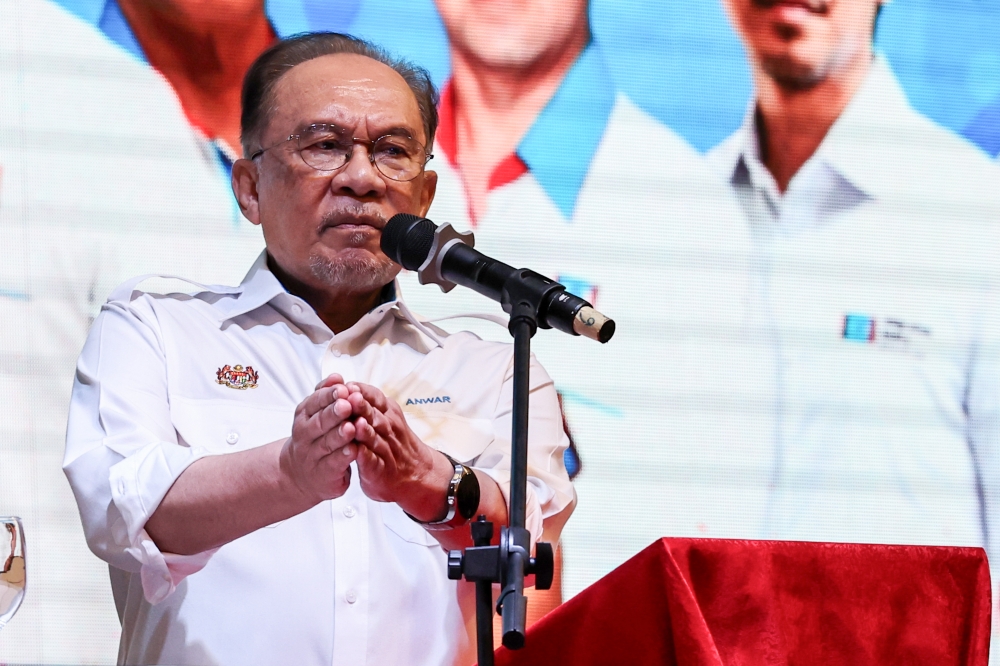
Prime Minister Datuk Seri Anwar Ibrahim has responded to the Royal Commission of Inquiry's findings on Tabung Haji with an emphatic call for accountability, pointing to the staggering RM12 billion in losses as evidence of what he characterised as "sakau"—the siphoning away of depositor funds. Speaking in Melaka on August 15, Anwar underscored the gravity of the situation, arguing that such massive financial leakage cannot be dismissed or normalised, and that those responsible must face consequences.
The Prime Minister's comments arrive as Malaysia grapples with the fallout from an institutional collapse that has affected millions of Muslims who entrusted their savings to Tabung Haji for pilgrimage purposes. The losses uncovered by the RCI represent not merely a corporate failure but a breach of trust by an organisation statutorily mandated to safeguard the hajj funds of Malaysian depositors. Anwar's framing of the issue in terms of deliberate "sakau" suggests he views the losses as stemming from intentional misconduct rather than mere mismanagement, a distinction with significant implications for potential legal action and remedial measures.
Tabung Haji, formally known as Lembaga Tabung Haji, has long occupied a special place in Malaysia's social fabric as the custodian of savings for millions of Muslims planning to perform the hajj pilgrimage. The discovery of such profound financial deterioration raises uncomfortable questions about governance oversight, regulatory failures, and the adequacy of internal controls within one of the country's most visible financial institutions. For depositors, particularly those from middle and lower-income backgrounds who have accumulated savings over decades, the RM12 billion loss translates directly into diminished funds for their religious obligations and personal aspirations.
The RCI's investigation into Tabung Haji's financial crisis represents a formal acknowledgement that systemic problems warrant comprehensive scrutiny. By calling for inquiries and demanding explanations, the government has signalled that complacency regarding institutional failures will not be tolerated. Anwar's repeated emphasis on the magnitude of losses and the language of wrongdoing suggests the government intends to pursue investigative and possibly prosecutorial avenues, rather than accepting explanations centred on market volatility or investment underperformance.
The political dimensions of the Tabung Haji issue extend beyond immediate financial recovery. As a Malay-Muslim centric institution, the organisation's troubles have implications for public confidence in institutions serving particular communities. The handling of the crisis and the perceived commitment to accountability will influence how Malaysian Muslims view government stewardship of institutions designed to serve their interests. Anwar's pointed remarks can be read as an effort to demonstrate that his administration takes such breaches seriously, regardless of the sensitivities involved.
From a regional perspective, the Tabung Haji situation offers lessons about the necessity of robust governance frameworks for financial institutions managing public funds. Throughout Southeast Asia, similar organisations entrusted with depositor savings or community resources have faced crises, often revealing inadequate audit mechanisms, weak board independence, and insufficient regulatory oversight. Malaysia's experience underscores how even established institutions can suffer catastrophic losses when accountability mechanisms fail.
The investigation and any subsequent reforms at Tabung Haji will likely influence discussions about financial regulation and institution-specific governance standards across the region. Regulators in other ASEAN nations with comparable financial institutions will monitor Malaysia's approach to remediation, recovery, and accountability with interest, potentially adopting lessons learned or avoiding similar pitfalls in their own oversight frameworks.
Anwar's rhetoric around "sakau" also carries implications for how Malaysia frames corporate corruption and financial crimes. By explicitly naming the issue as intentional fund siphoning rather than mere mismanagement, the Prime Minister is elevating the discourse around institutional accountability and signalling that the government views the matter as a potential criminal matter rather than a regulatory issue to be resolved administratively. This stance may embolden prosecutors and regulators to pursue civil and criminal remedies against responsible parties.
The path forward requires not only identifying and holding accountable those responsible for the losses but also implementing structural reforms to prevent recurrence. This includes enhanced corporate governance, independent auditing, regulatory oversight, and potentially changes to the board composition and management structure of Tabung Haji itself. The RM12 billion loss, while devastating for depositors, may ultimately catalyse broader institutional reforms that strengthen protections for Malaysian savers entrusted to financial institutions serving specific communities.
For depositors anxious about their accumulated hajj savings, the RCI findings and government responses offer both accountability and uncertainty. Accountability comes from the explicit acknowledgement that losses occurred and that investigation is underway; uncertainty stems from questions about whether lost funds can be recovered, how quickly reforms can be implemented, and whether the government has capacity to pursue justice comprehensively. The coming months will test whether Anwar's commitment to holding institutions accountable translates into concrete action that restores public confidence and protects future depositors from similar losses.

