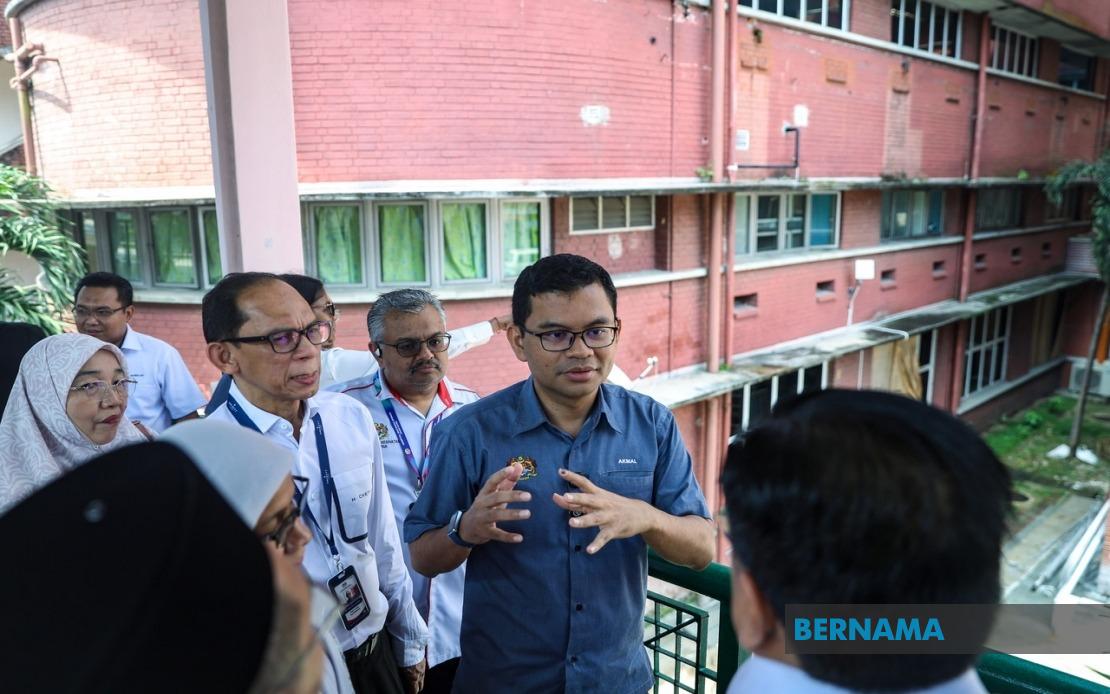
Johor's flagship tertiary hospital is at the centre of an ambitious modernisation programme that reflects the government's commitment to enhancing healthcare infrastructure in the southern state. Seven interlinked development and improvement projects, collectively valued at RM1.139 billion, are currently under way at Sultanah Aminah Hospital (HSA) in Johor Bahru, with Economy Minister Akmal Nasrullah Mohd Nasir overseeing their progress during a recent working visit to the state.
The scope of work encompasses both immediate maintenance priorities and longer-term capacity enhancements designed to keep pace with growing demand for specialist services. Among the foundational elements is a significant RM159 million electrical and mechanical systems overhaul, which includes upgrades to the hospital's primary power supply infrastructure. This project, currently 76.49 per cent complete, addresses critical vulnerabilities in a system that must operate reliably around the clock in a high-volume medical facility. Uninterrupted power supply is essential for operating theatres, intensive care units, and diagnostic equipment, making this component central to maintaining service quality during the broader construction phases.
The most substantial portion of the investment, valued at RM877.54 million, is devoted to constructing an Ambulatory Care Centre (ACC) with integrated multi-storey parking facilities and the HSA Specialist Clinic Complex in two phases. These additions represent a strategic response to the hospital's capacity constraints and the rising prevalence of chronic conditions requiring specialist intervention across Johor's population. The anticipated Letter of Acceptance for contractor appointments targeting February of the following year suggests a carefully orchestrated timeline designed to minimise operational disruption. This phased approach reflects lessons learned from previous hospital construction projects, where poorly coordinated building works have occasionally compromised patient services and staff efficiency.
The expansion directly addresses a longstanding bottleneck in Malaysia's healthcare delivery system: the shortage of specialist consultation slots, which often forces patients into lengthy waiting periods or pushes them toward private sector care. By creating dedicated specialist clinic space within the hospital compound, the project promises to streamline the patient journey and reduce inefficiencies inherent in scattered outpatient arrangements. The inclusion of substantial car parking capacity reflects recognition that inadequate parking infrastructure at major hospitals creates daily frustrations for patients, visitors, and healthcare workers, ultimately affecting staff retention and patient satisfaction metrics.
Operating theatre capacity will receive particular attention through the addition of three new operating rooms, bringing the total from 12 to 15 facilities. This seemingly modest increase represents meaningful relief for surgical departments managing a backlog of elective procedures, orthopaedic cases, and emergency interventions. For a state hospital serving Johor's 4.1 million residents and attracting patients from neighbouring Pahang and the Negeri Sembilan, expanded surgical capacity translates directly into shorter waits for procedures ranging from cataract surgery to complex abdominal interventions.
Minister Akmal Nasrullah emphasised during his site inspection that coordinating implementation across multiple projects without cascading disruptions to ongoing clinical operations presents an intricate logistical puzzle. A hospital cannot simply suspend services during construction; anaesthetic gas lines, surgical suites, and emergency departments must function continuously while contractors work on adjacent facilities. This demands sophisticated project management, with phased work schedules negotiated between hospital administrators and building teams to ensure that no single project creates bottlenecks affecting patient flow or clinical outcomes.
The HSA modernisation programme sits within a broader Johor development context. Since 2000, the state has hosted 613 separate development programmes and projects worth a combined RM56.12 billion, including 154 entirely new initiatives and 459 extensions to existing facilities. This cumulative investment underscores Johor's role as an economic engine and population centre demanding proportionate infrastructure investment. Healthcare projects occupy an increasingly prominent position within state development planning, reflecting both demographic pressures from an ageing population and the political salience of hospital services for voters across all socioeconomic categories.
Funding allocation reveals implementation momentum. Of the RM4.95 billion budgeted for development projects statewide during the current financial year, RM2.5 billion—representing 50.51 per cent—had been expended through late July. This spending rate, tracking approximately ahead of a simple linear projection, suggests that implementation agencies are executing planned works with reasonable efficiency, though completion timelines for major projects like the HSA complex extension remain fluid.
For Malaysian healthcare stakeholders, the HSA expansion carries implications extending beyond Johor's borders. As state governments increasingly compete for talent in medical and nursing professions, hospital amenities and working conditions directly influence recruitment and retention. Healthcare workers considering positions across different state systems factor in operating theatre availability, support infrastructure, and professional development opportunities. A modernised HSA, with expanded facilities and updated systems, becomes more competitive in attracting and retaining skilled professionals—a consideration that reverberates across Malaysia's healthcare workforce challenges.
The project timeline and sequencing also offer insights into how federal authorities approach healthcare infrastructure planning in an era of competing budget pressures. The staggered approach to specialist clinic development, combined with phased implementation, distributes both financial burden and construction disruption across multiple years. For federal planners and state governments observing this model, it demonstrates how major facility upgrades can proceed without requiring massive upfront capital allocations or prolonged service interruptions that might trigger public complaints and media scrutiny.
Looking forward, the success of these seven integrated projects will establish precedents for similar hospital modernisations elsewhere in Malaysia. Whether construction timelines hold, whether budget allocations remain stable amid economic uncertainties, and whether the finished facilities genuinely enhance patient outcomes rather than simply increasing square footage—these questions will shape future healthcare infrastructure investments. For Malaysian patients and taxpayers, the RM1.139 billion commitment represents both tangible healthcare system improvement and a test of the government's capacity to execute complex, multi-year development programmes successfully.

