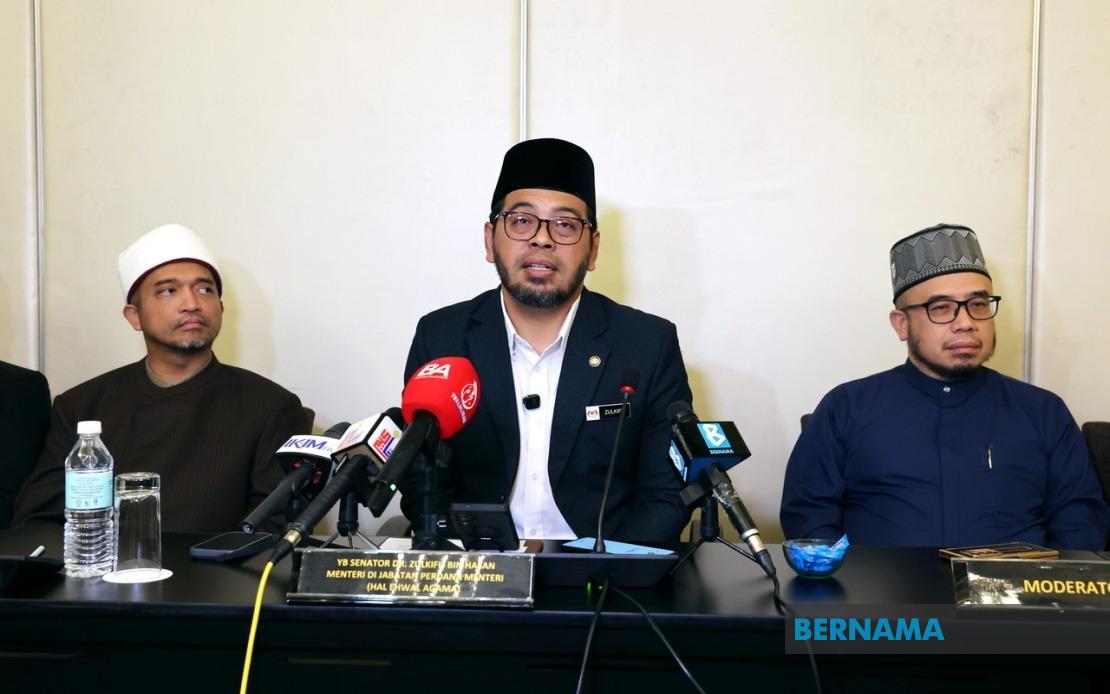
Malaysia's Religious Affairs Minister Dr Zulkifli Hasan has declared the Islamic concept of 'kafir harbi' fundamentally incompatible with the nation's constitutional framework and multicultural identity. Speaking in Putrajaya on August 10 following a dedicated roundtable discussion on the controversial term, Zulkifli emphasized that no Malaysian citizen—irrespective of faith—should be labelled in a manner that contradicts their status as equal members of society bound by the Federal Constitution. The pronouncement represents an official policy stance aimed at curbing the application of religious classifications that some have employed divisively in domestic discourse.
The minister's intervention followed substantive deliberations during the forum titled "'Kafir Harbi' in Malaysia: A Discussion," which brought together stakeholders to examine the appropriateness of deploying the term within a plural democracy. Zulkifli articulated the consensus reached by participants, stressing that Malaysia's constitutional architecture mandates equal citizenship regardless of religious affiliation. He underscored that the nation functions as a unified polity where inhabitants share mutual obligations toward collective development and security. The emphasis on constitutional primacy over theological categorizations signals a deliberate attempt to subordinate religious terminology to civic law whenever tensions arise.
This pronouncement carries significant implications for Malaysia's ongoing struggle to balance Islamic governance with pluralistic principles. The term 'kafir harbi'—traditionally referring to non-Muslims viewed as adversaries of Islam in classical Islamic jurisprudence—has occasionally surfaced in Malaysian public debate as a rhetorical tool. By formally deprecating its use, the Religious Affairs Ministry seeks to prevent further entrenchment of divisive language that could fracture social cohesion. The minister's framing positions constitutional citizenship as the operative legal and moral framework, superseding historical theological categories that lack relevance in contemporary multiconfessional nation-states.
Zulkifli outlined plans for the Department of Islamic Development Malaysia (JAKIM) to spearhead a coordinated public information campaign in collaboration with other governmental agencies and ministries. This inter-agency approach reflects recognition that religious matters cannot be addressed in institutional isolation; rather, they demand integration with broader efforts spanning education, community relations, and national integration policy. By involving multiple government bodies, authorities aim to embed the constitutional principle across diverse sectors and reinforce consistent messaging among civil servants who interact with the public.
The decision to amplify clarification efforts across multiple platforms acknowledges that theological concepts, once introduced into political discourse, require sustained counter-messaging to prevent their normalization. JAKIM's involvement ensures that religious expertise informs public communication, lending authority to explanations that might otherwise appear politically motivated. The collaborative strategy also prevents the perception that any single ministry monopolizes the narrative, instead presenting a united governmental position rooted in law rather than sectarian preference.
Zulkifli's appeal for unified national effort transcends the narrow legal question about terminology. He explicitly called upon all Malaysians to reinforce interfaith understanding, mutual respect, and cultural awareness as foundations for strengthened unity. This framing elevates the discussion beyond administrative clarification to encompass a broader national project of deepening solidarity among diverse communities. By linking the rejection of 'kafir harbi' to affirmative commitments toward brotherhood and shared stewardship, the minister positions the policy as constructive rather than merely prohibitive.
For Malaysia's religious minorities and multicultural constituencies, the minister's statement provides official validation that the state apparatus rejects theological frameworks that implicitly question their legitimate place within the national compact. Christian, Hindu, Buddhist, and other non-Muslim citizens have occasionally encountered the term deployed to suggest their status as outsiders or enemies, creating legal and social uncertainty. The formal ministerial rejection of such characterization clarifies that authorities view citizens of all faiths as possessing equivalent constitutional standing and shared responsibilities for national welfare.
The timing and context of this pronouncement also merit attention within the regional Southeast Asian framework. Other Muslim-majority nations including Indonesia and the Philippines grapple with similar questions about balancing Islamic identity with pluralism. Malaysia's explicit constitutional commitment to recognizing Islamic law while simultaneously maintaining a secular federal framework creates unique jurisprudential complexities. By demonstrating that even explicitly Islamic theological concepts must yield to constitutional principles when they threaten social harmony, the ministry signals that Malaysia's model privileges constitutional pluralism over theological particularism—a position that may influence regional debates about Islam and governance.
The roundtable discussion itself represents an institutional innovation in how Malaysia addresses sensitive religious matters. Rather than issuing prohibitions through top-down decree, authorities convened deliberative forums where diverse voices contributed to reaching consensus. This participatory approach builds legitimacy for the government's stance and creates intellectual ownership among stakeholders who contributed to the discussion. Such methods prove increasingly important as Malaysia navigates religious questions in an environment where imposed solutions risk generating backlash or resentment.
However, translating policy pronouncements into societal acceptance remains challenging. Public awareness campaigns and inter-agency coordination, while necessary, may encounter resistance from segments who view the term as theologically justified or politically sympathetic to their worldview. The effectiveness of JAKIM's public education initiatives will depend on sustained commitment, adequate resourcing, and integration with existing religious instruction in schools, universities, and mosques. Without such institutional reinforcement, formal rejection by government can appear merely symbolic rather than reflective of genuine attitudinal change.
The broader significance of this position extends to how modern nation-states accommodate religious identity within secular constitutional orders. Malaysia demonstrates that recognition of Islam's special position in the Constitution need not prevent authorities from restricting religious language or doctrines that conflict with constitutional citizenship principles. This framework, if consistently applied, provides a model for other plural societies where religious and civic identities require ongoing negotiation and adjustment.

