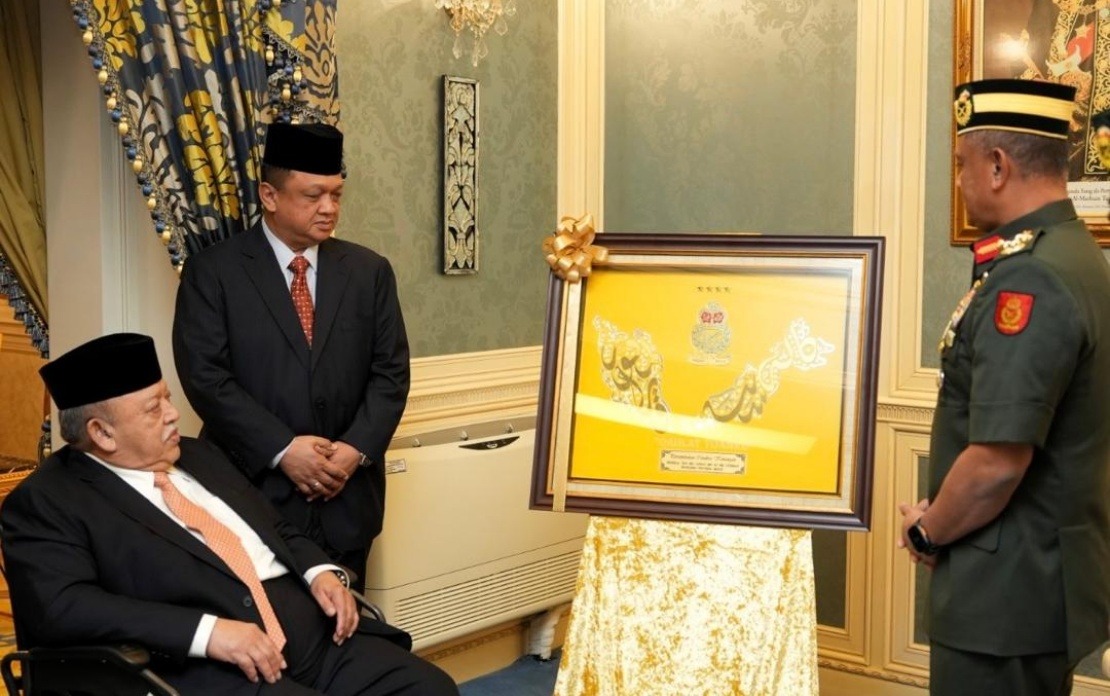
The Raja of Perlis, Tuanku Syed Sirajuddin Jamalullail, held a formal audience with the nation's army chief, General Tan Sri Azhan Md Othman, during a ceremony at Balai Menghadap Biru in Istana Arau on July 29. The meeting brought together Malaysia's military leadership and Perlis's top royal figures to reaffirm the institutional relationship between the defence establishment and the state's royal household.
Present alongside the Raja was the Raja Muda of Perlis, Brigadier General Tuanku Syed Faizuddin Putra Jamalullail, who simultaneously holds the position of Commander of the 504th Territorial Army Regiment stationed at Kem Bukit Keteri near Padang Besar. The presence of both senior royal figures, combined with the Raja Muda's military command role, underscored the significance of the occasion and the historical intertwining of Malaysia's defence apparatus with its royal institution.
According to a statement issued by Istana Arau, the audience was designed to deepen the existing bond between Perlis's royal establishment and the armed forces. The palace emphasised the institution's recognition of the military's ongoing dedication to maintaining the country's territorial integrity and protecting the safety of its citizens. This acknowledgement reflects a broader pattern in Malaysia where the monarchy maintains ceremonial and symbolic ties with defence authorities at both the federal and state levels.
The Raja of Perlis holds several ceremonial military appointments that give substance to these formal relationships. He serves as Colonel-in-Chief of the Royal Ranger Regiment (RRD) and the Royal Military Police Corps (KPTD), positions that carry historical weight in Malaysia's military hierarchy. These titular roles, while largely ceremonial in nature, represent the constitutional framework through which the royal institutions exercise influence and maintain symbolic oversight of armed forces activities within their respective domains.
Beyond the ceremonial aspects, Istana Arau characterised the meeting as a platform for advancing strategic cooperation between military and state leadership. The palace highlighted that discussions encompassed security matters, public welfare initiatives, and broader national development projects. This framing suggests that such audiences serve not merely as formal courtesy calls but as opportunities for substantive engagement on matters affecting Perlis and the nation at large.
The emphasis on partnership between defence institutions and royal institutions reflects Malaysia's constitutional arrangement, whereby the rulers retain significant symbolic and consultative roles in matters of national security and governance. In Perlis specifically, such coordination becomes particularly relevant given the state's geographical position near the Thai border, making security and cross-border cooperation ongoing priorities that benefit from regular dialogue between state and military leadership.
For Malaysian readers, these regular interactions between royal figures and senior military officers represent the functioning of institutional checks and consultative mechanisms embedded in the nation's governance structure. The formal nature of the audience, documented and publicised by the palace, demonstrates how Malaysia's traditional institutions and modern defence establishment maintain their relationship through protocol and ceremony.
The meeting also carries significance for understanding how state-level politics intersect with national defence priorities. Perlis, as one of Malaysia's smaller states, has historically maintained strong connections with the military, partly due to its role as a border state and partly through the Raja Muda's direct military service. These periodic formal audiences help maintain institutional memory and ensure that state interests are considered within broader national security frameworks.
From a broader Southeast Asian perspective, the continued prominence of formal relationships between monarchy and military in Malaysia provides insight into the region's approach to civil-military relations. Unlike some Southeast Asian nations that have experienced military intervention in politics, Malaysia's institutional separation between royal authority and military command, coupled with regular formal engagement, represents a distinct model of stability.
The palace's statement emphasizing the meeting's contribution to preserving national peace, stability, and prosperity through cooperation between defence and royal institutions underscores a key principle in Malaysian governance: that institutional harmony across traditional and modern structures serves national interests. This philosophy, while challenged periodically, remains central to how Malaysia's leadership legitimises its governance framework to domestic and international audiences.
Such ceremonial occasions also serve important symbolic functions in projecting institutional continuity and respect for constitutional arrangements. By publicly documenting the Raja's audience with the army chief, Istana Arau signals the ongoing relevance of the monarchy in Malaysia's defence and security architecture, a message particularly important during periods when questions about institutional roles emerge.

