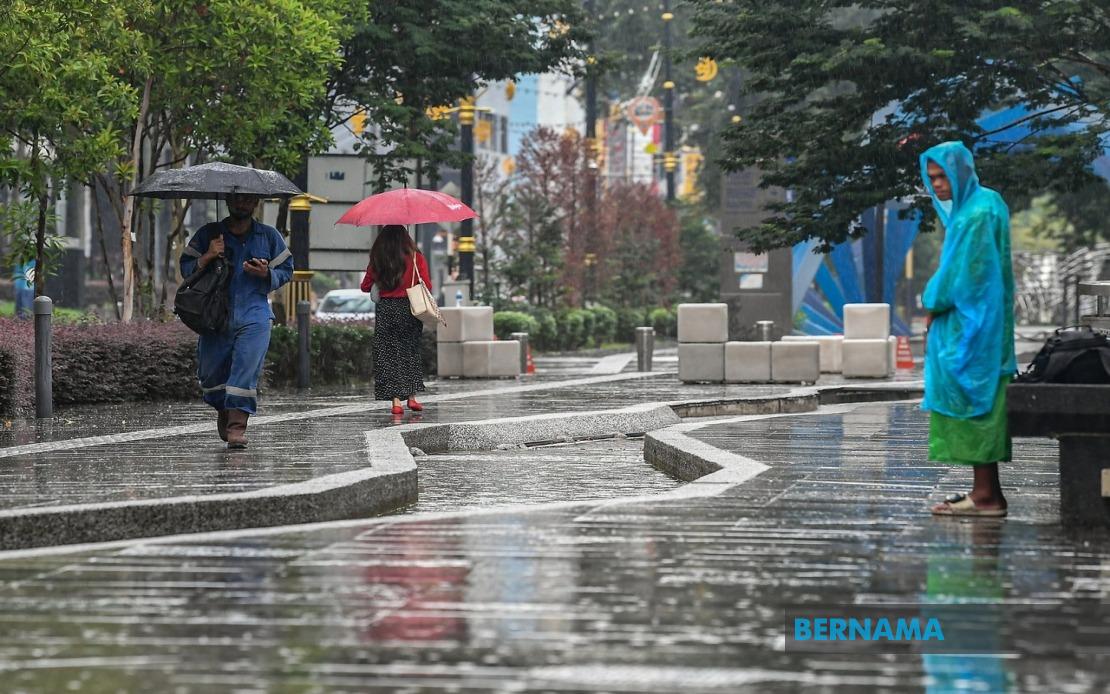
The Johor state election process will proceed tomorrow despite adverse weather conditions, with the Malaysian Meteorological Department issuing a forecast for widespread rainfall that could complicate logistics for prospective candidates and their supporters throughout the nomination period. Azlai Ta'at, the state director of MetMalaysia, cautioned that morning precipitation would impact seven of Johor's ten districts, namely Johor Bahru, Muar, Batu Pahat, Kota Tinggi, Pontian, Tangkak and Kulai, potentially creating minor operational difficulties for the tightly scheduled nomination proceedings.
The nomination phase itself remains confined to a compressed two-hour window beginning at 9 am, with all 56 nomination centres expected to complete their work by 10 am. This condensed timeframe means that despite inclement conditions in the majority of the state's administrative districts, the Election Commission has maintained its original scheduling without contingency adjustments. The morning downpours will be followed by the official announcement of eligible candidates by returning officers, a process that will provide the foundation for the heated campaign season that formally commences immediately thereafter.
Temperature variations across Johor will add another dimension to nomination day conditions. The meteorological department projects minimum temperatures ranging from 24 to 25 degrees Celsius throughout the state, while maximum temperatures will oscillate between 31 and 34 degrees Celsius, with Segamat expected to record the highest reading at approximately 34 degrees Celsius. The three districts of Segamat, Kluang and Mersing will experience clearer morning conditions, offering relative respite from the wet weather affecting the larger population centres, though this geographic division creates an uneven playing field for campaign activities across the state.
Particularly concerning for campaigners is the afternoon forecast, which calls for thunderstorms to sweep across Johor Bahru, Segamat, Kluang, Kota Tinggi, Pontian, Mersing and Kulai. These afternoon storms will directly coincide with the launch of the official campaigning period, disrupting public engagement activities and outdoor mobilisation efforts that traditionally characterise the opening days of an election campaign. Batu Pahat and Tangkak are expected to receive additional rainfall without the intensity of thunderstorms, while only Muar is forecast to experience predominantly hot conditions, making it a notable outlier in weather patterns across the peninsula's southernmost state.
The Election Commission has set a clear calendar for the election proceedings, designating July 7 as the date for early voting and July 11 as polling day. This timeline compresses the traditional campaign period into roughly a fortnight, making efficient candidate mobilisation during the initial days particularly valuable despite meteorological obstacles. The early voting provision is designed to accommodate military personnel, their spouses, police officers and their relatives who will participate separately, reflecting the distinctive electoral participation mechanisms that apply to uniformed services personnel in Malaysian elections.
The voter registration figures underscore the electoral stakes involved in this state contest. Approximately 2.73 million registered voters are eligible to participate, comprising 2.7 million ordinary voters alongside specialised voting blocs including 12,041 military personnel and spouses and 12,710 police personnel and spouses. This represents a substantial electorate by Malaysian state standards, making Johor's political dynamics consequential for broader peninsular politics and coalition positioning at the national level.
Multiple political coalitions and independent parties are contesting all 56 state seats, reflecting the increasingly fragmented landscape of Malaysian electoral competition. Pakatan Harapan has committed full candidate slates across all constituencies, deploying 20 PKR candidates, 19 from Amanah and 17 from DAP, maintaining its position as a comprehensive alternative to established governance coalitions. Barisan Nasional similarly fields 56 candidates comprising 36 from UMNO, 16 from MCA and four from MIC, demonstrating the continued centrality of component party negotiations within the established coalition framework.
Perikatan Nasional's candidate distribution reveals strategic concentration in specific regions, with PAS contesting 11 seats, Bersatu 16, the Malaysian Indian People's Party five and Pejuang one. This allocation suggests deliberate targeting of constituencies where each component party maintains electoral advantages rather than attempting comprehensive coverage. The Malaysian United Democratic Alliance is competing in four seats while Parti Sosialis Malaysia fields a single candidate, highlighting how smaller parties navigate electoral viability constraints within Malaysia's first-past-the-post system.
Particularly noteworthy is the debut electoral participation of Parti Bersama Malaysia, which will contest 15 seats, signalling the emergence of new political actors attempting to carve niches within an increasingly competitive electoral marketplace. The proliferation of political options available to Johor voters reflects broader anxieties about representation and governance that have animated Malaysian politics since the 2018 general election, with voters increasingly willing to experiment with political alternatives beyond the traditional duopolistic arrangement of Barisan Nasional versus established opposition coalitions.
MetMalaysia officials emphasised the importance of public vigilance regarding evolving weather conditions throughout nomination and early campaign phases. The advisory carries particular significance for the logistical operations required to transport candidates, supporters and campaign materials across the state during the initial momentum-building days of the election cycle. Rain-disrupted roads and reduced visibility could impede the efficient movement of campaign convoys and public rallies that traditionally define Malaysian electoral competition, potentially advantaging parties with superior organisational infrastructure and established ground networks.
For Malaysian observers monitoring Johor politics, the state contest carries implications extending well beyond state-level governance concerns. Johor's electoral outcome will provide crucial insights into voter sentiment regarding the current national political configuration and the performance of various coalition arrangements at provincial level. The weather disruptions on nomination day, while operationally inconvenient, are unlikely to fundamentally alter the structural competitive dynamics that will determine electoral outcomes on July 11.

