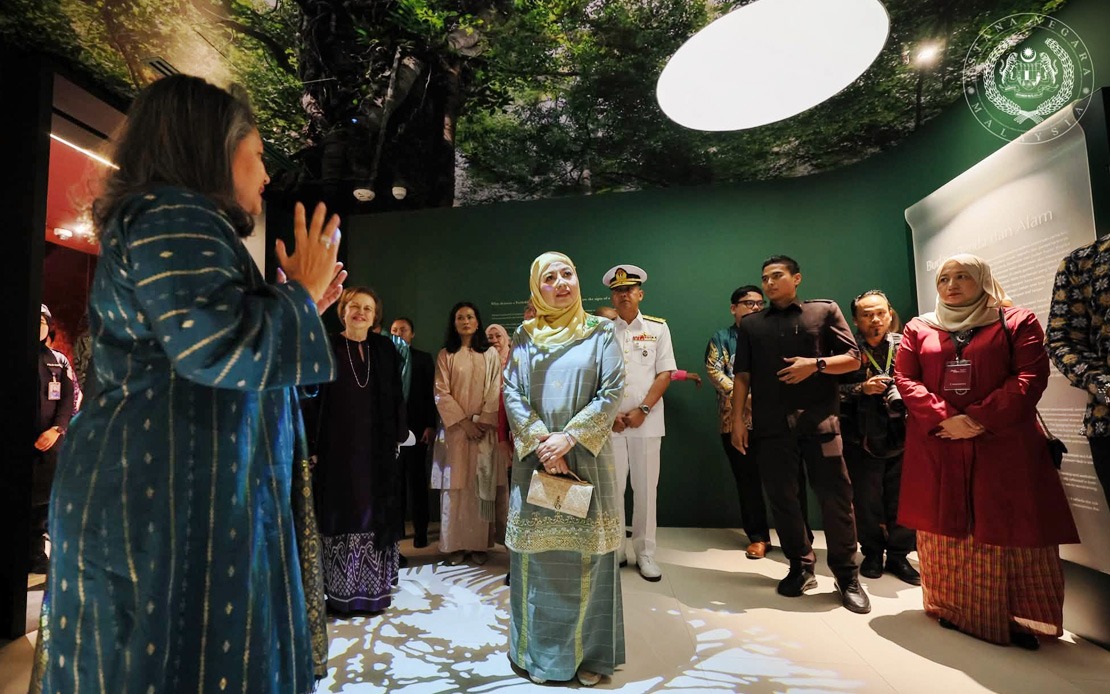
Her Majesty Raja Zarith Sofiah, Queen of Malaysia, formally inaugurated the Merdeka Textile Museum on August 21 at the Menara Merdeka Maybank compound in Kuala Lumpur, marking a significant milestone in the nation's efforts to safeguard its cultural treasures. The institution represents a collaborative initiative by PNB Merdeka Ventures Sdn Bhd, a subsidiary wholly controlled by Permodalan Nasional Berhad, designed to honor and document the textile traditions that have defined Malay-world communities across centuries.
The museum's establishment addresses a critical gap in Malaysia's cultural infrastructure, offering a dedicated space where the nation's sartorial heritage can be explored, studied, and celebrated by both domestic and international audiences. Through immersive storytelling methods and hands-on cultural activities, the facility seeks to deepen public understanding of how textiles have functioned not merely as functional garments but as profound expressions of identity, spirituality, and social status within Malaysian society. This approach reflects a growing global recognition that museums must evolve beyond passive display to become active centers of learning and community engagement.
During the inauguration ceremony, Queen Zarith Sofiah emphasized the universal importance of preserving heritage for future generations, noting that every nation bears the responsibility of safeguarding the traditions that encapsulate its values and identity. She articulated a vision whereby cultural inheritance becomes a living legacy rather than static artifacts confined to museum cases, urging young Malaysians to develop genuine appreciation for their ancestral traditions to prevent irreversible cultural erosion. The Queen's remarks, shared through Sultan Ibrahim Sultan Iskandar's social media platform, underscored the personal nature of this endeavor and its relevance to contemporary Malaysian society.
The museum's collection draws substantially from the estate of the late Sharifah Azah Syed Mohammed Alsagoff, commonly known as Azah Aziz, whose passion for textile preservation shaped the institution's foundational holdings. Azah Aziz, widow of the late Prof Diraja Ungku Abdul Aziz Abdul Hamid and mother of former Bank Negara Malaysia governor Tan Sri Dr Ungku Zeti Akhtar Aziz, accumulated an extraordinary assemblage of garments and ornaments over her lifetime. Her family's decision to donate these pieces to public stewardship demonstrates a commitment to transforming private collection into shared cultural resource, enabling researchers, designers, and enthusiasts to access treasures that might otherwise remain inaccessible.
The Azah Aziz collection encompasses 240 distinct clothing items representing different regional styles and historical periods, alongside 69 pieces of traditional jewelry that exemplify the intricate craftsmanship defining Malaysian adornment practices. Among the holdings are exceptional examples of songket sarong featuring hand-woven precious metal threads, Limar Baju Kurung showcasing sophisticated tailoring techniques, and Tekat Emas displaying the labor-intensive embroidery methods that have characterized formal wear across generations. These artifacts provide tangible evidence of the technical sophistication and aesthetic refinement embedded within Malaysia's textile traditions, offering contemporary makers and enthusiasts direct inspiration and instruction.
The physical infrastructure supporting the museum's mission extends well beyond exhibition galleries, incorporating sophisticated research and conservation facilities essential for long-term preservation. The institution houses eight distinct galleries designed to guide visitors through different thematic and chronological frameworks, enabling visitors to comprehend textile heritage not as disconnected objects but as interwoven narratives spanning geography and time. A dedicated study center provides serious researchers access to specialized equipment, while the fabric library catalogues materials and techniques, and the textile knowledge center consolidates scholarship and documentation that continues to deepen understanding of this expansive field.
The museum's conservation laboratory represents a critical component of its infrastructure, equipped to undertake the specialized work required to stabilize fragile historical textiles and prevent deterioration of irreplaceable pieces. This facility acknowledges that preservation extends beyond secure storage to encompass active intervention by trained specialists employing contemporary scientific methods alongside traditional knowledge. For Malaysian scholars and international researchers interested in Southeast Asian textile studies, the availability of such laboratory capacity within the region eliminates previous reliance on overseas institutions and establishes Kuala Lumpur as a legitimate center for textile conservation expertise.
The event's attendance reflected the museum's significance within Malaysia's cultural and institutional landscape. Minister in the Prime Minister's Department (Federal Territories) Hannah Yeoh represented government support for the initiative, while Chief Secretary to the Government Tan Sri Shamsul Azri Abu Bakar's presence signaled recognition at the highest administrative level. PNB group chairman Raja Tan Sri Arshad Raja Tun Uda's participation underscored the private sector's investment in cultural preservation, demonstrating that heritage conservation has become a priority across Malaysia's institutional spectrum.
For Malaysian creative industries, the museum's establishment creates valuable infrastructure supporting fashion design, textile education, and heritage-informed contemporary creation. Designers seeking authentic inspiration from traditional patterns, techniques, and aesthetics now possess a comprehensively documented resource within their own country, reducing dependency on overseas archives and fragmentary information sources. Educational institutions can incorporate museum visits into curriculum, directly exposing students to historical examples that textbooks necessarily simplify. This accessibility strengthens the ecosystem within which Malaysian fashion and textile sectors develop, potentially enhancing the distinctive cultural authenticity that distinguishes local production in increasingly globalized markets.
The Merdeka Textile Museum positions Malaysia within expanding Southeast Asian efforts to document and celebrate textile heritage threatened by rapid modernization and generational knowledge loss. While countries like Thailand and Vietnam have similarly invested in textile institutions, Malaysia's museum distinguished itself through its focus on the personal collection and rigorous contextual documentation approach. This model could inspire comparable initiatives elsewhere within the region, contributing to broader Southeast Asian cultural scholarship and establishing networks facilitating exchange of conservation expertise, research findings, and exhibition concepts among regional institutions.
Looking forward, the museum faces the ongoing challenge of remaining relevant and financially sustainable while maintaining scholarly rigor and public accessibility. Its success will depend on developing diverse programming that extends appeal beyond heritage enthusiasts to engage younger demographics increasingly disconnected from traditional textile practices. Partnerships with educational institutions, fashion schools, and cultural organizations can transform the museum from destination to active participant in Malaysian cultural discourse, ensuring that textile heritage remains dynamic rather than historical curiosity.

