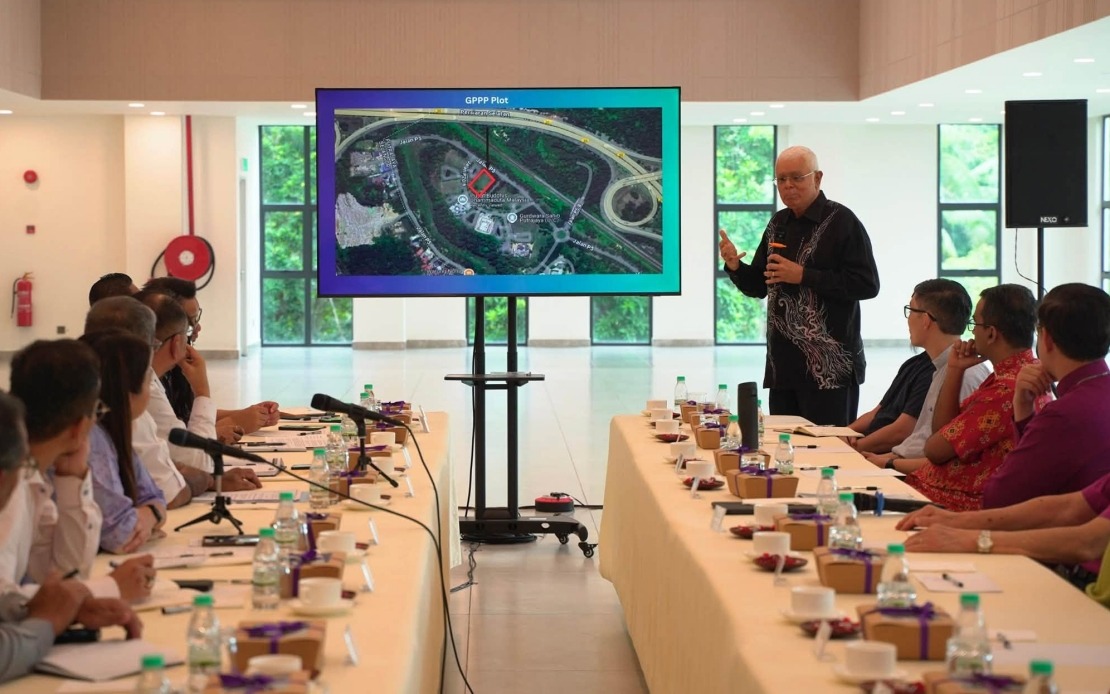
The federal government has long-term plans to develop Putrajaya's Precinct 20 into a dedicated hub for non-Muslim religious communities, with National Unity Minister Datuk Aaron Ago Dagang confirming that site allocation began over a decade ago in 2013. The strategic designation reflects a deliberate commitment to multireligious coexistence within Malaysia's administrative capital, moving beyond ad-hoc accommodation of diverse faiths toward systematic, inclusive urban design.
According to Aaron, the initiative transcends mere provision of physical space; it demonstrates how contemporary urban planning can embed interfaith principles into infrastructure and community development. By allocating designated precincts rather than scattered plots, planners create opportunities for meaningful interaction among different religious communities while maintaining each group's autonomy in worship practices. This approach aligns with modern urbanisation best practices seen in multicultural cities worldwide, where intentional zoning acknowledges religious diversity as a feature rather than an afterthought.
The Putrajaya Structure Plan 2050 provides the policy framework for this vision through Policy 17, which envisions Putrajaya as an inclusive, compassionate community. The document explicitly prioritises building spaces where mutual respect flourishes alongside religious freedom, anchoring the Precinct 20 initiative within broader long-term governance strategy. This integration ensures that interfaith accommodation remains institutionalised beyond electoral cycles or individual ministerial tenures, providing stability for religious communities planning worship facilities in the capital.
The National Unity Ministry's Harmoni MADANI initiative, launched in 2024, operationalises these planning commitments through the framework of "Understand, Respect, Accept and Celebrate." Rather than treating religious diversity as a security concern requiring compartmentalisation, this approach actively promotes engagement and knowledge-sharing. The Precinct 20 development becomes a practical testbed for whether such positive interfaith messaging can translate into tangible community benefits when backed by government resources and planning authority.
Visit by Minister Datuk Aaron Ago Dagang and Minister in the Prime Minister's Department Hannah Yeoh to the newly established Prince of Peace Church demonstrates political commitment to the initiative at senior government levels. Such high-profile engagement signals that interfaith development commands cabinet-level attention, setting tone for both the religious communities involved and broader public perception of the government's multireligious credentials.
Precinct 20 already hosts several functioning and developing worship facilities that collectively represent Malaysia's major non-Muslim religious traditions. The Dhammaduta Malaysia Buddhist Centre has been operational since 2023, while construction advances on the Gurdwara Sahib Putrajaya, Dewi Sri Lalithaambigai Alayam temple, and San Qing Taoist Temple. A Roman Catholic church site has also been reserved, though development timelines remain unclear. This portfolio of faiths—Buddhism, Sikhism, Hinduism, Taoism, and Christianity—encompasses the religious landscape of Malaysia's non-Muslim communities.
The phased development approach, with some facilities already operational while others remain under construction, reflects practical realities of religious community preparedness and financial capacity. Different religious organisations operate distinct governance structures, fundraising mechanisms, and construction timelines. Rather than requiring simultaneous completion, the flexible rollout allows each community to develop their facility according to their own pace and resources, reducing administrative burden on government while demonstrating genuine accommodation of diverse community needs.
For Malaysia's diverse religious communities, Precinct 20 represents tangible recognition within the capital's master planning. Rather than worshipping in converted shophouses or industrial spaces, communities gain access to purpose-built facilities in prominent locations, lending legitimacy and permanence to their presence in Putrajaya. This recognition matters symbolically and practically—it signals governmental acknowledgment of non-Muslim Malaysians as constituent parts of the national polity, not peripheral populations.
The interfaith hub model offers potential lessons for other Malaysian cities grappling with religious accommodation. Rather than treating religious pluralism reactively—responding to community requests case-by-case—proactive zoning establishes clear expectations and reduces conflict over land use. The Precinct 20 example demonstrates that religious pluralism can be compatible with systematic, orderly urban development rather than posing inherent obstacles to planning.
However, the success of Precinct 20 ultimately depends on how communities inhabit these shared spaces. Physical proximity alone does not guarantee interfaith harmony; intentional programming, education, and dialogue mechanisms become essential. The Harmoni MADANI framework suggests the National Unity Ministry recognises this, but translating policy into community engagement requires sustained resourcing and institutional commitment beyond ribbon-cutting ceremonies.
Regionally, Putrajaya's approach carries relevance for Southeast Asian nations managing religious diversity within urbanisation. As the region's cities expand rapidly, questions of religious accommodation will intensify. Malaysia's experiment with designated interfaith precincts within capital planning offers a model that other nations may study, particularly those with historical tensions between religious communities and those seeking to demonstrate commitment to pluralism through concrete infrastructure investment.
Looking forward, Precinct 20's trajectory will indicate whether Malaysia can operationalise multireligious governance principles through urban design. Success would demonstrate that religious harmony need not demand religious homogeneity, but rather reflects deliberate institutional choices to recognise and accommodate difference. For Southeast Asia's increasingly diverse and urbanised societies, such demonstrations carry both moral weight and practical relevance.

