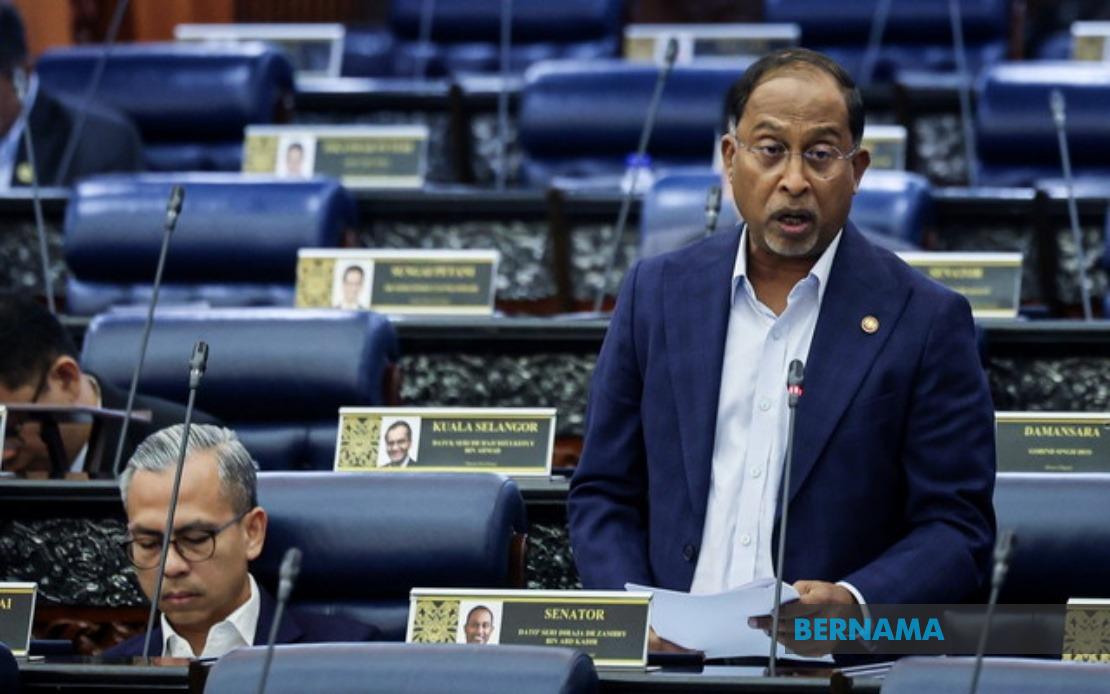
The National Higher Education Fund Corporation (PTPTN) has successfully collected RM197 million in outstanding loan repayments through appointed debt negotiation agencies (APH) between July 2025 and May, signalling growing effectiveness in its revised collection strategy. Higher Education Minister Datuk Seri Dr Zambry Abdul Kadir revealed the figures during parliamentary proceedings this week, highlighting the achievement as evidence that the intermediary approach is bearing fruit in persuading long-defaulting borrowers to resume payments on their obligations.
The recovery amount reflects a 6.4 per cent improvement compared with the identical period in the previous financial year, suggesting that the APH mechanism has gained traction among delinquent borrowers who have previously resisted PTPTN's direct collection efforts. This incremental but consistent growth underscores a strategic shift in how the corporation addresses its chronic collection challenges, moving away from purely punitive approaches toward negotiated settlements that account for borrowers' real financial circumstances. For Malaysian policymakers and education administrators, the uptick validates the decision to engage third-party negotiators as a bridge between institutional pressure and borrower cooperation.
As of May, the corporation had referred 103,418 borrower accounts carrying combined arrears exceeding RM3 billion to APH agencies. These accounts represent only the most severe cases within PTPTN's portfolio—borrowers with delinquencies stretching beyond ten years and those against whom court judgments have already been recorded. The high threshold for referral reflects a deliberate escalation protocol, ensuring that only accounts deemed unrecoverable through standard in-house collection channels are handed to external negotiators. This selective approach protects the vast majority of borrowers who maintain reasonable payment schedules or experience temporary hardship from aggressive enforcement action.
Minister Zambry emphasised during his parliamentary address that the appointment of APH agencies should not be mischaracterised as a punitive mechanism designed to harass or intimidate borrowers. Instead, he framed it as a targeted collection instrument applied exclusively to accounts with exceptionally long arrears histories that have exhausted conventional recovery pathways. The distinction carries significance for public perception of PTPTN's role: rather than positioning the fund as an inflexible creditor, the government seeks to present it as a pragmatic administrator balancing institutional sustainability with borrower welfare. This messaging is particularly important given Malaysia's politically sensitive education landscape, where student debt has become an electoral issue and borrowers command considerable voter interest.
Crucially, the minister reiterated that referral to APH does not permanently close the door on negotiation or settlement. Even after an account has been transferred to a debt agency, borrowers retain the right to engage PTPTN legal officers and petition for modified repayment arrangements reflecting their actual capacity to pay. This safety valve acknowledges that financial circumstances change unpredictably—unemployment, medical emergencies, business failures, or family crises can render previously manageable obligations impossible. By preserving negotiation channels post-referral, PTPTN signals flexibility while maintaining pressure on accounts that have shown consistent unwillingness to engage.
Borrowers facing genuine financial strain are encouraged to submit formal appeals and discuss tailored repayment solutions with PTPTN's legal team. According to Zambry, the corporation evaluates each case individually, weighing the borrower's income level, existing financial commitments, and broader socio-economic situation before determining appropriate terms. This individualised assessment framework theoretically prevents blanket enforcement actions against borrowers whose delinquency stems from systemic factors—underemployment in regions with limited job opportunities, for instance, or caregiving responsibilities that reduce earning capacity. The approach acknowledges that Malaysia's education loan portfolio encompasses economically heterogeneous borrowers with vastly different post-graduation circumstances.
The backdrop to this parliamentary exchange was a question from Lim Lip Eng, the PH-Kepong MP, requesting clarity on guidelines governing APH operations, oversight mechanisms, and specialised protocols for borrowers seeking repayment flexibility. The inquiry reflects legitimate concern about the transparency and fairness of third-party debt collection, a perennial flashpoint in education loan systems across the region. Without clear regulatory guardrails, APH agencies could theoretically employ coercive tactics that, while technically legal, contradict the government's stated commitment to borrower welfare. The minister's response attempted to reassure parliament that controls exist, though he did not elaborate extensively on their specific nature or enforcement.
For Southeast Asian observers, PTPTN's experience offers instructive lessons about managing large-scale education loan portfolios in developing economies. Malaysia's population comprises millions of graduates burdened with tertiary education debt, many facing wage stagnation and underemployment despite their qualifications. The arrears problem is not primarily a moral hazard issue—borrowers deliberately defaulting—but rather a structural mismatch between loan obligations calibrated for optimistic wage expectations and the reality of a labour market increasingly characterised by precarity and wage suppression. The RM3 billion in arrears across 103,418 accounts hints at a systemic problem rather than isolated delinquency.
The government's reliance on APH agencies also reveals the limitations of PTPTN's in-house collection capacity. Over decades, the corporation accumulated expertise in disbursing loans and processing routine repayments but apparently lacked the specialised negotiation skills or operational flexibility required to recover long-defaulted accounts. Outsourcing this function to APH agencies transfers both the burden and, implicitly, some reputational risk to private entities. If APH agents employ aggressive tactics or borrowers experience harassment, PTPTN can maintain a degree of institutional distance, though the government remains ultimately responsible for the system's overall conduct.
Moving forward, the sustainability of PTPTN depends partly on balancing revenue collection with borrower retention in the system. Overly aggressive enforcement could deter eligible borrowers from pursuing higher education or create precedents for default. Conversely, excessive forbearance erodes the fund's financial viability and signals weak enforcement to strategic defaulters. The 6.4 per cent year-on-year improvement through APH suggests that third-party negotiation occupies a productive middle ground, encouraging payment without triggering the public backlash that might accompany harsher collection measures. Whether this modest improvement can be sustained or expanded, however, remains an open question as Malaysia grapples with broader economic headwinds and education sector pressures.

