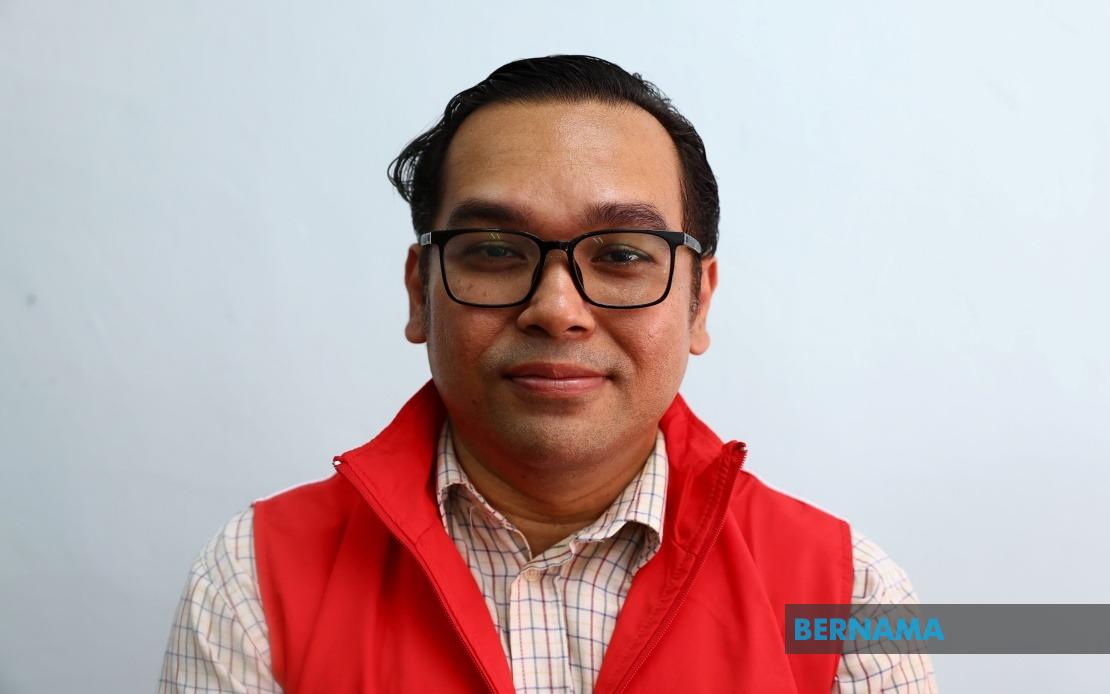
The Parti Sosialis Malaysia (PSM) has fielded Amir Syafiq Ameer Soekre as its sole representative in the 16th Johor state election, with the 40-year-old focusing his campaign on the cost-of-living crisis that has driven many Skudai residents to seek employment across the border in Singapore. Speaking during campaigning for the July 11 election, Amir Syafiq articulated how economic hardship has fundamentally reshaped commuting patterns in the constituency, with workers routinely departing before dawn to reach jobs in the island republic where wages offer better purchasing power than available locally.
The candidate's biographical arc reflects a deliberate trajectory toward electoral politics rooted in sustained community organising. Amir Syafiq, who holds a Master's degree in International Business Management from Teesside University in the United Kingdom, began his activism during his teenage years and eventually joined PSM, where he now serves as party secretary. His professional background as a sales executive at a private company has been interwoven with voluntary advocacy on behalf of workers, informal settlers, and economically marginalised groups across the state. This combination of formal qualifications and grassroots experience positions him as a bridge between intellectual policy analysis and street-level understanding of constituency needs.
The phenomenon of Skudai workers commuting to Singapore illuminates deeper structural issues within Malaysia's labour market and regional economic integration. Amir Syafiq emphasised that the exodus of local workers across the Causeway represents not individual choice but economic necessity—a symptom of wage stagnation and inflation that has eroded household purchasing power. Residents leaving their homes between 3 and 4 am daily to access better-compensated employment in a neighbouring country signals that local income levels have decoupled from the actual cost of supporting a family in Johor. This pattern carries implications for worker welfare, family stability, and the sustainability of communities dependent on cross-border employment arrangements.
Amir Syafiq's campaign platform, articulated through the slogan "Skudai Saksama" (Equitable Skudai), moves beyond simple wage demands to propose a more comprehensive vision of economic justice. The concept of saksama—rooted in equity and fairness—suggests redistribution mechanisms that would narrow wealth gaps and ensure all residents, regardless of socioeconomic status, can access dignified living standards. This framing connects individual wage grievances to systemic questions about how development benefits are distributed across constituencies and demographic groups. The platform explicitly privileges multiracial harmony as foundational to equitable growth, recognising that in Skudai's diverse community, economic injustice cannot be addressed without attending to intercommunal dimensions.
Quality public amenities constitute a third pillar of Amir Syafiq's policy agenda alongside cost-of-living mitigation and income improvement. This trio of priorities reflects understanding that household economic vulnerability is not purely a wage issue but intertwined with access to affordable public services, transport infrastructure, healthcare, and education. When residents must spend significant portions of their income on private alternatives to inadequate public provision, nominal wages become largely irrelevant to real living standards. By elevating public amenities as a campaign priority, Amir Syafiq signals that elected representation should scrutinise how state budgets allocate resources toward constituencies and whether existing public infrastructure meets resident needs.
The Skudai contest represents a four-way race featuring Amir Syafiq against Barisan Nasional's Tan Hiang Kee, Pakatan Harapan's Kartiyaini Jeyapalan, and Parti Bersama Malaysia's Eugene Chua Meng Chong. This constellation of candidates reflects the broader fragmentation of Malaysian electoral politics, with establishment coalitions, opposition alliances, and smaller parties competing for voter support. As PSM's sole representative across all 56 state seats being contested in Johor, Amir Syafiq operates at significant disadvantage in terms of party machinery, campaign funding, and incumbent legitimacy compared to opponents from larger organisations.
PSM's minimal electoral footprint in the Johor contest underscores the structural barriers facing socialist and left-oriented parties within Malaysia's electoral ecosystem. Despite articulating policy positions that resonate with economic grievances, parties positioned to the left of Pakatan Harapan struggle to achieve breakthrough results in state and federal elections. Amir Syafiq's candidacy therefore functions partly as advocacy platform and partly as attempt to build party visibility and credibility in a constituency where economic anxiety may translate into receptiveness to alternative political messaging.
The broader Johor election has attracted 172 candidates competing for 56 state seats, reflecting substantial competition across the electoral landscape. Early voting occurs on July 7, with general polling on July 11, providing sufficient time for candidates to mobilise supporters and communicate platforms to voters. For Amir Syafiq and PSM, the limited campaign period requires efficient resource deployment and reliance upon grassroots networks rather than sophisticated advertising infrastructure.
Amir Syafiq's first candidacy emerges from two decades of community work, positioning him as an outsider to establishment politics but with demonstrated commitment to Skudai constituencies. His emphasis on cost-of-living issues addresses genuine household economic anxiety that polling consistently identifies as voters' primary concern. Whether his people-centric grassroots approach can overcome the organisational advantages of larger parties remains uncertain, but his presence in the race ensures that economic justice frameworks reach voters and that alternatives to mainstream party politics receive explicit articulation in campaign discourse.

