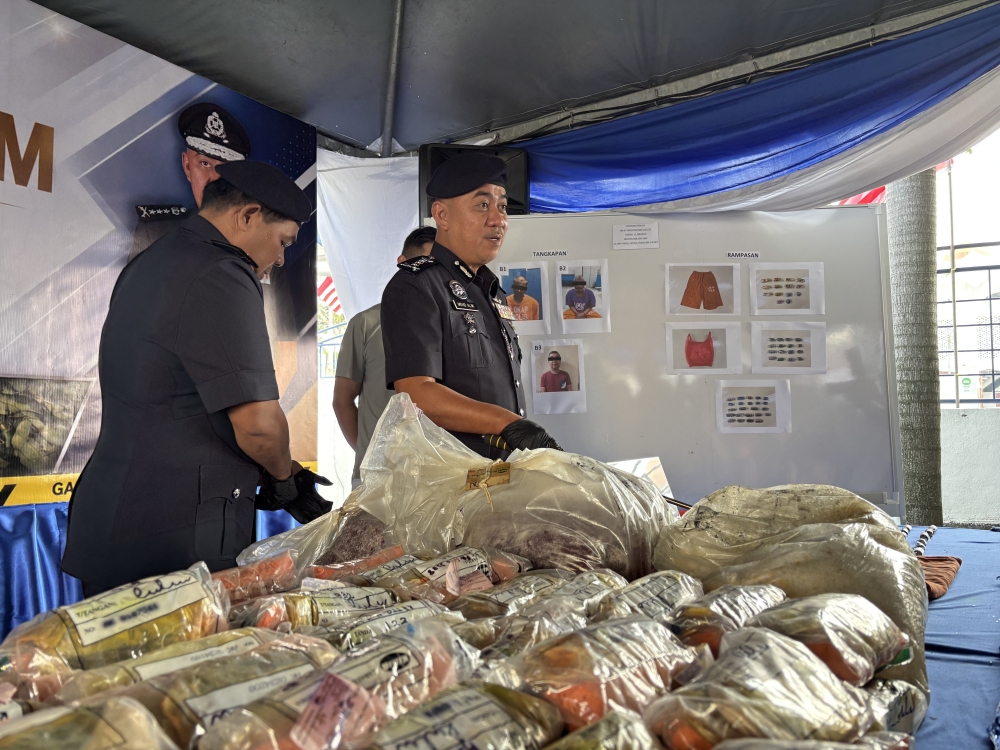
Three individuals, among them a serving police constable, have been arrested in connection with a significant drug discovery at a police holding facility in Lumut, with law enforcement confiscating controlled substances worth RM18,534. The incident represents a concerning breach of security protocols within the police detention system and raises uncomfortable questions about the integrity of officers entrusted with custodial responsibilities.
The seizure, which included methamphetamine, heroin and cannabis, occurred during a routine inspection at the Lumut police station in Perak. The discovery prompted immediate intervention by narcotics and internal affairs units, reflecting the seriousness with which authorities treat breaches involving controlled substances within police premises. The involvement of an in-service constable has heightened scrutiny on recruitment and vetting procedures within Malaysia's police force.
Police operations in Perak have increasingly focused on disrupting drug trafficking networks that utilise state facilities and personnel. Lumut, a coastal town in Manjung district, has historically served as a transshipment point for illicit narcotics moving through Port Klang and smaller maritime routes. The discovery of drugs within a police station itself suggests either inadequate security measures or, more troublingly, complicity among officers facilitating trafficking activities.
The case underscores persistent vulnerabilities within Malaysia's custodial system. Police holding cells nationwide serve as temporary detention spaces where suspects await court appearance or processing. These facilities require robust internal controls and surveillance to prevent contraband introduction and ensure detainee safety. When officers themselves become vectors for drug introduction, institutional oversight mechanisms face serious credibility questions.
The constable's involvement carries significant implications for force morale and public confidence. Police legitimacy depends substantially on public perception of officer integrity. High-profile cases involving serving personnel in drug-related offences damage this perception disproportionately, particularly in communities already experiencing elevated law enforcement presence. This incident will likely feature prominently in discussions surrounding police reform and accountability measures.
Investigations into how the substances entered the cell will examine multiple vectors: whether they were brought in by the arrested constable, smuggled by visitors, or introduced through systemic security gaps. Determining the specific role of the officer involved remains critical, as this shapes both the criminal charges and internal disciplinary proceedings. The Royal Malaysia Police will face pressure to demonstrate thorough investigation and meaningful consequences for any found culpable.
The methamphetamine, heroin and cannabis seizure represents typical drug market composition in Perak, where synthetic drugs command premium prices whilst traditional narcotics remain persistently available. The RM18,534 valuation reflects street-level street pricing rather than wholesale costs, suggesting these may have been personal use quantities, supply caches for downstream distribution, or evidence in processing cases. Drug pricing varies significantly across Malaysia's states depending on supply proximity and market saturation.
Penal consequences for the three arrested individuals will depend on drug quantities and specific charges filed under the Dangerous Drugs Act 1952. Possession with intent to supply carries substantially heavier penalties than simple possession, whilst any officer convicted faces additional dishonourable discharge from service. Prosecutors will likely pursue maximum charges to demonstrate institutional commitment to combating internal corruption.
The incident occurs amid broader concerns about synthetic drug availability throughout Southeast Asia. Malaysia's geographic position makes it particularly vulnerable to transnational trafficking operations utilising land borders, maritime routes, and increasingly, postal and courier systems. Police stations inadvertently becoming distribution points suggests trafficking networks maintain significant operational sophistication and institutional penetration.
Internal affairs divisions will conduct parallel investigations examining whether systemic vulnerabilities facilitated this breach. Security camera footage, visitor logs, and officer movement records will undergo scrutiny. Such reviews often reveal uncomfortable patterns suggesting either negligence or willful oversight by supervisory personnel. Previous cases involving police involvement in drug trafficking have implicated multiple officers, suggesting coordination rather than individual isolated misconduct.
The public disclosure of this arrest serves institutional interests by demonstrating police willingness to investigate internal wrongdoing. However, it simultaneously highlights uncomfortable realities about maintaining institutional integrity when external pressures, financial incentives, and operational stress intersect. Malaysia's police force has invested significantly in anti-corruption initiatives, yet high-profile cases like this suggest challenges remain entrenched.
For Malaysian citizens and regional observers, this incident reinforces the complex reality that drug enforcement authorities occasionally become implicated in trafficking themselves. Effective anti-narcotics strategy requires not only interdicting external supply chains but maintaining scrupulous internal discipline and oversight. The case will likely influence forthcoming police recruitment standards and internal surveillance protocols, though substantive systemic reforms remain uncertain.
The investigation's outcome will inform broader discussions about police professionalism and governance standards as Malaysia navigates persistent drug challenges alongside rising synthetic narcotic use patterns across the region.

