%22%2F%3E%3C%2Fpattern%3E%3C%2Fdefs%3E%3Crect%20width%3D%22100%25%22%20height%3D%22100%25%22%20fill%3D%22url(%23phxscmg)%22%2F%3E%3Crect%20width%3D%22100%25%22%20height%3D%22100%25%22%20fill%3D%22url(%23phxscmp)%22%2F%3E%3Ctext%20x%3D%2250%25%22%20y%3D%2250%25%22%20text-anchor%3D%22middle%22%20dominant-baseline%3D%22central%22%20fill%3D%22rgba(255%2C255%2C255%2C0.95)%22%20font-family%3D%22Georgia%2C%20'Times%20New%20Roman'%2C%20serif%22%20font-weight%3D%22700%22%20font-size%3D%22320%22%20letter-spacing%3D%22-0.02em%22%3EPM%3C%2Ftext%3E%3C%2Fsvg%3E)
Datuk Seri Dr Wan Azizah Wan Ismail, president of Pergerakan Puteri Islam Malaysia (PPIM) and wife of the Prime Minister, hosted a gathering with nearly 400 young participants concluding the organisation's National Level Nature Camp 2026 programme at the National Planetarium in Kuala Lumpur on Thursday. The event drew together 395 participants who had spent the preceding two days engaged in outdoor and educational activities designed to cultivate leadership qualities and spiritual awareness among Malaysia's youth.
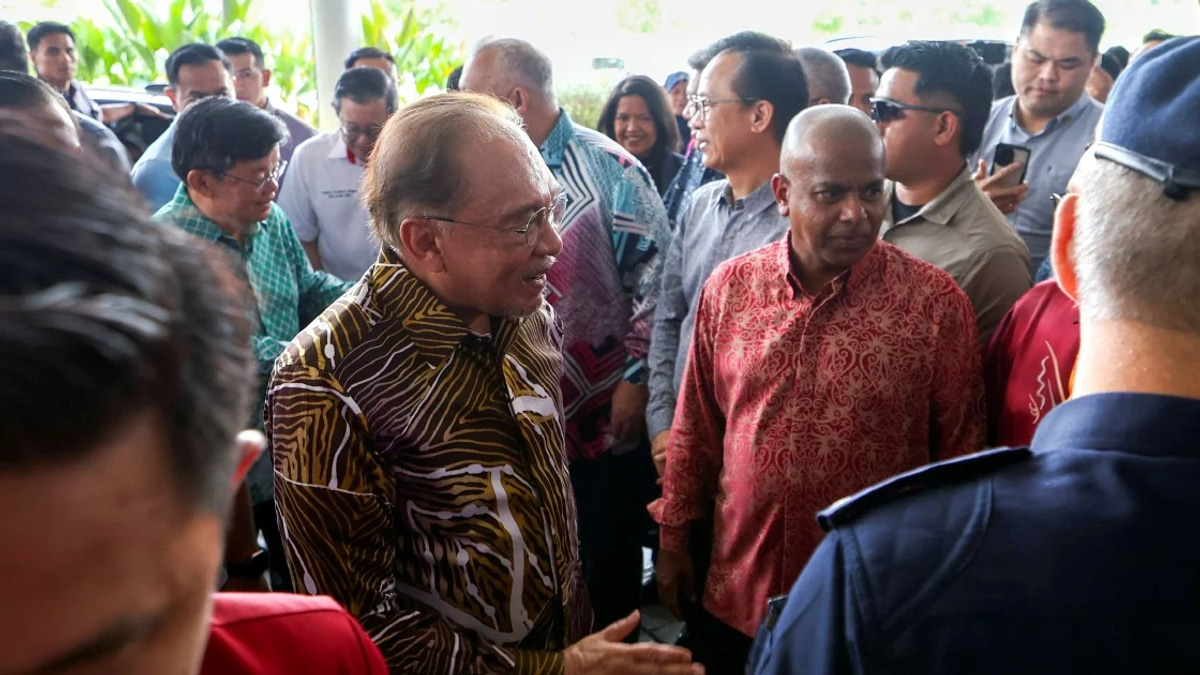
Dr Wan Azizah arrived at the National Planetarium shortly after 1.15 pm, where she spent time conversing with attendees in the lobby before recording her visit in the facility's official visitors' book. The occasion brought together a notable gathering of government and civil society figures, including Datuk Ruziah Shafei, the deputy secretary-general at the Ministry of Science, Technology and Innovation responsible for science planning and promotion, alongside PPIM's honorary secretary Aizar Mohd Jaman and National Planetarium director Mohd Zamri Shah Mastor. Numerous national and state-level PPIM representatives attended the gathering, underscoring the organisation's commitment to youth development across the country.
The three-day camp, held from June 18 to 20 at Laman Puteri within the Kompleks Darul Puteri along Jalan Cheras, represented the latest iteration of PPIM's biennial flagship programme aimed at nurturing the next generation of Malaysian women leaders. By hosting the closing ceremony at the National Planetarium, organisers deliberately chose a venue that would complement the camp's educational mission with an interactive science and astronomy experience. This strategic decision reflected a broader institutional commitment to broadening participants' intellectual horizons beyond traditional outdoor and skill-building activities.
According to Aizar, this year's edition emphasised a carefully calibrated integration of three distinct but complementary educational pillars: environmental stewardship, Islamic teachings rooted in the Quran, and practical life skills development. This multidimensional approach seeks to instil in participants a holistic sense of personal identity grounded in both spiritual principles and contemporary competency demands. The organisers recognised that nurturing young Malaysians requires addressing not only technical abilities but also moral foundation and ecological consciousness, particularly given the nation's environmental challenges and the younger generation's often ambivalent relationship with religious practice.
The curriculum underpinning PPIM's youth development framework encompasses eight distinct developmental areas, each carefully designed to address different facets of personal growth and social contribution. Beyond the environmental and spiritual components emphasised at this year's camp, the programme incorporates dedicated segments on camping and outdoor competency, administrative and management capabilities, health and wellness awareness, individual personal development, and broader skill-building across multiple domains. This comprehensive structure reflects decades of experimentation within the Islamic women's movement regarding what approaches most effectively shape character alongside capability in young Muslim women.
PPIM's decision to maintain the biennial rhythm for its national-level nature camp reflects a deliberate strategic choice balancing the organisation's finite resources against the demand from member organisations across Malaysia's states and federal territories. The two-year interval allows sufficient time to recruit and train volunteer facilitators, secure funding from corporate sponsors and government grants, and conduct comprehensive planning that ensures each iteration offers substantive innovations and improvements over its predecessor. Participant numbers exceeding 395 suggest the programme has achieved significant institutional recognition and family-to-family transmission of interest across Malaysian communities.
The closing ceremony's location at the National Planetarium signified an intentional pedagogical decision to expose participants to scientific inquiry and space science education during a formative moment of their development. For many young Malaysians, particularly those from rural areas or lower-income urban communities, such facilities remain underutilised despite their potential to inspire curiosity about STEM fields. By integrating an astronomy and science visit into the camp's conclusion, PPIM demonstrated awareness that competing frameworks for understanding the universe—scientific, religious, and cultural—need not prove mutually exclusive within a comprehensive Islamic education framework.
The presence of senior government officials, particularly from the science and innovation ministry, underscores growing governmental recognition of civil society organisations' role in bridging gaps between formal education systems and informal youth development. This alignment between state priorities and PPIM's programming reflects broader Malaysian efforts to develop human capital through diverse institutional channels. The Ministry's participation signals tacit support for linking science education with character development and environmental awareness, an integrated approach increasingly recognised as essential for addressing complex national challenges including climate change, resource sustainability, and technological disruption.
For Malaysian parents considering youth development options for their daughters, PPIM's nature camp represents one of relatively few programmes that combines outdoor education, spiritual formation, and skills training within a specifically Islamic women-centred framework. The organisation's emphasis on environmental integration reflects global consciousness regarding climate crisis and sustainability, issues affecting Malaysia through water security concerns, deforestation pressures, and changing agricultural patterns. By grounding environmental ethics within Islamic teaching rather than secular frameworks, PPIM potentially enhances receptiveness among traditionally-minded families who might otherwise resist environmental messaging perceived as Western-originated.
The programme also addresses a recognised gap in Malaysian youth development: opportunities for young women to develop leadership capabilities specifically within Islamic contexts rather than through secular NGOs or corporate youth schemes. As Malaysia navigates questions about youth radicalisation, economic opportunity, and social fragmentation, initiatives offering structured community engagement, spiritual grounding, and practical capability development carry particular significance. PPIM's expansion of its youth programmes reflects both organisational confidence and perceived social need for religiously-anchored developmental spaces.
Moving forward, the national-level camp's demonstrated scale and government institutional support suggest PPIM will continue expanding its youth engagement portfolio. The integration of contemporary concerns—environmental sustainability alongside traditional Islamic education and camping skills—positions the organisation to remain relevant across generational cohorts while maintaining its distinctive Islamic women's movement character. For policymakers monitoring civil society's role in youth development, PPIM's model offers insights into how faith-based organisations can address multiple developmental objectives simultaneously while maintaining cultural authenticity and community trust.