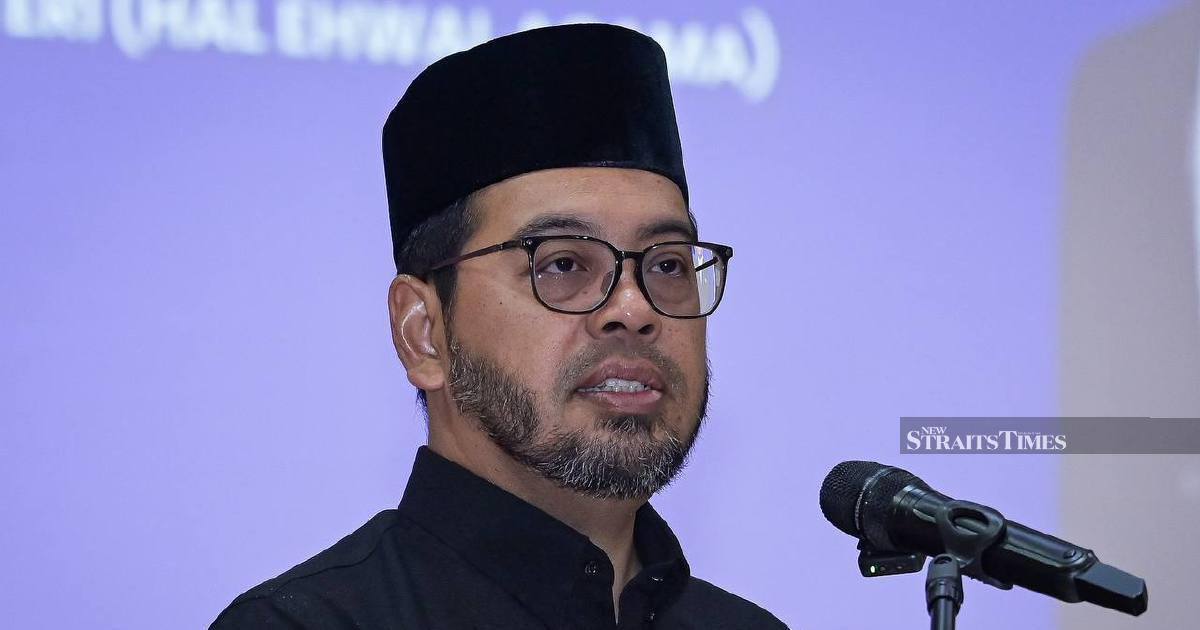
The Prime Minister's Department (Religious Affairs) has declared its comprehensive support for His Majesty Sultan Ibrahim, King of Malaysia's directive that all investigations stemming from the Royal Commission of Inquiry (RCI) into Lembaga Tabung Haji be executed with full rigour, complete transparency and unwavering accountability.
This pronouncement represents a significant alignment between the executive branch and the constitutional monarchy on a matter deemed critical to public trust and institutional governance. The RCI's examination of Tabung Haji operations has raised questions about financial management, investment decisions and oversight mechanisms within the organisation responsible for administering the pilgrimage savings scheme for millions of Malaysian Muslims.
The King's intervention underscores the gravity with which the palace views potential governance failures at Tabung Haji. As the spiritual leader of Islam in Malaysia and holder of constitutional powers, Sultan Ibrahim's call for thorough investigation carries moral and institutional weight. His emphasis on transparency reflects broader concerns within Malaysia's political establishment about public confidence in major institutions managing citizen resources.
Tabung Haji holds profound significance within Malaysian Muslim society, functioning as a dedicated savings and investment mechanism for those undertaking the hajj pilgrimage to Mecca. The fund manages billions in assets accumulated from millions of contributors spanning decades. Any governance lapses or financial irregularities could undermine confidence not merely in the institution itself but in the broader ecosystem of Islamic financial instruments and government-backed religious bodies.
The RCI's mandate apparently encompassed a comprehensive audit of Tabung Haji's operations, potentially examining investment portfolios, administrative expenditures, regulatory compliance and decision-making structures. The scope and findings of such an inquiry would naturally prompt intensive follow-up investigations. The King's emphasis on thoroughness suggests that preliminary findings may have raised multiple areas warranting deeper examination rather than superficial remedial actions.
The PMO's Religious Affairs division holding official responsibility for religious matters at the federal level positions its public backing as particularly meaningful. This ministry typically serves as a liaison between government and religious institutions, making its explicit endorsement of the King's directive a clear message that investigative processes will not face bureaucratic obstruction or political interference. The phrase "without compromise" carries particular weight, suggesting that any investigation will not be diluted by competing institutional interests or political considerations.
Malaysia's institutional history contains instances where governance investigations have faced criticism regarding their independence or ultimate impact. The prominence given to the King's directive and the swift institutional response may reflect lessons learned from past inquiries. By publicly committing to the monarch's standard for rigour and transparency upfront, the PMO appears intent on preempting future questions about whether investigations were adequately pursued.
For Malaysian Muslims and Tabung Haji contributors specifically, this commitment carries practical implications. Depending on RCI findings, corrective measures might encompass structural reforms, leadership changes, enhanced oversight mechanisms or financial restitution. The depth and integrity of subsequent investigations will determine whether accountability leads to meaningful systemic change or merely surface-level adjustments.
The broader context includes growing regional scrutiny of Islamic financial institutions and pilgrimage-related bodies. Other Muslim-majority nations have faced challenges with hajj fund management and religious endowment governance. Malaysia's visible commitment to transparent investigation may establish regional benchmarks for institutional accountability within Islamic finance sectors.
From a governance standpoint, the RCI process itself represents a constitutional remedy for examining institutional failures. The subsequent investigation phase requires different capacities—forensic financial analysis, potential forensic accounting, legal assessment of compliance breaches and perhaps criminal referrals where applicable. The PMO's backing suggests these resources will be deployed appropriately.
The investigation timeline remains undefined, but the King's intervention indicates expectations for diligence rather than expedience. Public patience with governance matters involving citizens' savings is necessarily limited. Protracted investigations without visible progress risk perpetuating uncertainty and eroding confidence. The balance between thorough investigation and timely resolution will test institutional capacity.
For Tabung Haji's current leadership and staff, the transparency directive creates both pressure and opportunity. Cooperation with investigations offers a pathway toward institutional rehabilitation. Conversely, any perception of obstruction would carry consequences that extend beyond individual accountability to institutional credibility.
The alignment between the Palace and PMO on this matter demonstrates that Malaysian governance structures can function coherently around institutional accountability. As investigations proceed, stakeholders will monitor whether this public commitment to rigour translates into substantive investigative action and whether findings ultimately lead to the systemic reforms that such institutional scrutiny typically warrants.

