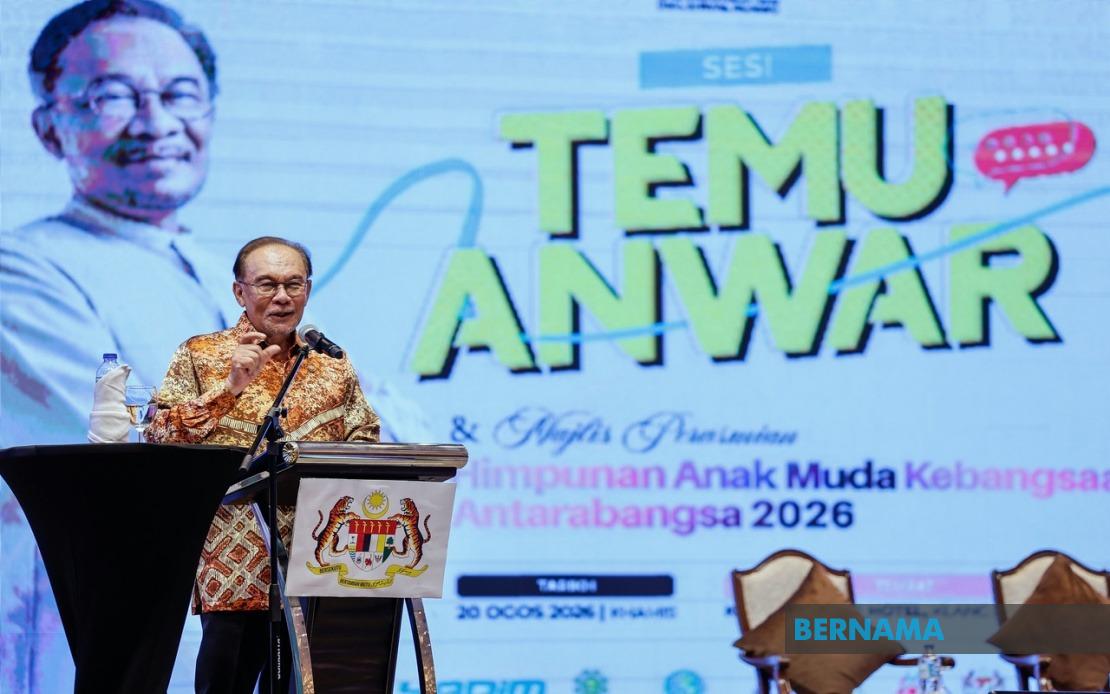
Prime Minister Datuk Seri Anwar Ibrahim has signalled that a series of important policy announcements will be rolled out across the coming weeks, beginning with a declaration on the eve of National Day on August 30, followed by another during Malaysia Day celebrations on September 16, and a third when the government tables its budget in early October. Speaking at a Temu Anwar session during the opening of Himpunan Anak Muda Antarabangsa (HAMKA) 2026 in Klang, the Prime Minister declined to offer specifics about the content of these announcements, instead emphasising his consultative approach to governance and his commitment to addressing youth-related concerns.
The timing of these announcements carries symbolic weight. By anchoring major policy reveals to National Day and Malaysia Day, the government signals that these measures are viewed as pivotal to the nation's development and identity. The clustering of announcements over three consecutive months suggests a comprehensive policy agenda is under preparation, though the deliberate withholding of details indicates the government may be still refining proposals or seeking broader stakeholder input. The Prime Minister's reference to listening to multiple viewpoints before finalising these initiatives reflects an apparent shift towards greater consultative governance, though this approach also raises questions about the timeline for finalising and implementing whatever changes emerge.
Anwar's remarks came directly in response to a student's inquiry about government action to safeguard the welfare and financial security of young people engaged in gig economy work, a sector that has expanded significantly across Malaysia and the wider region in recent years. This focus underscores growing recognition that traditional employment frameworks are proving inadequate for a generation increasingly turning to platform-based and freelance work. The gig economy, encompassing ride-hailing, food delivery, freelance services, and similar models, has become integral to economic participation for many young Malaysians, yet remains largely unregulated in terms of worker protections and benefits.
The government's existing response centres on the establishment of the Malaysian Gig Economy Commission, known as SEGiM, alongside the introduction of a forthcoming bill addressing small business concerns. These mechanisms represent the administration's first structured attempt to create a regulatory framework specifically tailored to gig work, rather than attempting to force such arrangements into conventional employment categories. However, Anwar acknowledged that significant constituencies believe current protections remain insufficient, a reality that becomes increasingly apparent as more workers face income volatility, lack of conventional benefits, and limited access to dispute resolution mechanisms.
Beyond immediate worker protections, the government is also exploring pathways to facilitate young people's transition from employment into entrepreneurship. Anwar highlighted the role of the National Entrepreneurial Group Economic Fund, known as TEKUN, in providing financing for graduates wishing to establish businesses. This initiative addresses a genuine gap in Malaysia's entrepreneurial ecosystem, where young people with qualifications but limited capital or business history face significant barriers to securing startup financing from conventional lending institutions.
Significantly, the Prime Minister acknowledged that existing lending criteria requiring applicants to demonstrate prior business track records warrant re-examination. This concession suggests the government recognises how such requirements effectively exclude many capable young entrepreneurs precisely when they are most likely to apply for financing. Changing economic conditions and shifting employment patterns have rendered traditional business experience less relevant as a predictor of entrepreneurial success, particularly in technology-enabled sectors where formal business history may not exist. Opening financing access to first-time entrepreneurs without track records could unlock considerable untapped potential within Malaysia's youth demographic.
Yet Anwar's cautious phrasing—stating the government would "look into the matter" and would "do our best for the youth" "if we have the capacity"—suggests fiscal constraints or other limitations may restrict how aggressively these supportive measures can be expanded. This qualified language is worth noting given Malaysia's ongoing fiscal pressures and competing budgetary demands across multiple sectors. The government's ability to substantially expand financing facilities depends partly on available resources and partly on political calculations about priorities within a challenging economic environment.
The broader context of these youth-focused initiatives reflects regional trends. Across Southeast Asia, governments increasingly recognise that youth unemployment and underemployment pose both economic and social risks. Malaysia's youth population remains substantial relative to older demographics, meaning policies addressing young people's economic participation carry outsized significance for overall economic growth, social stability, and the viability of future tax bases and pension systems. Gig economy support and startup financing are becoming standard policy areas across the region, making Malaysia's efforts part of a wider pivot toward recognising and regulating non-traditional work.
The student-driven nature of this consultation—occurring during a youth gathering—suggests the administration values direct engagement with young constituencies and is attempting to position itself as responsive to generational concerns. Whether the eventual announcements in late August, mid-September, and early October translate these consultations into substantive policy changes remains to be seen. The government's public commitment to making these announcements, however, does create expectation and accountability mechanisms that will inform how observers assess the government's follow-through on its stated concern for youth welfare.
Looking forward, Malaysian observers and young people themselves will be watching closely whether these promised announcements contain concrete legislative reforms, budget allocations, or regulatory changes, or whether they prove largely rhetorical in nature. The intersection of gig economy protection, startup financing accessibility, and youth employment has become sufficiently urgent in Malaysia that incremental or purely consultative gestures may prove insufficient to address underlying structural challenges. The announcements themselves will offer clarity on whether the government intends meaningful transformation in how it approaches non-traditional work and young entrepreneurship, or whether existing frameworks will continue to dominate despite acknowledged inadequacies.

